
Best High-Pressure Forged Steel Valve Supplier: Ensuring Reliability in Critical Systems
2026-06-17
In industries where failure is not an option, the quality of every component matters—especially valves. High-pressure forged steel valves are critical to maintaining safety and performance in demanding systems. Choosing the right supplier is just as important as the valve itself. That’s where ZMV stands out. With a focus on precision forging and unmatched durability, ZMV has earned a reputation as the best high-pressure forged steel valve supplier for critical applications. This blog explores how their solutions deliver reliability when it matters most.
Forged in Fire: The Metallurgical Secrets Behind Long-Lasting Valves
Industrial valves often operate in conditions that would devour weaker components—corrosive chemicals, extremes of pressure, and thermal cycling that tests every grain boundary. The difference between a valve that fails within months and one that serves reliably for decades often comes down to metallurgical choices made long before the first cut. High-performance alloys like duplex stainless steels or nickel-based superalloys are not mere checkboxes on a spec sheet; they are forged and heat-treated through tightly controlled sequences that dictate how inclusions align, how carbides precipitate, and how residual stresses are mitigated. It’s a deliberate orchestration of microstructure, where a few degrees during tempering can shift the balance between toughness and hardness.
The forging process itself imparts a directional strength that cast counterparts simply cannot match. By deforming the metal at high temperatures, grain flow is contoured to follow the valve’s geometry, placing the toughest paths exactly where tensile and bending stresses peak during operation. This is not always visible on a polished surface, but it shows up clearly in failure analyses—fractures rarely propagate across properly aligned grain flow. Heat treatment then dials in the desired phase distribution, carefully avoiding the sensitization range where chromium carbides could rob the alloy of its corrosion resistance. Tempering cycles are often repeated, each pass refining the martensitic matrix and relieving the microscopic tensions that invite cracking.
Beyond composition, the very cleanliness of the steel plays an outsized role. Modern vacuum degassing and electroslag remelting strip away oxides and sulfides that would otherwise act as initiation points for pitting or fatigue. A single non-metallic inclusion, barely wider than a hair, can become the Achilles’ heel of a high-pressure valve seat. The best manufacturers pair these ultra-clean melts with rigorous non-destructive testing—ultrasonics, dye penetrants, and X-ray inspections—not to find acceptable flaws, but to verify that none exist. The end result is a component where the metallurgy is not just a property but a quiet guarantee, forged in fire and proven by decades of uninterrupted service.
Choosing a Partner: Traits of a Trusted High-Pressure Valve Supplier
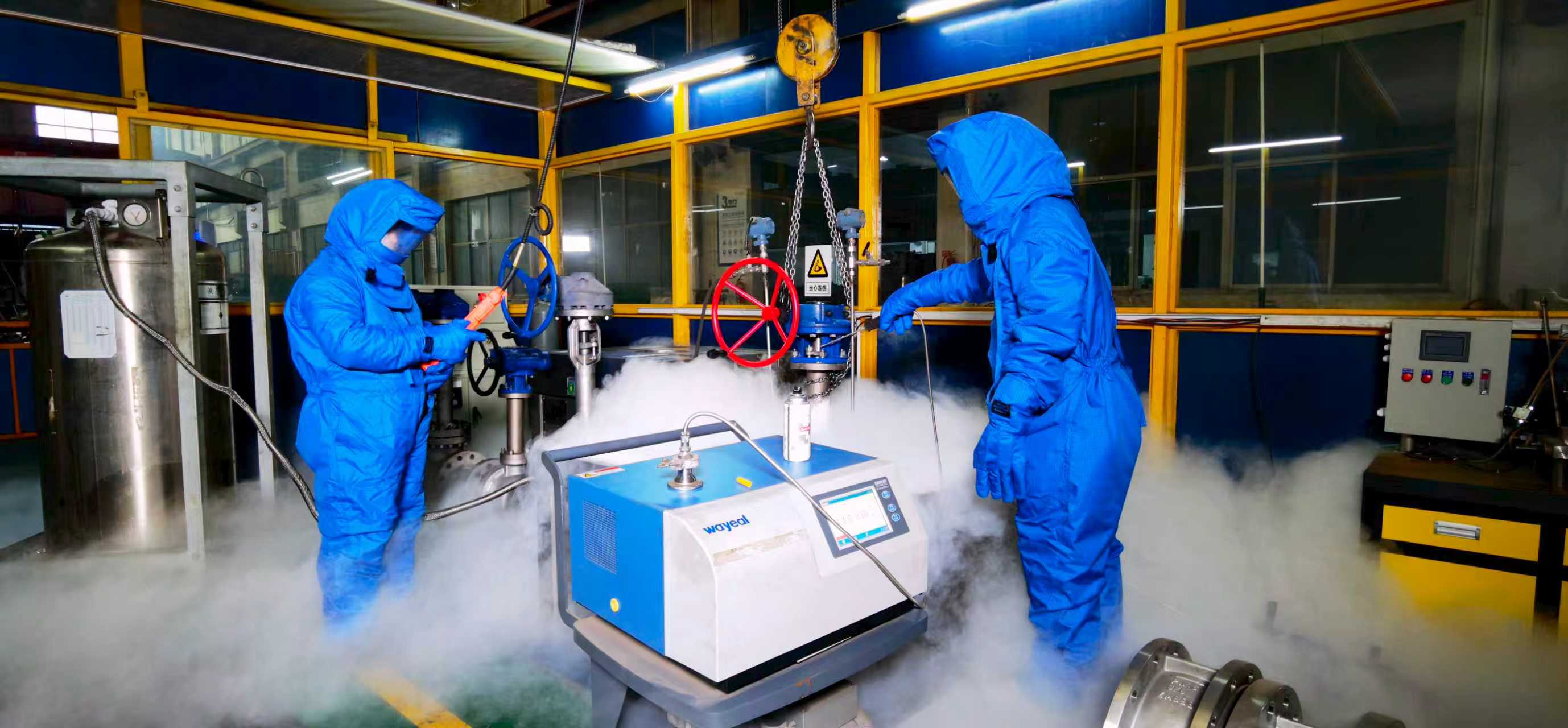
Finding a dependable supplier for high-pressure valves goes beyond basic specs and price tags. You want a partner who grasps the critical nature of your operation—whether it’s managing extreme temperatures, corrosive media, or rapid cycling. A supplier worth its salt doesn’t just ship a product; they invest time in understanding your system constraints, offering material upgrades or seat configurations you might not have considered. Look for evidence of a robust quality management system, such as ISO 9001 and API certifications, but don’t stop there. Ask about their in-house testing capabilities: can they simulate real-world pressures and perform cryogenic or fugitive emissions tests? A supplier that voluntarily exceeds the testing requirements is one that understands the consequences of failure.
Technical agility is another trait that sets the best apart. Off-the-shelf designs only go so far when you’re dealing with unconventional flange patterns or space restrictions. A trusted supplier will have engineers who speak your language—process, maintenance, reliability—and can propose modifications without endless back-and-forth. Pay attention to how they handle inquiries. Do they ask for your P&IDs and fluid datasheets, or do they just quote a part number? The latter is a red flag. Also, watch for transparency around lead times and raw material sourcing. A supplier that openly shares their supply chain strategy, including back-up forging partners, demonstrates that they won’t leave you stranded when demand spikes.
Finally, evaluate the supplier’s after-sales commitment. A high-pressure valve isn’t a set-and-forget component; it requires periodic servicing, spare parts, and sometimes field support. The right partner maintains detailed records of every valve they’ve built for you, so a seal kit or a stem assembly is never a mystery. They offer training for your crew, whether on torque specifications or troubleshooting packing leaks, and they don’t vanish once the invoice is paid. Consider visiting their facility if possible—the condition of the shop floor and their attitude toward traceability reveal more than any brochure. Ultimately, a supplier becomes a true partner when they anticipate your needs before you articulate them, helping you avoid downtime rather than simply reacting to it.
Engineering Against Extremes: How Design Prevents Catastrophic Failure
When a bridge withstands a once-in-a-century flood or an aircraft lands safely after a hailstorm, it’s rarely luck. These outcomes hinge on design choices made years earlier—increments of margin, material science, and failure mode analysis. Engineers don’t just build to “work”; they build to absorb the unpredictable, from thermal shocks to seismic violence, knowing that the cost of a missed edge case is measured in more than dollars.
The core of extreme-condition design isn’t overbuilding—it’s understanding exactly how and where a system will give up. This means deliberately introducing weakness in controlled ways: shear tabs that yield before columns tear, fuse-like connectors in power grids, or deliberate fracture points in automotive crumple zones. By dictating the sequence of failure, designers turn a potential catastrophe into a managed event that protects what matters most.
Behind every such safety net lies a mix of physical testing and simulation that would have been unimaginable a generation ago. Full-scale shake tables can now replay historical earthquakes on six-story structures, while fluid-structure interaction models reveal how a skyscraper’s skin will peel in a Category 5 hurricane. The goal isn’t to prove that nothing will break—it’s to ensure that if something does, the break channels energy away from people long enough for them to walk away.
The Rigors of Testing: Beyond Industry Standards for Absolute Reliability
In an industry where certifications often define the ceiling, we treat them as the floor. Standardized tests provide a baseline, but they rarely capture the chaotic reality of everyday use. That’s why our validation process draws from field data and worst-case scenarios, pushing components into stress zones that formal protocols overlook. Rather than simply checking boxes, we’ve built a battery of proprietary trials that replicate years of abuse in a matter of weeks.
One example is our thermal shock gauntlet, where devices swing from -40°C to 85°C in under thirty seconds—hundreds of cycles beyond what typical standards demand. We also subject units to continuous vibration profiles harvested from heavy machinery telemetry, not just the smoothed laboratory curves. In our accelerated life testing, prototypes run 24/7 under combined stressors: humidity, salt spray, and voltage fluctuations that mirror decaying grid infrastructure. This approach uncovers failure modes that would otherwise surface only after years in the field.
The payoff isn’t just a longer MTBF number on a datasheet. It’s the quiet confidence that comes from knowing a product can survive a dust storm in a remote solar farm or the relentless shaking of an offshore turbine. By designing our tests around the planet’s roughest corners, we deliver reliability that doesn’t just meet expectations—it reshapes them.
In the Field: Case Studies Where Valve Quality Saved the Day
When a major petrochemical plant in Texas faced an unexpected pressure surge, the difference between a controlled shutdown and a catastrophic failure came down to a single component—the emergency isolation valve. This wasn't just any valve; it was a custom-engineered, high-integrity design that had been rigorously tested beyond standard operating limits. As pressure climbed past normal thresholds, the valve's reinforced seat and dual-seal system held firm, allowing operators to safely depressure the system without a single hydrocarbon release. Subsequent inspection revealed that a generic valve of the same nominal rating would have likely experienced seat deformation and leakage, potentially igniting a vapor cloud in a congested process area.
Offshore, on a deepwater platform in the North Sea, a ball valve controlling critical gas lift flow started showing erratic motion due to internal galling after years of cyclic service. The valve’s superior metallurgy—specific austenitic stainless steel with hard-facing on the ball and seats—prevented complete seizing, buying engineers two weeks to plan a controlled intervention while production continued at reduced rates. When retrieved, the valve internals showed minimal damage beyond the expected wear, a testament to material selection that considered not just corrosion resistance but also galling tendency under high-frequency actuation. Without that foresight, the platform would have faced an unplanned $3 million-per-day shutdown.
Looking Ahead: Innovations Shaping the Next Generation of Forged Valves
The future of forged valves is being rewritten by a quiet revolution in material science, where nano-structured alloys and metal matrix composites are pushing operating limits far beyond conventional standards. These advanced materials not only withstand extreme temperatures and corrosive environments but also offer substantial weight savings—a critical advantage in deep-water and aerospace applications. At the same time, integrated sensor technologies are turning passive valve bodies into intelligent assets capable of real-time stress monitoring and self-diagnosis, enabling predictive maintenance strategies that dramatically reduce unplanned downtime.
Manufacturing itself is undergoing a fundamental shift. Hybrid production methods that combine traditional forging with additive manufacturing allow for complex internal cooling channels and lattice structures that were previously impossible to produce. This approach doesn't just improve performance; it reduces material waste and shortens lead times for custom designs. Meanwhile, digital twins are becoming standard practice, letting engineers simulate decades of wear in minutes and fine-tune geometries before a single piece of metal is heated. The result is a new class of valves that are lighter, stronger, and tailored to specific operating conditions with unprecedented precision.
FAQ
Forged steel valves are built to withstand extreme conditions because the forging process aligns the metal’s grain structure, increasing strength and resistance to fatigue. In critical systems—like those in oil and gas or power generation—they maintain integrity under intense pressure and temperature swings, reducing the risk of leaks or failures.
Look for a supplier with a proven track record in demanding industries, backed by certifications like API 6D or ISO 9001. They should offer material traceability, rigorous in-house testing, and a willingness to customize solutions. Real-world references and long-standing partnerships with engineering firms often signal dependability.
Pay attention to the valve’s pressure rating, end connections, and the grade of forged steel used—A105, F22, or stainless steel depending on the medium. Features like live-loaded packing, blowout-proof stems, and metal-to-metal seating enhance safety and durability in harsh service.
The material directly determines the valve’s ability to handle pressure and corrosive media without deformation or cracking. Substandard materials can lead to premature failure, dangerous blowouts, or costly downtime. Reputable suppliers follow ASTM standards and perform spectrographic analysis to verify alloy composition.
Choosing the right valve type—gate, globe, check, or trunnion-mounted ball—ensures it performs its function without stress overload. Sizing, flow characteristics, and actuation method must match the system’s demands; otherwise, you risk chatter, seat erosion, or incomplete shut-off that compromises the whole process.
Forging starts by heating a steel billet and shaping it under immense force, which eliminates internal voids and refines the grain structure. After machining, the valve undergoes heat treatment for hardness and toughness. This process produces a denser, more uniform component than casting, resulting in longer service life under cyclic loads.
Conclusion
The secret to a high-pressure valve that never quits begins in the forge. Premium suppliers rely on forged steel, whose pressurized grain flow delivers exceptional strength and resistance to wear, erosion, and thermal shock—traits that casting simply cannot match. Yet metallurgy is only one piece of the puzzle. Equally critical is the supplier’s ethos: a commitment to listening, to customizing solutions for unique operating conditions, and to transparent communication throughout the project lifecycle. That partnership shapes the design phase, where engineers anticipate worst-case scenarios—hammering pressures, searing temperatures, corrosive media—and embed safeguards like live-loaded packing, anti-blowout stems, and cavity relief systems. Such forethought eliminates common failure points before they manifest.
Of course, design is validated through unforgiving testing. Leading manufacturers push prototypes and production units past API, ISO, and ASME requirements, cycling them through rapid thermal swings, cryogenic dips, and prolonged high-cycle endurance runs. These extreme trials flush out latent defects that conventional testing misses. The payoff becomes vivid in the field: a deep-sea gas platform that withstood a hurricane’s surge thanks to valves that held tight; a chemical plant that contained a leak because its seat design refused to warp. These episodes prove that thorough vetting isn’t a cost—it’s an insurance policy. As industries evolve, the next frontier includes embedded sensors for real-time health monitoring and nano-coatings that slough off foulants, promising even longer service intervals and lower total cost of ownership.
Contact Us
Contact Person: Lucas Lin
Email: [email protected]
Tel/WhatsApp: 8613968913000
Website: https://www.zhengmaogroup.com