

China Airplane Box Essentials Every Air Freight Shipper Should Know
2026-09-18
When your cargo leaves the ground, every inch of packaging counts. Air freight shippers quickly learn that not just any carton survives a flight—China airplane boxes are a different breed, engineered for altitude, pressure, and rough handling. Yet too many operators still guess their way through box specs, risking crushed corners and costly airline rejections. That's where Kuaijie Carton steps in, turning guesswork into a checklist you can actually trust. In this guide, we'll unpack the essentials every shipper should know before sealing that next air shipment—because in the sky, your box is the only bodyguard your goods will ever have.
Chinese Airplane Box Strength: What Lab Tests Don't Reveal
Lab tests like edge crush and burst strength give neat numbers under controlled conditions, but they miss how airfreight cartons sourced from China actually behave after 20 hours in a cargo hold. Humidity swings soften the linerboard, repeated vibrations loosen the flutes, and stacking strength drops far more than any specification sheet suggests. A box that passes a static compression test in a dry lab can collapse halfway through a real flight.
Another gap is handling damage. A carton that survives a steady press can still tear at the hand holes, split along the tape seam, or crush when a pallet strap cinches over the top. Many factories reinforce the edges to boost test results, but leave the middle panels thin. Real failures usually start at creases, corner joints, and moisture-weakened zones that standard protocols rarely stress.
Moisture is the quiet killer. In high-altitude holds, condensation cycles wet the board, and once the fiber moisture climbs past twelve percent, compression strength can drop by a third or more. Recycled fiber content varies by region, so two boxes from the same production batch can perform very differently. Buyers who rely only on lab certificates often discover this only when the shipment arrives with crushed corners and split seams.
The Weight-Size Trap That Delays Air Cargo at Chinese Airports
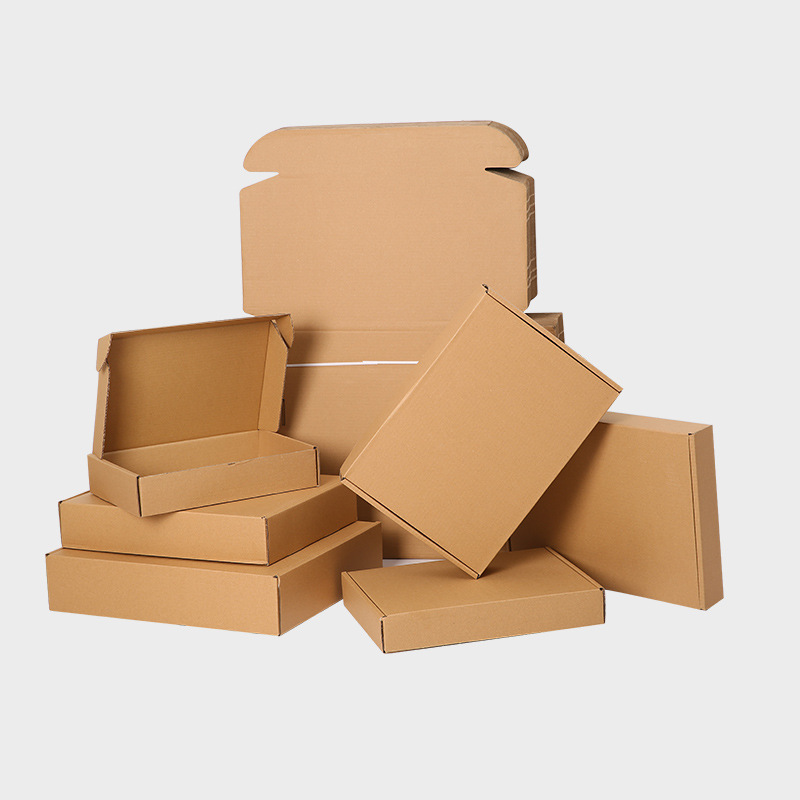
Many shippers assume that as long as a crate fits inside the aircraft door, ground handlers can wheel it straight onto the main deck. That assumption falls apart at Chinese hub airports, where unit load devices are pre-assembled around a narrow envelope of dimensions and center-of-gravity limits. A pallet that weighs less than the posted maximum but is slightly too tall or too long forces the cargo team to break it down and re-stack boxes by hand, often at a stand in the rain. The delay isn't from the airplane itself — it's from the sorting and buildup zone, where every oversized piece has to wait for a specialized high-loader and a certified rigging crew.
The real friction shows up with dense, compact freight that looks harmless on paper. A single crate of industrial bearings can weigh 900 kilograms but occupy barely a meter of floor space. On a standard PMC pallet, that concentration exceeds the allowable pounds-per-square-foot for many narrow-body flights out of Shanghai or Guangzhou. Ground staff then have to spread the load across steel plates or downgrade the shipment to a lower-deck freighter slot, which may not depart for another day. The weight-size trap is not about breaking hard limits — it's about the mismatch between what sales teams quote and what ramp supervisors will accept without signing a deviation report.
This bottleneck gets worse when multiple high-density pieces arrive at the same export window. Cargo terminals in Zhengzhou and Chengdu often assign only one or two build-up bays for non-standard ULDs. A delayed breakdown on a hydraulic lift can idle an entire truck queue, each vehicle holding goods that were booked on the same evening departure. In practice, Chinese airports move millions of tons efficiently, but the exceptions cluster around shipments that are neither fully containerized nor purely loose. Those in-between dimensions and weights create a twilight zone where paperwork says “ready to load,” yet the physical transfer keeps pushing the cut-off later into the night.
Why Moisture Ends Up Inside Sealed Boxes Mid-Flight
Most "sealed" shipping boxes aren't truly airtight. They're taped shut, but the cardboard still breathes through seams, corners, and staple holes. At ground level, the air trapped inside carries a certain amount of water vapor. Once the aircraft climbs, the cargo hold temperature drops sharply—often to near freezing. Cold air can't hold as much moisture as warm air, so that vapor condenses into tiny droplets on the inside walls of the box and on whatever is packed inside.
Pressure changes add a second push. As the plane gains altitude, cabin and cargo hold pressure is reduced. Air inside the box expands and escapes through gaps. When the plane descends, the outside pressure rises again, and fresh, humid air is drawn back into the box. If the destination is a tropical or rainy location, that incoming air carries even more moisture, which then condenses as temperatures stabilize.
The packing materials themselves can also be a source. Cardboard, paper, and wood absorb humidity while sitting in a warehouse or on the tarmac. At cruise altitude, the lower pressure encourages that trapped moisture to migrate out of the materials and into the box's airspace. As the flight progresses and temperatures fluctuate, this released water ends up as condensation on the products or inside plastic wrapping.
Marking Habits That Make Customs Inspectors Pause
A shipment's paperwork might look perfect, but a single odd marking on the crate can trigger a longer inspection. Inspectors often slow down when they see handwritten labels that don't match the typed manifest, or when country-of-origin marks are missing, smudged, or placed in an unconventional spot. These small inconsistencies suggest a rushed packing job or an attempt to obscure the true route of the goods.
Other red flags include reused boxes with old barcodes or shipping labels still visible, or markings that use non-standard abbreviations for common terms like "FRAGILE" or "THIS SIDE UP." If a container shows multiple sets of tracking numbers that have been partially scratched off, that's a sure way to have every pallet pulled aside. The habit of never cleaning old marks off returnable crates can make a routine shipment look like a mystery to unravel.
Even the ink itself matters. Markings made with cheap, easily smeared pens or with large, uneven stamp pressure can signal a low-budget operation that might cut corners elsewhere. On the flip side, excessively neat, almost typographic handwriting in an unusual language can also raise eyebrows, especially if it contradicts the declared origin. Inspectors are trained to pause when the physical marks don't tell a straightforward story.
Tape and Corner Reinforcements: The Difference Between Intact and Crushed
A corner bead that keeps its original profile does more than look straight; it gives the joint enough rigidity to resist the daily bumps and settling that every room goes through. When the reinforcement is intact, the tape or bead sits tightly against the framing, so the joint compound can be feathered out evenly and the corner line stays crisp. You can usually spot this by running a hand along the edge—there’s a continuous, unbroken plane from one side to the other. The difference shows up later, too: an intact corner won’t telegraph hairline cracks through the paint after a few seasons of humidity shifts.
Crushed reinforcement, on the other hand, never really recovers once the metal or paper has been bent inward or flattened. Even if the face looks acceptable after mudding, the damaged area creates a weak hinge. Over time, that spot becomes the first place to chip, dent, or open up under minor impact. The fix usually means cutting out the crushed section and splicing in a new piece rather than trying to build it back with extra compound—because no amount of topping mud can restore the structural spine that was lost.
Balancing Dimensional Weight Without Inviting Damage Claims
Many shippers react to dimensional weight pricing by cutting box sizes to the absolute minimum, only to see breakage rates climb and customers demand refunds. The real goal is not the smallest possible carton, but the lightest protective design that still absorbs the shocks of real-world handling. That often means replacing heavy void fill with engineered air pillows or molded pulp inserts, which add almost no billable weight while preventing movement inside the box.
A practical approach starts with testing your current packaging under carrier-like conditions: drop tests from conveyor heights, vibration tables, and compression checks. Record where damage occurs and adjust only those areas, rather than adding blanket layers of bubble wrap. In many cases, a slightly larger box with strategic corner protection will ship for the same dimensional weight tier as a tight-fitting one, yet cut damage claims by half.
Over time, keep a running log of damage complaints alongside package dimensions and weight. That data will reveal which products truly need extra cushioning and which ones can safely travel in slim envelopes or poly bags. The balance is dynamic: as your product mix changes, revisit your packaging rules so you never pay for excessive air, nor pay out for broken goods.
FAQ
An airplane box refers to the corrugated or honeycomb cardboard carton commonly used by Chinese exporters for air cargo. It is lighter than wooden crates, usually with a burst strength of at least 275 pounds per square inch, and sized to fit standard ULD contours so you do not waste chargeable volume.
The most common failure comes from using single-wall board where double-wall is required. Forklift clamps and conveyor transfers put uneven stress on the box edges, especially when the carton is overpacked. If the box flexes more than 10 mm when pressed at the midpoint, it will likely split during transit.
Keep the longest side under 120 cm and the height under 100 cm if possible. Carriers often charge dimensional weight, so a box that is tall and narrow wastes money. A practical ratio is length to width no more than 3:1, which keeps stacking stable inside the aircraft hold.
Every box needs at least three labels: the air waybill number, the full destination address with a local contact phone number, and the handling marks such as Fragile or This Side Up. If the goods are consolidated, show the HAWB and MAWB numbers separately so ground handlers can split the shipment without cutting open the box.
Use anti-static bubble wrap around each unit, then place the units in a rigid divider inside the box. Add at least 5 cm of crush space on all sides. For lithium batteries, follow the 30% state-of-charge limit and cover terminals with non-conductive tape, and mark the box with the lithium battery handling label as required by IATA.
Yes, Guangzhou and Hong Kong hubs often expose cargo to high humidity during ramp transfers. Wax-coated or moisture-resistant cardboard is worth the extra cost because regular kraft liners can lose up to 40% of their strength when damp. Include a silica gel pack only if the product tolerates it; desiccant powder can leak and trigger a contamination inspection.
Switch to plywood or reinforced honeycomb crates when the gross weight exceeds 70 kg per box, when the box holds liquids or heavy metal parts, or when the cargo passes through more than two transshipment points. A standard airplane box cannot survive repeated manual handling by different ground crews.
Missing the packing list line item that matches the box number is the top issue. If the declared gross weight differs from the scale weight by more than 3%, customs may place the box on hold. Always number every box and record the exact dimensions and weight on the packing list before the truck reaches the terminal.
Conclusion
The real test of a Chinese air freight carton often happens long after the lab report is filed. Ground crews stack containers tight, forklift tines clip corners, and pressure changes during climb and descent work on every seam. Boxes that pass static compression tests can still fail at the corners, so adding extra tape along edges and using corner boards or plastic protectors is cheap insurance against a crushed shipment. The weight-size trap is just as unforgiving. A carton declared a few centimeters over or a kilogram heavier than the paperwork gets pulled aside for re-measurement, breaking consolidation timelines at Chinese airports and piling on storage fees while the clock runs.
Moisture trapped inside a sealed box is rarely from outside leaks. Humid air packed at ground level condenses when the hold cools at altitude, leaving goods damp even though the tape never peeled. Marking habits also matter. Vague descriptions, missing handling symbols, or smeared barcodes make customs inspectors pause, and once a box is opened for inspection, the original seal is gone and repacking is rarely as careful as the first pack. Balancing dimensional weight with protection is the final calculation. Shaving box volume too hard saves freight but invites sidewall flex and edge damage. A slightly larger carton with proper internal bracing often avoids a damage claim that wipes out any dimensional weight savings.
Contact Us
Contact Person: Tan Xiang
Email: [email protected]
Tel/WhatsApp: 8613798906863
Website: https://www.dgkjzx.com