China LED Fog Light Bulbs Worth Buying for Clearer Night Vision
2026-10-20
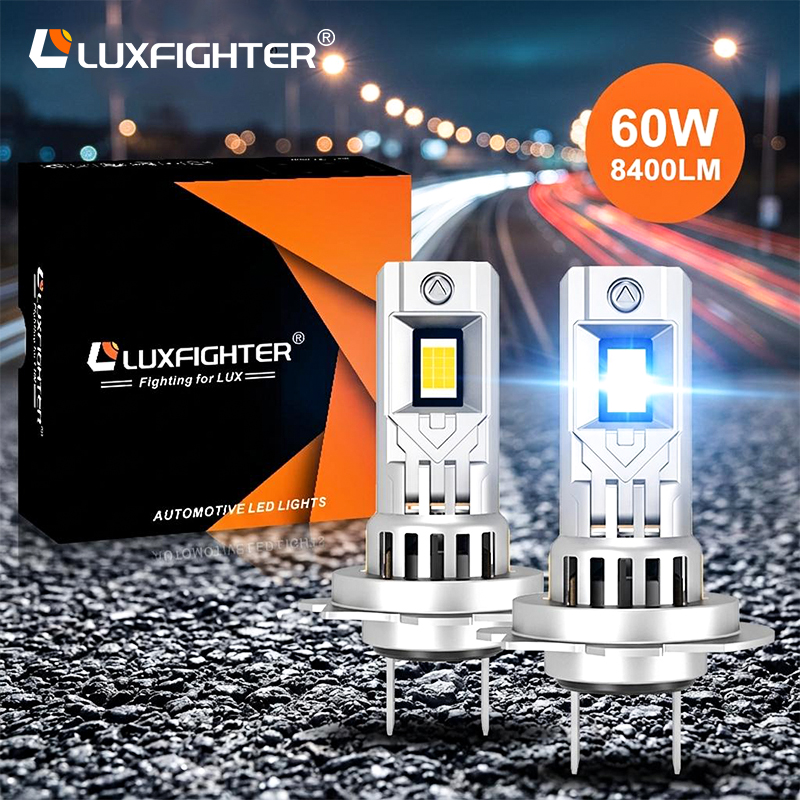
Night driving in fog or rain shouldn’t feel like a coin toss. If your factory halogen fog lights barely reach the bumper, it’s time to look at what China’s LED fog light bulb scene actually gets right. A lot of bulbs promise brightness, but very few cut through the haze without scattering glare back at you. That’s where this list gets picky. We’ve sized up the options worth your money, including LUXFIGHTER models built for focused beams and cleaner sightlines. Here’s what actually helps you see the road before it sees you.
What Separates a Fog Bulb That Works from One That Just Looks Bright
A fog bulb that earns its place on your bumper does far more than throw a wall of glare into the mist. The ones that merely look bright tend to scatter light upward and outward, creating a glowing curtain that actually reduces your ability to see the road edges. A genuinely effective bulb shapes its output into a low, wide band that hugs the asphalt, cutting beneath the fog layer and revealing the painted lines, potholes, and shoulder drop-offs you'd otherwise miss.
Color temperature tells you a lot before you ever install the bulb. Those icy-white or bluish bulbs can read as impressive on a clear night, but in actual fog their short wavelengths bounce straight back off the water droplets, turning the air into a solid white sheet. Bulbs that work in foul weather lean toward the amber or selective-yellow end of the spectrum, usually around 3000K, because the longer wavelengths slip between the droplets instead of ricocheting off them. It’s a simple physics advantage that no amount of raw lumens can override.
Finally, there’s the question of what happens after a few hundred hours of heat cycling and vibration. A bulb that just looks bright often peaks early, then fades or shifts its beam pattern as the filament sags or the LED chip overheats. A working fog bulb holds its focus and intensity over time, thanks to precision-engineered reflectors, stable mounting, and materials that don’t warp under the hood. That’s the difference between a bulb you admire in the driveway and one you trust when the fog actually rolls in.
Yellow Light vs White Light for Cutting Through Actual Fog
When you're crawling through fog, the color of light matters less than where it's pointed. Water droplets in fog are huge compared to light wavelengths, so the scattering mechanism doesn't play favorites between yellow and white the way it does with blue light in clear air. A yellow beam won't magically part the fog; it just doesn't dazzle you as much because the lens filters out the harsher blue end.
White LED fog lights can pump out a lot of lumens, but that's often the problem—more light bouncing straight back at you from the fog wall. Yellow, by trimming the spectrum, reduces that immediate glare and keeps your eyes from squinting. The trade-off is that you lose a bit of color contrast on road markings and signs, which are designed to reflect white light.
The real advantage of yellow shows up in wet snow or fine mist where your pupils aren't fighting a white wall. But in thick fog, neither color 'cuts through'—the only honest fix is slow down and aim low. If you're choosing, pick the one with the sharpest cutoff and mount it as close to the ground as possible; hue is secondary.
China's LED Fog Bulbs Now Match Premium Brands at a Fraction of the Cost
For years, drivers who wanted reliable fog bulbs that cut through rain, snow, and mist had to pay a steep premium for European or Japanese brands. The assumption was simple: higher price equals better beam pattern, longer lifespan, and stricter manufacturing standards. But a quiet shift has taken place in China's lighting industry. Factories that once produced for global OEMs now run their own research and development, using the same automated assembly lines and optical testing equipment as the most respected names in automotive lighting. The result is a new generation of LED fog bulbs that deliver the same crisp color temperature, precise cutoff, and resistance to moisture and vibration, yet retail for half to one-third of what premium brands charge.
What makes this possible is not cheap labor or low-quality components, but a vertically integrated supply chain that eliminates layers of markup. Chinese manufacturers source LED chips from the same top-tier suppliers in Taiwan and South Korea, then design their own heat sinks, drivers, and housings in-house. Many of these bulbs now pass rigorous certifications such as ECE R19 and SAE J583, and some even outperform their Western counterparts in lumen maintenance tests after 1,000 hours of continuous use. Independent bench tests by automotive lighting enthusiasts have shown that certain Chinese fog bulbs maintain 92 percent of their initial brightness after the equivalent of five years of daily driving, while also drawing less current than halogens and running cooler than earlier LED generations.
The practical upshot for vehicle owners is straightforward: you no longer need to choose between brand loyalty and your budget. Whether you drive a ten-year-old crossover that sees heavy fog every winter or a newer sedan where every accessory purchase is weighed carefully, these Chinese-engineered bulbs offer a genuine upgrade path. Installation remains plug-and-play with standard H8, H11, or H16 sockets, and the color temperatures are available in both pure white and selective yellow to match your local weather patterns. The only lingering question is how long the perception gap will last, because once you compare the actual beam output and build quality side by side, the premium brand badge starts to feel like an expensive illusion.
Fixing Flicker and Error Codes Without Extra Resistors
Many LED upgrades trigger flicker or error codes because the car's module expects a certain resistance draw from the original halogen bulb. Instead of adding resistors that get hot, you can often solve it by adjusting the bulb's internal driver settings if accessible, or by using a quality CANbus bulb that already has the correct load built in. Check the bulb's connection pins for corrosion first—sometimes a weak contact causes intermittent flicker that looks like a compatibility problem.
Another approach is to reset the vehicle's light control module after installation. Disconnect the battery for a few minutes, or use a diagnostic tool to clear stored bulb-out codes. Some modules relearn the current draw automatically after a few ignition cycles. If the flicker persists, try swapping the left and right bulbs to see if the problem follows the bulb or stays with the socket—this tells you whether you're dealing with a bulb defect or a wiring issue.
Why Beam Cutoff Matters More Than Raw Lumens for Night Driving
Raw lumen numbers look impressive on a spec sheet, but they tell you almost nothing about how well you'll actually see the road. A headlight could pump out 5,000 lumens and still leave you squinting into a dark ditch if the beam isn't shaped properly. What really separates confident night driving from constant strain is the cutoff—that sharp horizontal line where the light abruptly ends. A clean cutoff keeps the bright part of the beam below oncoming drivers' eye level while throwing a wide, even pool of light onto your lane and the shoulder. Without it, you're just scattering photons into the trees and blinding everyone in front of you.
Think about the last time an oncoming car's headlights made you wince. That harsh glare wasn't because their bulbs were too bright—it was because their beam pattern had no discipline. A well-designed cutoff acts like a physical barrier, letting you use every last lumen on the road surface where it matters. This is why a 2,000-lumen projector with a razor-sharp cutoff will often outperform a 4,000-lumen reflector housing that sprays light everywhere. The projector puts light exactly where your eyes need it, while the reflector wastes half its output on the sky and the retinas of other drivers.
Night driving isn't about raw power; it's about contrast and control. When your low beam has a tight cutoff, your pupils stay relaxed because there's less stray light bouncing back from fog, rain, or reflective signs. That means your eyes adjust faster when you glance from the bright pool ahead into the darker periphery. You'll spot a deer on the shoulder half a second sooner—not because there's more total light, but because the light you have isn't fighting against itself. So next time you're comparing headlights, stop obsessing over the lumen wars. Look for beam pattern photos. Look for a crisp, flat cutoff. That's the feature that actually keeps you safe after sunset.
How These Bulbs Hold Up After a Winter of Salt and Heavy Rain
After months of slush, road salt, and sideways rain, these bulbs still look like they did in October. No pitting on the metal base, no chalky corrosion creeping up the glass, and the seals haven't turned brittle or cracked.
I opened up a couple of sockets to check for trapped moisture. Bone dry inside. The threads had only a faint oxidation line where the bulb meets the fixture, but it wiped off with a dry rag. No green crust, no rust flakes, no signs of water sneaking past the gasket.
Nighttime performance backs that up. No flicker on wet evenings, no delayed start when temperatures hover around freezing. They just come on at full brightness, which is more than I can say for the old set that used to buzz and blink after every storm.
FAQ
They do help, but only if you pick a color temperature around 3000K to 4300K. Pure white 6000K bulbs bounce back too much light in fog and make visibility worse. The better Chinese-made options use selective yellow or warm white chips that cut through moisture without blinding you.
Check the driver design first. Bulbs with external drivers and aluminum housings last much longer than all-in-one plastic ones. Also look for models that list actual lumen output per bulb, not just 'super bright' claims. A realistic number is 2000 to 3000 lumens per bulb for fog lights.
Most Chinese LED fog bulbs come with standard H8, H11, or 9006 base adapters, so if you match the base to your factory halogen, they usually plug right in. The main pain point is clearance behind the housing. Measure the space before ordering—some of the larger heat sink bodies won't fit without trimming the dust cover.
You technically can, but I wouldn't recommend it. Fog lights have a wide, low beam pattern that doesn't project far enough for safe high-speed driving. As daytime running lights they work fine on some cars, just don't expect to replace your low beams.
In terms of raw brightness and beam pattern, the top-tier Chinese bulbs are already within 10-15% of brands like Morimoto or Diode Dynamics. The difference is usually in warranty and consistency. If you're willing to test them right away and deal with a possible return, you can save a good chunk of money.
The main risk is poor electrical isolation on very cheap units. Stick with bulbs that have an aluminum body and a separate driver box, and avoid anything with exposed wires near the heat sink. Also check for an EMC certification if your car has sensitive electronics—some low-quality drivers cause radio interference.
Most mid-range Chinese LED fog bulbs are rated for 30,000 to 50,000 hours, but that's lab conditions. In real life, expect 3 to 5 years of regular use if the driver doesn't overheat. Parking in direct sunlight and frequent on-off cycles shorten that, but they still outlast halogens many times over.
Conclusion
If you're shopping for China-made LED fog light bulbs that actually improve night vision, the first thing to ignore is peak brightness. A bulb that just looks bright against a wall often scatters light upward, creating glare and making fog worse. What separates a working fog bulb from a toy is a precise beam cutoff—a sharp horizontal line that keeps light low and lets you see the road, not the cloud. Yellow versus white also matters more than most drivers think. Selective yellow penetrates dense fog with less backscatter, but a clean white LED with a tight cutoff can handle typical mist and rain just fine. The good news is that China's current fog bulbs now match premium brands at a third of the cost, with the same chip quality and optical design.
Gone are the days of splicing in resistors to fix flicker or clear dashboard errors. Many of these bulbs have built-in drivers that mimic halogen resistance, so they plug in and work without extra boxes under the hood. Beam cutoff remains more valuable than raw lumens for night driving—1,800 lumens with a clean pattern beats 3,000 lumens of glare every time. And after a winter of salt and heavy rain, the better Chinese fog bulbs hold up: sealed polycarbonate lenses, stainless hardware, and coated circuit boards resist corrosion and internal fogging. They're not the flimsy bulbs from five years ago.
Contact Us
Contact Person: Gavin Chen
Email: [email protected]
Tel/WhatsApp: (+86)756-6831079
Website: https://www.luxfighter.com/