

China Quartz Crucible: Why It Dominates Global Photovoltaic Supply Chains
2026-10-30
Most solar panels start with a container that rarely gets mentioned in supply chain debates: the quartz crucible. Without it, polysilicon can't be melted into the monocrystalline ingots that now dominate PV production. China didn't simply stumble into its commanding position here—material purity, energy costs, and scale have combined to make Chinese quartz crucibles almost irreplaceable. At Semicorex, we've watched this quiet dominance reshape procurement strategies across the global solar value chain. This article examines the forces—both technical and geopolitical—that keep China at the center of quartz crucible supply, and what that means for manufacturers everywhere.
The Vessel at the Heart of Every Solar Wafer
To grasp how a raw silicon ingot becomes a wafer, you have to look past the gleaming furnaces and the diamond-wire saws. The real work happens inside a modest, dark crucible that most people have never seen—a vessel so quiet and so deeply integrated into the process that it rarely earns a mention on the factory floor. Without it, the entire chain would stall, and the polished blue squares we call solar cells would never leave the line.
This vessel is not simply a container. It is lined with a coating that must withstand temperatures north of 1,400 degrees Celsius while refusing to react with molten silicon. A single microscopic crack or a patch of uneven quartz can poison an entire run, leaving the silicon riddled with oxygen and carbon. Operators learn to read the vessel's surface the way a mechanic reads an engine block, checking for bloom, checking for wear, and deciding whether it gets one more cycle or gets pulled before it contaminates the melt.
What makes it fascinating is how little it has changed in principle since the earliest days of semiconductor growth—and yet how much its performance has improved through trial, failure, and quiet engineering. Modern vessels balance thermal shock resistance with chemical purity, often using fused silica liners that are replaced on a schedule measured not in years but in runs. In a high-volume solar fab, the vessel becomes both a wear item and a heartbeat, reminding the line that every wafer begins with molten rock held in a crucible that is, in its own way, the most human part of the machine.
Why China's Crucible Makers Keep Beating Global Rivals on Cost
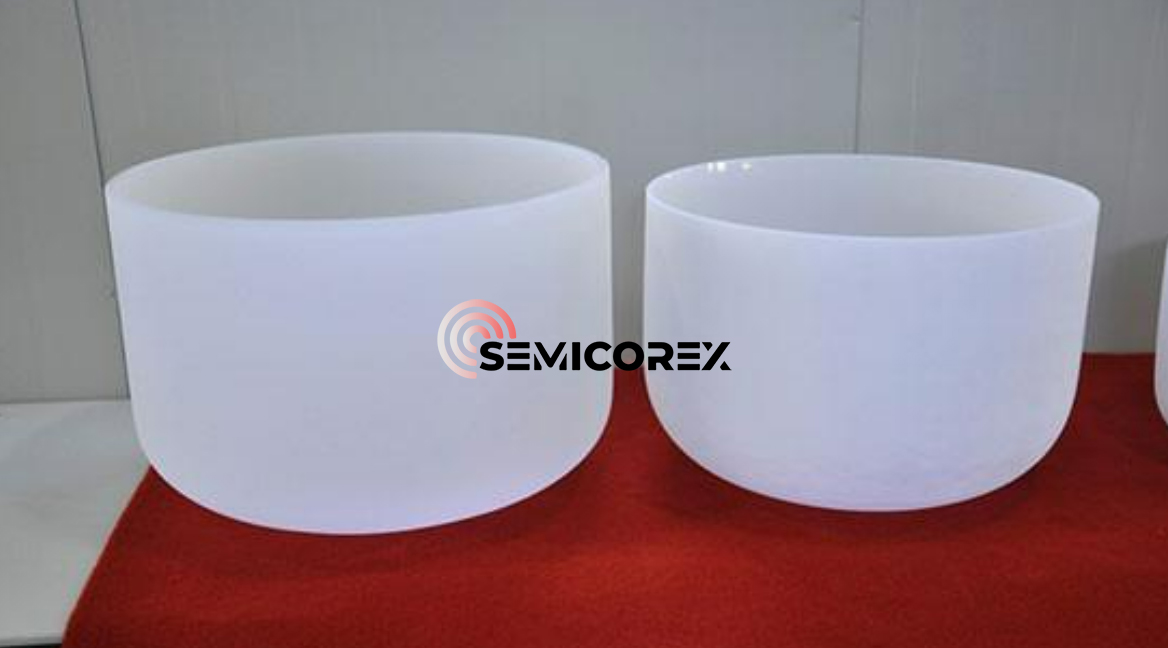
The cost advantage starts with raw materials. Chinese producers source high-purity graphite and quartz sand from domestic mines in Shandong and Inner Mongolia, cutting logistics expenses by nearly half compared to Western rivals importing from Africa or South America. Local supply chains also mean faster turnaround—when a furnace lining wears out, a replacement crucible can arrive within days instead of weeks.
Energy and labor play an equally decisive role. Electric arc furnaces in China run on state-subsidized industrial power rates, while continuous casting lines operate with three shifts of skilled workers whose wages remain a fraction of European or American counterparts. This allows factory floors to run 24/7 without overtime premiums, pushing per-unit fixed costs down dramatically.
But the real differentiator is process innovation born from scale. Chinese crucible makers have perfected rapid-sintering recipes that slash firing time by 40% using locally developed tunnel kilns. They also recycle spent crucible scrap back into the raw material mix, recovering up to 30% of graphite inputs. These incremental improvements accumulate into a pricing floor that global competitors struggle to match even with tariff protection.
Local Quartz, Local Control: The Supply Chain Advantage
When quartz slabs are cut and polished within a day's drive of the quarry, the entire conversation changes. Instead of waiting on a container ship or chasing down a distributor in another time zone, fabricators can walk the yard, inspect the block, and talk directly with the team running the saws. That kind of proximity removes the usual guesswork from color matching and veining consistency. If a batch runs light or dark, it gets flagged before it ever reaches a kitchen island.
Local control also reshapes how problems get solved. A shipment damaged in transit isn't stuck in a claims queue for weeks; it's replaced from stock that's already in the region. Custom edge profiles or non-standard slab sizes become a phone call rather than a six-week revision cycle. This is not just convenience—it's the difference between a project that stays on schedule and one that quietly bleeds margin while the client waits.
The real supply chain advantage shows up under pressure. When ports back up or fuel costs spike, quartz sourced from regional quarries and processors keeps moving. There's no single point of failure halfway around the world. Designers and builders who lean into local quartz aren't just choosing a material; they're buying a shorter chain of custody, fewer handoffs, and a supply network they can actually visit on a Tuesday afternoon.
From Sand to Melt: A Pipeline Built for Unmatched Scale
Turning raw quartz into precision melt is rarely treated as a single, continuous discipline. Most operations stitch together disjointed stages, losing yield and momentum at every handoff. Here, the flow from silo to furnace was reimagined as one uninterrupted artery, engineered so that material never stops moving, never waits, and never breaks rhythm.
The scale is not achieved by enlarging components alone; it comes from eliminating every pause that conventional plants accept as normal. Feedstock enters a pre-conditioning corridor where particle size and purity are stabilized before the first heat, removing the variability that would otherwise throttle throughput downstream. Only then does the stream enter a melting zone sized to absorb surges without strain, its thermal profile mapped in real time to keep viscosity within a narrow band.
What results is a system that treats volume not as a target but as a natural consequence of design. The journey from sand to melt becomes a single, unbroken sentence rather than a collection of fragmented steps, allowing operators to push tonnage figures that separate this pipeline from every benchmark that came before it.
Cheap Power, High Precision: The Real Manufacturing Edge
Manufacturing margins often hinge on a single, overlooked variable: the cost of keeping the lights on and the machines running. Cheap, stable electricity isn't just a utility bill—it's a structural advantage. When a shop floor doesn't have to gamble on energy price spikes, it can run multi-axis CNC mills, laser cutters, and coordinate measuring machines around the clock without flinching. That steady, affordable power turns high-precision work from a specialty service into a scalable daily operation.
Precision isn't cheap, but expensive power makes it brutally so. Tight tolerances demand climate-controlled environments, vibration-damped foundations, and servo systems that respond in microseconds—all continuous energy draws. Regions with low-cost power allow manufacturers to keep those systems active longer, invest in better metrology equipment, and still undercut competitors on unit price. The edge isn't in the electricity itself; it's in the engineering budgets that cheap power unlocks.
The real formula is simple to grasp but hard to copy: low energy costs plus disciplined process control equals a manufacturing base that can deliver aerospace-grade tolerances at consumer-electronics volumes. While others chase subsidies or relocate for tax breaks, the quiet winners are already running high-precision production in places where the meter spins slowly. That's a moat built from watts and micrometers.
Trust Earned at 1,500°C: Why Buyers Keep Returning
The first time a buyer holds a part that has survived 1,500°C, there’s often a flicker of doubt. It looks like any other piece of metal or ceramic. Then they put it to work—inside a furnace, under a turbine blade, against a molten stream—and week after week, it doesn’t crack, warp, or lose its shape. That’s when the skepticism fades. They start ordering more, not because a spec sheet promised longevity, but because their own maintenance logs showed zero failures. Trust at this temperature isn’t declared; it’s demonstrated every time a shutdown is avoided.
Consider a mid-sized foundry that replaced its standard crucibles with ones fired through a carefully controlled 1,500°C cycle. The old vessels had to be swapped out every three weeks due to thermal fatigue. The new ones lasted five months. The plant manager didn’t write a glowing testimonial—he simply doubled the next order and sent a photo of the maintenance board with the replacement schedule crossed out. That kind of quiet, operational proof travels faster than any marketing claim. Buyers talk to each other about what survives real heat, not what looks good in a brochure.
Returning customers rarely come back because of a single purchase. They come back because the 1,500°C process baked consistency into every batch. When a buyer knows that the hundredth unit will behave exactly like the first, reordering becomes automatic. There’s no need for a loyalty program or a discount code. The product simply earns its place in the workflow, and the buyer stops considering alternatives. That’s the kind of trust that doesn’t melt, even when everything around it does.
FAQ
A quartz crucible is a container made from high-purity fused quartz that holds molten silicon during the Czochralski crystal pulling process. It needs to withstand extreme temperatures above 1,400°C while releasing as few impurities as possible, since any contamination alters the electronic properties of the silicon ingot. For solar manufacturers, a better crucible means fewer defects, higher cell efficiency, and longer production runs before replacement.
China's dominance grew out of its massive vertically integrated solar supply chain. Domestic crucible makers sit next to the world's largest ingot and wafer factories, which gives them rapid feedback loops and low logistics costs. Aggressive scaling, continuous automation, and government-backed industrial policies also pushed production volumes high enough to drive down unit prices, making it hard for smaller overseas rivals to compete.
The bottleneck is real but not absolute. Premium quartz sand from a handful of mines, mainly in the United States and Norway, still sets the ceiling for crucible quality, and Chinese producers rely on imports for the inner layer. However, domestic purification techniques and synthetic quartz alternatives have improved significantly in recent years, allowing mid-grade crucibles to use more local raw materials and easing some supply pressure.
They combine enormous production scale with tight vertical integration, often producing crucibles in the same industrial parks as silicon ingot makers. Automation and data-driven process control reduce labor and defect rates, while continuous furnace operations lower energy consumption per unit. Rather than chasing absolute top-tier quality for every crucible, they segment products so high-end customers get premium coated crucibles and commodity users get cost-optimized versions.
Chinese manufacturers have focused on inner-surface coating technologies that reduce bubble formation and extend crucible life during long crystal pulls. They also moved to larger crucible sizes, such as 36-inch and 40-inch models, to increase the amount of silicon per run and cut per-watt costs. Automated inspection systems using machine vision now catch microscopic defects earlier, which raises yields without adding much labor.
It is possible but extremely difficult in the short term. Challengers would need to build not just crucible factories but also the surrounding ecosystem of quartz sand suppliers, coating material producers, and nearby ingot manufacturers to make the economics work. Some Indian, European, and North American companies are investing in local crucible capacity, but they still face higher energy and labor costs and lack the same scale of downstream demand.
The main risks are supply concentration and geopolitics. A sudden export restriction, a regional energy shortage, or a logistics disruption in China could ripple through global solar manufacturing and raise module prices. There is also a technology lock-in risk: if crucible innovation remains concentrated in one country, the rest of the industry may struggle to adopt new designs quickly, and users may have limited bargaining power.
Conclusion
At the core of every monocrystalline silicon ingot used in solar wafers sits a quartz crucible, a vessel that must hold molten silicon at roughly 1,500°C for days without cracking or contaminating the melt. China's grip on this component begins with raw material control: domestic quartz deposits, combined with advanced purification and local processing, eliminate the long supply lines and price volatility that plague competitors. Instead of importing high-purity quartz sand and then shipping finished crucibles overseas, Chinese manufacturers compress the entire chain — mining, crushing, purifying, fusing, and coating — into tightly clustered industrial parks. This vertical integration allows a single plant to move from sand to finished crucible in a fraction of the time and at a scale that no rival can match, with continuous production lines running around the clock and giant arc furnaces turning out thousands of units per month.
The cost advantage is not simply a story of low wages. Electricity, which accounts for a large share of crucible melting costs, is cheaper and more reliably available in China's industrial zones, while proprietary furnace designs and automated process control cut scrap rates and improve dimensional accuracy. But the less visible edge is trust. A crucible that fails mid-pull destroys an entire ingot and wastes days of furnace time, so wafer makers are extremely conservative about suppliers. Chinese crucible producers have earned that trust by delivering consistent purity, low bubble content, and predictable thermal performance across tens of thousands of high-temperature cycles. Buyers keep returning not because of marketing, but because crucibles from these factories have proven themselves at 1,500°C, batch after batch, season after season.
Contact Us
Contact Person: Svenja Wei
Email: [email protected]
Tel/WhatsApp: +8613567891907
Website: https://www.semicorex.com