

China Tubular Steel Towers Solution for Durable and Cost-Effective Power Networks
2026-09-08
Power grid expansion across rugged terrain demands towers that won't buckle under pressure or drain budgets. That's where China's tubular steel tower expertise shines, and Anbang has spent years refining a solution built to last. Discover how their approach cuts long-term costs without sacrificing structural integrity.
How Chinese Tubular Steel Towers Extend Service Life in Corrosive Environments
Corrosion eats away at ordinary steel towers within a decade, but Chinese manufacturers have turned this threat into a manageable design parameter. The key lies not in a single magical coating, but in a layered strategy that starts at the material level. High-grade weathering steel, often alloyed with small amounts of copper, chromium, and nickel, forms a dense, adherent rust patina that acts as a protective skin. Unlike conventional carbon steel, this patina does not flake away; instead, it slows further oxidation dramatically, effectively extending the tower's structural life even in coastal or industrial atmospheres loaded with salt and sulfur compounds.
Beyond the base metal, surface preparation and coating systems are engineered for longevity rather than just initial appearance. Shot blasting to a near-white finish creates a clean, rough profile that anchors zinc-rich primers deeply. Hot-dip galvanizing remains the workhorse, but modern Chinese mills often apply a duplex system: a thick galvanized layer followed by high-build epoxy and polyurethane topcoats. This combination resists both galvanic corrosion and UV degradation, preventing the tiny scratches and holidays that typically become corrosion nucleation sites. Field joints and bolt holes—notoriously weak points—receive extra attention with cold galvanizing compounds and sealing washers.
Finally, design details reduce moisture traps and promote drainage. Tubular towers avoid the crevices and overlapping plates common in older angle-iron structures. Sealed internal spaces, rubber gaskets at flanges, and weep holes at the base prevent standing water from collecting. Access doors and cable entry points use double-sealed designs tested under salt spray for thousands of hours. The result is a tower that shrugs off the corrosive environments that would shorten the life of a cheaper structure by half or more, making it a dependable choice for wind farms, transmission lines, and telecom networks in the harshest coastal regions.
The Hidden Cost Savings Behind Modular Power Transmission Structures
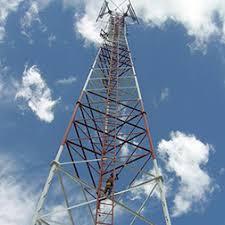
Most budget discussions around modular power transmission structures start and end with the upfront price per ton of steel. That misses the real story. Because the components are designed for repeatable assembly, the time from ground-breaking to energized line shrinks dramatically. Fewer crane days, smaller crews, and far less on-site welding translate into expenses that never show up as a line item on the materials invoice. When a project avoids weeks of weather delays and traffic control, the cost difference is felt across the entire schedule.
Foundations are another quiet lever. Modular structures are lighter and more predictable in their load paths, so they often require less concrete and fewer deep excavation hours. On congested or remote sites, reducing the amount of material hauled in and the number of trucks moving through constrained corridors avoids fueling, permitting, and restoration costs that traditional lattice towers quietly pile up.
Then there is the salvage value. A modular tower that can be unbolted and relocated holds its usefulness beyond the first deployment. Utilities that reconfigure lines or face changing easements can reuse the same hardware instead of scrapping it. That kind of optionality never appears in a bid comparison, but it quietly changes the lifetime economics of a transmission asset.
Precision Welding and Galvanizing: A Closer Look at Manufacturing Quality
Precision welding demands more than steady hands and a good machine. Every joint has to hold under stress, weather, and time. Our welders work from detailed schematics, checking fit-up and penetration on each pass. Small deviations get corrected before the next bead goes down. That kind of discipline keeps structural failures off the table long after the product leaves the shop.
After welding, galvanizing adds a layer of protection that raw steel simply cannot offer. We use hot-dip galvanizing to bond zinc to the surface, creating a barrier against corrosion. The process includes thorough cleaning, fluxing, and immersion at controlled temperatures. This isn't a decorative coating; it's a functional shield that extends the life of components exposed to moisture, salt, or industrial chemicals.
Combining these two steps under one roof means fewer handoffs and tighter quality control. Weld areas get inspected before and after galvanizing to ensure no trapped air or uneven coating. The result is a finished piece that looks clean, weighs right, and performs without surprises. For buyers who care about long-term durability, that integration makes all the difference.
Why Utility Planners Choose Tubular Steel for Grid Upgrades
Tubular steel earns its place in grid upgrade plans through a combination of mechanical efficiency and long-term field performance. The closed cross-section resists torsional and flexural loads more effectively than open lattice shapes, allowing utilities to carry heavier conductor bundles without a proportional jump in foundation size. Field crews also appreciate the fewer bolted connections, which cuts both assembly time and the chance of corrosion-related failures at joints.
Another driver is logistics in constrained corridors. A tapered polygonal or round pole can step down in diameter along its height, so a single piece often replaces multiple lattice sections and reduces the number of lifts. That matters when crews are working beside energized lines or in narrow rights-of-way where crane access is limited. Galvanized coatings hold up well against de-icing salts, coastal salt spray, and industrial fallout, which keeps inspections simpler over the asset's service life.
Planners also weigh total ownership cost rather than first cost. Tubular steel typically arrives with shop-applied coatings, pre-drilled davit arms, and welded base plates, so site work is mostly alignment and bolt-up. The result is fewer outage windows for changeovers and a cleaner visual profile that eases community acceptance in urban and suburban upgrades.
Designing for Wind, Ice, and Seismic Loads Without Overengineering
Balancing wind, ice, and seismic demands often pushes engineers toward conservative assumptions that stack safety factors until structures become unnecessarily heavy. A more direct approach starts by examining load simultaneity—wind and ice rarely peak together, and seismic events operate on different time scales than sustained weather loads. By using load combination factors that reflect actual probability rather than worst-case algebra, you can trim material while preserving real-world resilience.
Local climate data matters more than generic code minimums. Instead of applying a uniform ice thickness or a single gust speed across a site, pull historical records and microclimate models to identify which extreme actually governs. In many regions, seismic drift limits will control lateral stiffness long before wind or ice become critical; in others, freezing rain accumulation on exposed members drives section sizes. Tailoring the analysis to the dominant hazard avoids the trap of designing every element for a hypothetical combined event that has never occurred.
Finally, revisit connections and detailing rather than simply upsizing members. Ice loads add self-weight and surface area, wind introduces fatigue and cyclic reversal, and seismic demands ductility. A well-detailed connection with appropriate yield mechanisms can absorb these varied demands far more efficiently than a heavier beam or column. Prototyping or advanced simulation can reveal where reserve capacity already exists, letting you remove material without compromising safety or serviceability.
From Factory to Foundation: Streamlined Delivery for Power Projects
Delivering power infrastructure from manufacturing floor to final installation demands a tightly coordinated sequence that eliminates delays and duplicated effort. By staging modular components at the factory, assembly and quality checks happen under controlled conditions, reducing on-site rework and weather exposure. Each shipment is then planned around project milestones, so transformers, switchgear, and structural steel arrive only when teams are ready to receive them.
Transport logistics are treated as an extension of the production line rather than an afterthought. Specialized carriers, route surveys, and offloading equipment are confirmed well before dispatch, and every crate is labeled with its destination zone and installation priority. This allows site crews to unload directly into laydown areas or even onto pre-positioned foundations, cutting crane time and handling steps.
The result is a delivery model that shrinks the gap between factory acceptance and energized operation. Contractors spend less time sorting materials and more time making connections, while project owners see shorter schedules and fewer lost components. From the first weld in the plant to the final bolt on the pad, each handoff is measured, tracked, and kept moving toward one goal: getting power online without the usual bottlenecks.
FAQ
Tubular steel towers have fewer connection points and a closed cross-section, which reduces corrosion traps and stress concentrations. The smooth surface also sheds ice and wind loads more evenly, helping the structure withstand harsh weather over a longer service life.
Their lighter weight and modular design cut transportation and foundation expenses. The tapered, slip-joint assembly requires fewer bolts and less on-site labor, which shortens construction time and lowers overall installation costs.
Yes, the compact footprint and lighter components make them easier to transport and erect in mountainous, marshy, or hard-to-access areas. They can often be installed with smaller cranes and fewer crews than angle-steel lattice towers.
With hot-dip galvanized finishes and sealed interiors, they generally need only periodic visual inspections and occasional coating touch-ups. The lack of many bolted joints means there are fewer spots where moisture and debris can collect.
Yes, manufacturers can adjust wall thickness, base diameter, and height to match specific voltage requirements, conductor loads, and wind zones. This flexibility supports everything from distribution lines to high-voltage transmission corridors.
Towers are usually produced on automated CNC plasma cutting and bending lines, then welded by certified operators. Dimensional checks and galvanizing thickness tests are performed at multiple stages to keep every section within tight tolerances.
They can be engineered for high wind speeds, heavy ice accumulation, seismic activity, and coastal salt spray. Protective coatings and sealed joints help prevent corrosion in humid, industrial, or marine environments.
Their slender, tapered profile is often considered less visually intrusive than wide lattice structures. In urban or scenic areas, this can ease permitting and improve public acceptance without sacrificing structural performance.
Conclusion
Chinese tubular steel towers have become a practical choice for utilities that need infrastructure to last without inflating upfront budgets. By focusing on hot-dip galvanizing and tight weld controls, manufacturers have tackled the main cause of early failure in coastal or industrial zones: corrosion. The result is a tower that keeps its structural integrity decades longer than older lattice designs, even where salt spray and chemical exposure are constant. At the same time, modular construction has quietly changed the economics. Prefabricated sections cut the number of on-site labor hours, reduce crane time, and shrink the risk of weather delays. Fewer bolts and fewer joints also mean less maintenance over the asset's life, so the true cost per kilometer of line ends up lower than a simple bid comparison would suggest.
Grid planners working on upgrades face a difficult balance: they need structures strong enough for extreme wind, ice, and seismic events, but overbuilding wastes steel and money. Tubular steel lends itself to this because its closed cross-section handles torsion and buckling more efficiently than angles, allowing engineers to fine-tune wall thickness and diameter instead of adding redundant bracing. That flexibility, combined with streamlined factory-to-site logistics, shortens project timelines. When a tower arrives pre-welded, pre-drilled, and ready to set on a prepared foundation, erection crews can move faster and with fewer errors. For a utility juggling load growth, aging infrastructure, and tight capital budgets, the Chinese manufacturing approach offers a direct path to a more resilient grid without the typical cost penalty.
Contact Us
Contact Person: antor khan
Email: [email protected]
Tel/WhatsApp: 8613863903569
Website: https://www.qdabtower.com/