

Custom PVC Wall Panel Hot Stamping Foil: Finding the Best Company for Your Design Needs
2026-07-12
When it comes to custom PVC wall panel hot stamping foil, the details define the design. Whether you're aiming for a sleek metallic finish or a bold textured pattern, the right foil can transform an ordinary panel into a stunning focal point. That's where GUMPTION steps in—offering precision, durability, and endless customization to bring your vision to life. But with so many suppliers making big promises, how do you find a partner that truly delivers? In this blog, we’ll unpack what sets a great hot stamping foil company apart and why your next project deserves the best.
Why Custom PVC Wall Panels Deserve a Touch of Metallic Brilliance
PVC wall panels have quietly evolved beyond their basic, utilitarian roots, becoming a canvas for interior expression. When we infuse them with metallic finishes, the transformation is not just visual—it's atmospheric. These custom panels catch light in ways that flat, painted surfaces never can, throwing subtle reflections that shift with the time of day. That brushed gold accent or cool chrome edge doesn’t merely decorate a room; it sculpts the light, making the space feel more dynamic and considered. It’s a quiet luxury that doesn’t scream for attention but rewards those who notice the details.
What makes the pairing particularly clever is the contrast between PVC's practical nature and metal's perceived opulence. PVC is lightweight, moisture-resistant, and friendly on the budget, yet it rarely gets credit for elegance. A metallic touch bridges that gap beautifully. You get the high-end look of burnished copper or aged zinc without the weight, expense, or complicated upkeep. This combination lets designers and homeowners play with industrial chic or art deco themes on a manageable scale, turning an ordinary wall into a subtle focal point that feels intentionally crafted, not mass-produced.
Hot Stamping Foil and PVC: The Perfect Pair for Lasting Impressions
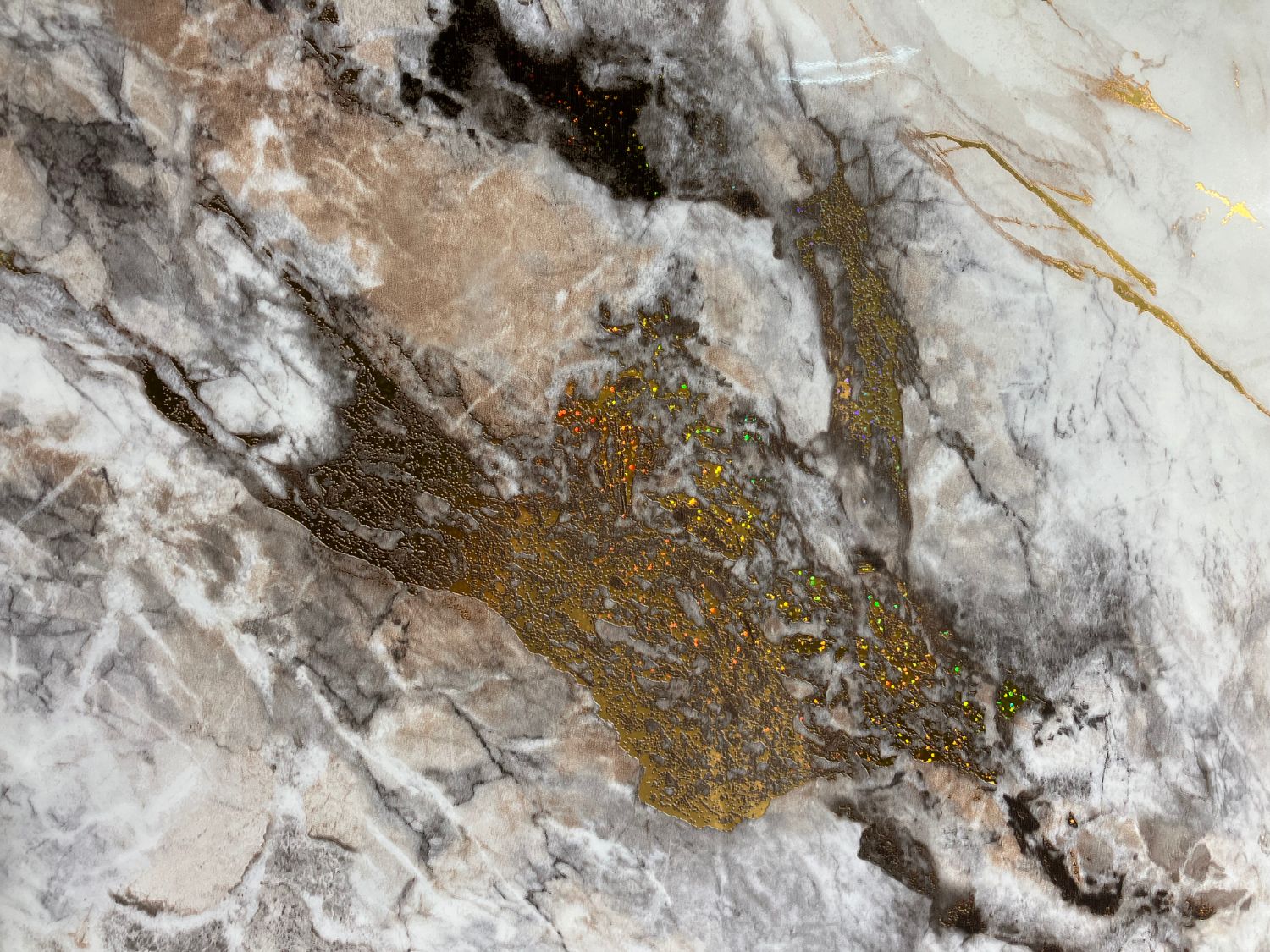
When you need packaging or promotional items that feel substantial and look refined, pairing hot stamping foil with PVC is a combination that rarely disappoints. The process uses a heated die to press a thin layer of metallic or pigment foil onto the PVC surface, fusing it with enough pressure to create a bond that resists peeling or fading. Because PVC can be rigid or flexible, the foil adapts seamlessly, leaving a crisp, mirror-like finish that catches the light in all the right ways.
What makes this duo particularly effective is its staying power. Unlike inks that can scratch or degrade over time, hot stamped foil on PVC withstands regular handling, moisture, and even mild abrasion without losing its brilliance. That's why you'll see it on membership cards, luxury hang tags, and product sleeves that need to hold up under daily use. The tactile contrast between the smooth PVC and the slightly raised foil also adds a subtle, premium feel that's hard to ignore.
From intricate typography to bold logos, the precision of hot stamping allows for detail that remains sharp even after thousands of impressions. Whether you're aiming for a brushed metallic sheen or a high-contrast matte vellum, the foil options blend effortlessly with PVC's naturally glossy or satin finish. It's a straightforward method that turns an ordinary plastic piece into something people instinctively keep—because it simply looks and feels like quality.
Key Traits That Separate Top Manufacturers from the Rest
Truly outstanding manufacturers don’t just meet specifications—they anticipate problems before they arise. Their engineering teams collaborate with clients from the earliest design stages, offering material alternatives or process tweaks that reduce cost without sacrificing quality. This proactive problem-solving mindset transforms a transactional relationship into a true partnership.
Beyond technical expertise, top-tier manufacturers obsess over consistency. They maintain rigorous, often in-house testing protocols that go beyond industry standards, catching deviations that generic audits would miss. That dedication shows up in flawless batch-to-batch repeatability, minimal defect rates, and a pedigree of trust built over years—not claimed in marketing brochures.
Design Possibilities: From Subtle Elegance to Bold Statement Walls
Sometimes the quietest choices make the strongest impact. A wall treated with soft, layered neutrals—think warm greys, dusty blush, or muted sage—can shift the mood of an entire room without screaming for attention. It’s the subtle play of texture that raises the bar here: a gentle limewash finish, a barely-there stripe, or a matte surface that catches light in unexpected ways. These spaces feel collected, never decorated, inviting you to linger a little longer.
Then there's the opposing camp, where walls refuse to be background players. A deep teal lacquered to a high shine, a mural that sprawls across an entire dining room, or a geometric pattern that breaks every rule of proportion—these are the moments that spark conversation. A statement wall isn't about being loud for the sake of it; it's about claiming a piece of your home as a deliberate act of personality. When done well, it anchors the space and makes even a restrained furniture mix feel intentional.
What's interesting is how these extremes play off one another. A house full of statement walls can feel exhausting, just as a completely muted palette might lack focal points. Many of the most memorable rooms find their rhythm somewhere in between: perhaps a dramatic ceiling color above calm plaster walls, or a deep alcove color that frames a quiet, light-filled room. The real magic isn’t in choosing a side, but in letting the architecture and how you use the space guide your hand.
Navigating the Selection Process Without the Guesswork
Making an informed choice often feels like trying to hit a moving target in the dark. The flood of options, conflicting opinions, and shiny marketing claims can easily cloud your judgment. But there’s a way to cut through the noise without relying on hunches or what “feels right” in the moment. It starts by anchoring your decision to concrete criteria that reflect your actual needs, not someone else’s checklist. When you replace vague preferences with clear, measurable priorities, the path forward becomes far less murky.
Data-driven comparisons are your compass here. Instead of poring over subjective reviews, build a simple matrix that pits each option against the factors that matter most to you—durability, compatibility, long-term cost, or even how well it integrates with tools you already use. Weight these factors honestly, and you’ll quickly see which contenders stand up to scrutiny and which ones are just dressed up nicely. This isn’t about collecting endless information; it’s about gathering the right information that directly informs your specific situation.
Then comes the validation step many people skip: testing your shortlist against the real world. Reach out to individuals who’ve already walked this road—not for their opinions, but for the unvarnished details of their experience. Ask about the unexpected trade-offs, the maintenance hurdles, or the hidden costs that no brochure mentions. Pair those insights with a low-risk trial if possible, even if it’s just a limited-scope pilot. That hands-on feedback loop turns guesswork into grounded confidence, ensuring your final pick isn’t just promising on paper but actually delivers where it counts.
Real-World Inspiration for Your Next Interior Project
Stepping into a space that feels genuinely lived-in often starts with looking beyond curated feeds and magazine spreads. The raw textures of a neighborhood café, the unexpected color pairings in a friend’s entryway, or the way morning light slices through a museum courtyard—these unpolished moments hold more design truth than any glossy photo. By paying attention to how real environments make you feel, you can translate those sensations into choices that reflect your own rhythm.
Translate what you observe into tangible elements without literal mimicry. That worn leather chair at the corner bookstore might inspire you to blend buttery leather with matte black fixtures, while the layered patina on an old factory wall could steer you toward limewash paint or hand-glazed tiles. The key is extracting the essence—whether it’s the calm of a library nook or the energy of a bustling market—and filtering it through your personal lens, creating a narrative that belongs to no one else.
Unexpected pairings keep a room from feeling stagey. Combine that vintage rug you found on a trip with a sleek modern sofa, or let the graffiti on a downtown alley guide a bold wallpaper choice in a powder room. It’s these honest collisions of memory and everyday beauty that make a space feel collected over time, not decorated in a weekend. Let the world outside your window be your most reliable mood board, curated simply by living with your eyes open.
FAQ
Hot stamping foil is a decorative material that transfers metallic or pigmented finishes onto PVC wall panels through heat and pressure. It adds a luxurious, reflective quality that mimics precious metals, creating striking visual accents. Whether you want a sleek modern look or an ornate traditional style, the foil bonds permanently to the surface, making ordinary panels into standout design features without the weight or cost of real metal inlays.
Custom foil lets you break free from generic catalog options and bring your unique vision to life. You can match brand colors, embed logos, or create a completely original motif that ties a room together. It’s especially valuable for commercial projects where brand identity is key, or for residential spaces where you want a one-of-a-kind accent wall that truly reflects your personality.
Look for a manufacturer with a strong portfolio of past work, especially in architectural foils. Ask about their design support, minimum order quantities, and production turnaround. A good company will offer guidance on file preparation, foil color matching, and even sample runs so you can see the result before committing to a full batch. Checking client testimonials and requesting physical samples are both smart steps.
Absolutely. High-quality hot stamping foil forms a tough, abrasion-resistant layer that withstands daily wear and tear. When properly applied to PVC wall panels, it resists moisture, fading, and peeling, making it suitable for kitchens, bathrooms, and commercial corridors. The durability largely depends on the foil grade and the application process, so always discuss performance requirements with your supplier.
It usually starts with you sharing your concept—sketches, digital files, or just a reference image. The company’s design team refines the artwork to ensure it’s compatible with the hot stamping process, then produces a digital proof. After approval, they create physical color swatches or a small sample strip. Once you sign off, production begins. Lead times vary, but most projects take a few weeks from finalized design to shipping.
Today’s foil technology offers an incredible range: rose gold, copper, holographic, brushed metal, matte metallic, and even textured patterns that simulate leather or wood grain. You can also achieve subtle tinted effects by overlaying transparent colored foils. The choice depends on the mood you want to set—warm and vintage, cool and industrial, or futuristic and shiny.
Precision matters. You’ll need to supply accurate panel measurements and layout specifications. The foil manufacturer should use your panel template to map the design, leaving appropriate margins and registration marks. For large installations, they might recommend a repeating pattern or a panoramic layout that flows across multiple panels. Requesting a virtual mock-up on your wall layout helps catch alignment issues early.
Several elements come into play: the complexity of your design, the number of colors or foil types, the size of the production run, and the required durability. Intricate artwork with tight registration, or special effects like holographics, will raise the cost. However, ordering in bulk typically reduces the per-unit price. Don’t forget to factor in shipping and any necessary setup fees—transparent companies will provide a detailed quotation upfront.
Conclusion
Custom PVC wall panels gain an entirely new dimension when metallic brilliance comes into play. Hot stamping foil applies a thin layer of metallic or pigmented foil onto the panel surface, creating a bond that resists peeling and fading far better than paint or laminates. This technique unlocks reflective finishes, brushed metal looks, and even holographic effects that standard coatings simply can’t match. But the outcome depends heavily on the manufacturer’s expertise. True specialists maintain strict control over temperature, pressure, and dwell time, adapting parameters to the specific PVC formulation. Their foil selection spans various grades and adhesives, ensuring compatibility and a flawless transfer. Look for partners who offer sample validation, custom color matching, and consistent batch performance—these are the signs of a supplier that treats foil stamping as a craft rather than a commodity.
Design-wise, the possibilities stretch from subtle champagne accents to dramatic bronze or copper feature walls. Some designers use foil to mimic the look of brushed steel or aged brass, while others experiment with patterned foils that catch light in geometric motifs. Alongside aesthetics, a dependable company guides you through technical variables: foil type, panel texture, and intended durability level. They’ll ask about the installation environment—residential versus high-traffic commercial—to recommend the right foil hardness and protective topcoat if needed. Inspirational projects show hotel lobbies transformed with gold-fluted panels, retail displays accented by rose-gold stripes, and home interiors where one foiled accent wall becomes the focal point. By aligning creative vision with material science, the best manufacturers turn a simple wall covering into a signature design statement.
Contact Us
Contact Person: Hsien
Email: [email protected]
Tel/WhatsApp: +86 57387072688
Website: https://www.gsfilm.cn