

Custom Vertical Machining Center Solutions: Precision Manufacturing for Complex Parts
2026-05-07
In the world of precision manufacturing, complex parts demand more than just standard equipment—they require tailored solutions that push the boundaries of accuracy and efficiency. At WINNRUI CNC, we understand that every component tells a unique story, and our custom vertical machining centers are built to bring those stories to life. From intricate aerospace geometries to delicate medical devices, the right machine can transform a challenging blueprint into a flawless reality. But what truly sets a purpose-built VMC apart? Join us as we explore the critical role of customized machining solutions in mastering complex part production.
Tailored Configurations for Unique Machining Challenges
Every workshop faces parts that just don’t fit the standard mold—complex geometries, unforgiving materials, or tolerances that push conventional tooling past its limits. Off-the-shelf solutions rarely address these quirks, leaving machinists to compromise on speed, finish, or tool life. We approach these problems by mapping the entire process chain, from fixturing to final pass, and identifying where a purpose-built configuration can eliminate chatter, reduce cycle times, or hold a critical dimension that standard inserts simply can’t hit.
The real difference comes from treating each challenge as a conversation between the machine, the workpiece, and the tool. Instead of forcing a generic setup to work, we dig into the specific root cause—whether that’s an interrupted cut causing edge fracture, a deep cavity creating chip-evacuation nightmares, or a thin wall prone to deflection. That’s when custom geometries, tailored coatings, and adjusted clamping strategies stop being luxuries and become the only practical path forward.
Achieving Micron-Level Accuracy on Intricate Geometries
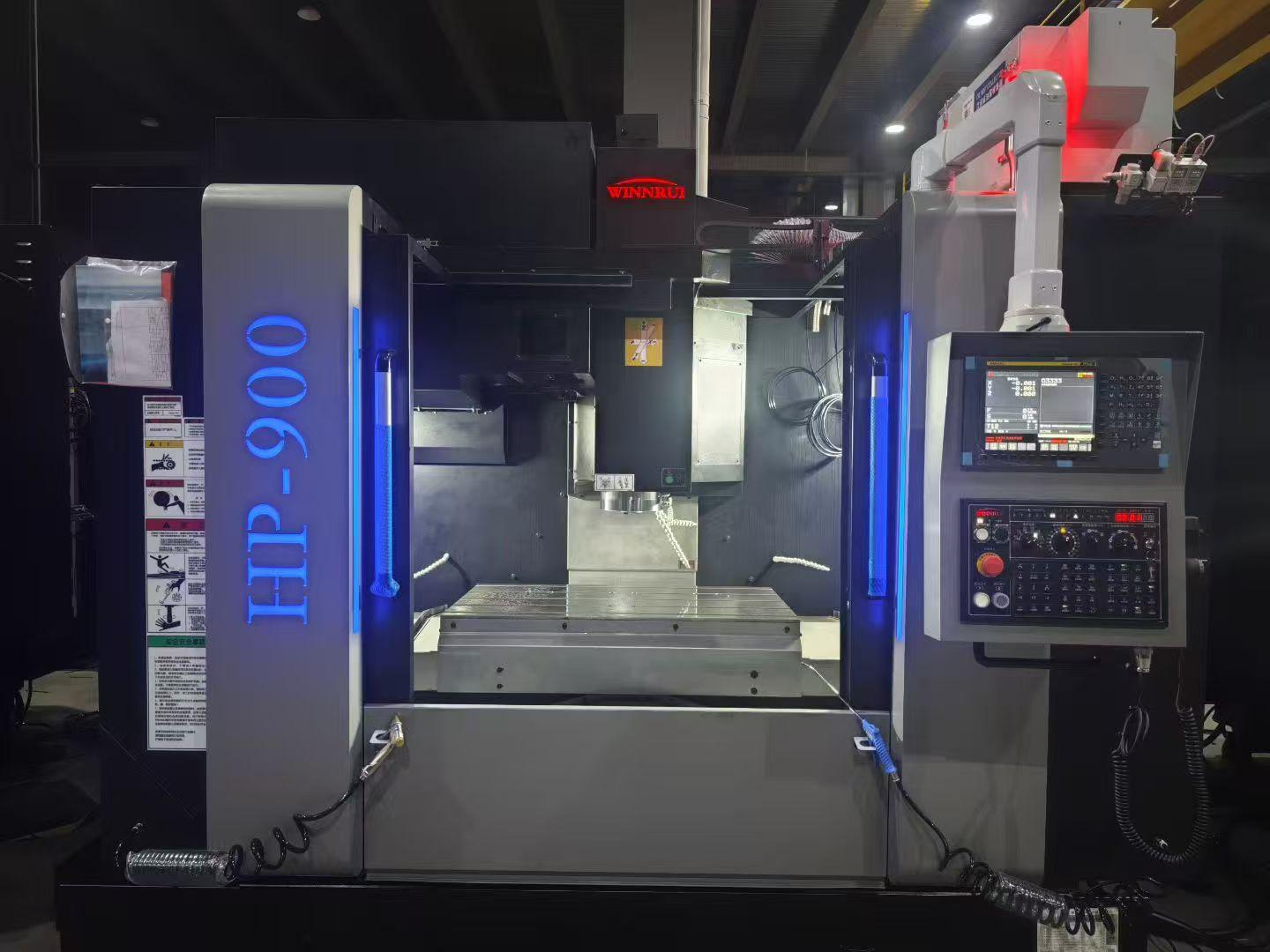
Shaping parts with freeform surfaces and tight internal channels often pushes conventional tools past their limits. Instead of settling for near-net shapes that require extensive post-processing, we rely on adaptive toolpath strategies that continuously adjust to the local curvature of the model. This avoids scalloping and chatter even where walls thin down to a fraction of a millimeter, while keeping the entire process within a single-digit micron envelope. The result is a surface finish that needs no hand polishing, regardless of geometric twists.
Material behavior adds another layer of complexity. When dealing with superalloys or hardened steels, minute deflections from tool pressure can distort fine features long before they are measurable. We tackle this through in-process probing cycles that map the evolving shape against the CAD reference, feeding corrections back into the remaining toolpath without pausing the machine. This closed-loop compensation effectively decouples geometric ambition from the stiffness limitations of the workpiece.
Thermal stability often gets overlooked, yet it can erase micron-level gains in minutes. Even subtle ambient shifts cause the machine structure to breathe, altering the true position of the spindle nose. Our approach anchors precision on thermal-neutral reference points and actively warms critical components before the first cut, so the system reaches a drift-free plateau within moments. Paired with volumetric error mapping, this lets us hold inner corners and deep pockets to print even when outside temperatures swing throughout a shift.
Advanced Spindle and Tooling Options for Tough Materials
When facing hardened steels or heat-resistant superalloys, spindle selection isn’t just about horsepower—it’s about stiffness and damping. A robust spindle with preloaded angular contact bearings and minimal runout keeps tool deflection in check, preventing chatter and premature edge chipping. Pairing this with a through-coolant delivery system directly at the cutting zone flushes away heat and swarf, preserving both part accuracy and surface integrity.
Tooling geometries step up for the challenge with variable helix end mills and dedicated chipbreakers that slice through gummy materials like titanium without work-hardening the surface. Coating technologies, such as AlTiN or nanocomposite layers, act as thermal barriers, letting you push speeds higher without burning edges. Even shrink-fit holders earn their place by offering near-perfect balance and grip, which matters when a micro-end mill needs every ounce of concentricity.
Beyond the basics, modular quick-change systems and vibration-dampened boring bars turn tricky long-reach cuts into repeatable processes. Consider trochoidal milling strategies where the tool path itself manages engagement, letting a lighter machine tackle dense billets with surprising efficiency. The real gain comes from matching these advanced tooling and spindle choices to the specific material’s failure mode—whether it’s abrasive wear, built-up edge, or thermal cracking—so each component works together rather than just surviving.
Streamlined Workflows for High-Mix, Low-Volume Production
High-mix, low-volume manufacturing throws a unique set of challenges at production teams. Standardized procedures that work for mass production often crumble when every order looks different. The trick lies in designing workflows that stay fluid—think modular stations, cross-trained staff, and rapid tooling swaps. Without these, changeovers eat into productive time and margins vanish.
Streamlining doesn't mean stripping away necessary steps; it means building in flexibility from the ground up. Visual work instructions, for instance, replace lengthy text documents so operators can pivot without hunting for details. Pair that with smart scheduling that groups similar tasks across orders, and you turn chaos into a manageable rhythm. The goal is to keep material moving, not people waiting.
Another overlooked piece is feedback loops. When batches are small, you can't afford to repeat mistakes. Capture insights from each run—what slowed things down, where quality dipped—and feed them back immediately. This constant tweaking, driven by the people on the floor, transforms rigid processes into living systems that adapt as the product mix shifts.
Integrating Automation to Enhance Repeatability
Automation transforms workflows from being reliant on manual precision to operating with machine-driven consistency. By scripting repetitive tasks, the same sequence executes identically every time, eliminating the variability that creeps in when humans perform monotonous steps. This shift ensures that output quality isn't tethered to focus levels or fatigue—once a process is correctly automated, it becomes a reliable baseline that can be reproduced endlessly without degradation.
Embedding automated checks and validations within a pipeline further solidifies repeatability. Instead of depending on after-the-fact inspections, you can program the system to verify parameters in real time, flagging anomalies before they compound. This not only catches errors earlier but also builds a self-correcting loop where the process itself enforces the standard, reducing drift between runs and across different operators or environments.
The true value emerges when these automated sequences are combined with modular design and version control. Treating each automated segment as a reusable module allows you to replicate successful patterns across projects without reinventing the wheel. Meanwhile, versioning the automation scripts guarantees that every iteration is traceable, so you can pinpoint exactly when and why a change was introduced, making the entire system both repeatable and auditable.
Real-Time Monitoring and Adaptive Process Control
Real-time monitoring has reshaped how industrial plants manage their operations, shifting away from periodic checks to continuous observation. Sensors now feed live data into central systems, painting an immediate picture of every moving part. This kind of visibility helps operators spot emerging issues before they snowball into costly shutdowns, trimming waste and keeping safety margins intact without constant manual oversight.
Adaptive process control takes that data stream and acts on it, refining machine settings on the fly. Instead of rigid setpoints, the system learns from trends and adjusts parameters when conditions drift. Imagine a chemical reactor that tweaks its own temperature in response to a minor feedstock change—no human input needed. That agility cuts down on product variability and often brings a surprising jump in overall equipment effectiveness.
FAQ
It’s a CNC milling machine where the spindle is oriented vertically, and the entire setup—travel distances, spindle power, tool capacity, even workholding—is tailored to a manufacturer’s unique production needs. Instead of adapting your process to a stock machine, the machine is built around your parts.
By integrating features like 4th and 5th axis tables, high-pressure coolant through the spindle, and specialized tool changers. This lets you reach undercuts, deep cavities, and angled features in fewer setups, maintaining tighter tolerances across multiple faces without repositioning.
Aerospace, medical device, automotive performance, and mold-making shops often need them. They’re producing parts with intricate airfoil shapes, patient-specific implants, or deep core molds where standard work envelopes just can’t provide the necessary clearance or rigidity.
Absolutely. When you spec the machine with the right spindle speed range, damping characteristics, and vibration control for your specific materials—like titanium or hardened tool steels—you can often hit required finishes right off the machine, eliminating hand polishing or grinding.
Initially, yes, because you’re paying for engineering and non-standard components. But the return comes quickly from reduced cycle times, less scrap, fewer setups, and often a smaller footprint than a cell of general-purpose machines trying to do the same work.
You should expect on-site installation, part-specific programming consultation, and training that focuses on your actual workpieces. Many builders also offer long-term support like predictive maintenance services and upgrade paths as your part designs evolve.
Conclusion
In modern manufacturing, custom vertical machining center solutions are redefining precision manufacturing for complex parts by adapting to unique production demands. Rather than forcing generic setups onto intricate workpieces, these systems offer tailored configurations that address specific machining challenges from the start. This means everything from spindle selection to workholding is optimized for the part's geometry and material, enabling micron-level accuracy even on the most intricate features. For tough materials like titanium or hardened alloys, advanced spindle and tooling options ensure stable cutting conditions, preserving surface integrity and tool life. The result is a reliable process that consistently meets tight tolerances without compromising speed.
Beyond the hardware, these centers excel in high-mix, low-volume environments by streamlining workflows to minimize changeover times and manual interventions. Integrated automation, from pallet changers to robotic loading, enhances repeatability across batches, removing variability caused by operator fatigue. Meanwhile, real-time monitoring and adaptive process control continuously adjust parameters based on sensor feedback, catching deviations before they become defects. This closed-loop intelligence transforms the machine into a self-correcting platform that learns and improves with each cycle. Ultimately, the combination of mechanical precision and digital oversight ensures that even the most complex parts are produced with unmatched consistency, making custom vertical machining centers an indispensable asset for demanding industries.
Contact Us
Contact Person: Tim
Email: [email protected]
Tel/WhatsApp: +86 15522553731
Website: https://www.winnrui-cnc.com/