

Custom Vulcanizing Press: Tailored Solutions for Precision Rubber Molding
2026-08-29
Every rubber molding project comes with its own set of challenges—unusual dimensions, demanding tolerances, or materials that refuse to behave. Off-the-shelf vulcanizing presses rarely fit the bill. That’s where SFC steps in, crafting custom vulcanizing presses that turn precision rubber molding from a headache into a repeatable process.
When Standard Presses Create More Problems Than They Solve
The assumption behind any standard press is simple: a known force, a predictable footprint, a repeatable result. Yet in many shops, that assumption quietly breaks down the moment the material is out of flat, the die wear is uneven, or the operator compensates for a drift nobody logged. The standard press becomes a source of variation rather than a control for it, and the problems it creates are often blamed on everything except the machine itself.
One of the most common failure modes is what could be called “standard by default.” A press is specified for a narrow range of thickness, hardness, and springback, but production schedules force it to run a much wider mix. Instead of flagging the mismatch, teams adjust feeds, slow the stroke, or accept a higher scrap rate. Over time, these workarounds become the new standard, hiding the fact that the press is no longer solving a forming problem—it is multiplying one. The documentation says the process is under control, while the floor knows otherwise.
A more durable approach is to treat the press not as a fixed artifact but as a system with a measurable operating envelope. When that envelope is respected, the press prevents defects by design. When it is ignored, the press generates defects faster than any manual correction can catch them. The difference is rarely in the tonnage or the brand; it is in whether the organization is willing to see the standard press as a hypothesis to be tested on every shift, rather than a promise that can never be broken.
Why Custom Vulcanizing Presses Are Worth the Investment
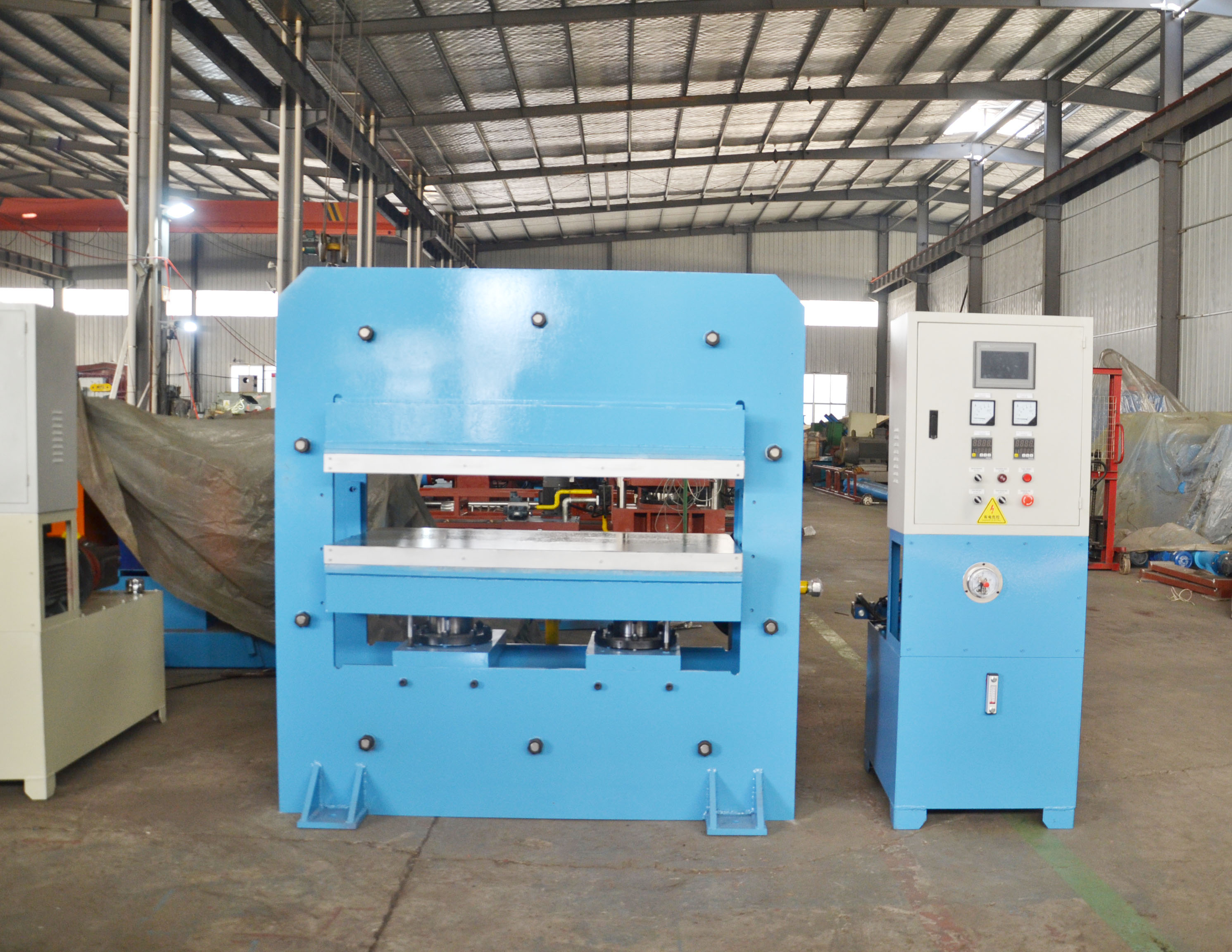
Off-the-shelf vulcanizing presses often force manufacturers to compromise on platen size, tonnage, or heating method. A custom unit, by contrast, is built around your exact mold dimensions and production cycle, eliminating wasted energy and floor space. This precision directly translates into faster throughput and lower per-part operating costs, which is what makes the upfront expense pay for itself over time.
Temperature uniformity and pressure distribution are rarely perfect in generic equipment, leading to inconsistent cure and higher scrap rates. Custom presses allow engineers to specify heating zones, insulation, and hydraulic controls that match the thermal profile of your specific rubber or composite material. The result is a more consistent product, fewer rejected batches, and a stronger reputation for reliability with your customers.
A customized press also offers room to grow. If you anticipate new product lines or larger molds, the frame, control system, and safety features can be designed with future capacity in mind. Rather than buying a second machine or retrofitting later, you make one strategic investment that adapts as your business evolves, keeping total cost of ownership far below that of repeatedly replacing standard equipment.
Key Features That Make a Press Truly Precision
A press earns the precision label only when every component works in tight harmony. The ram must travel with minimal deflection, guided by surfaces machined to tolerances measured in microns. Gib adjustments stay put under load, and the frame resists torsion without adding bulk. These aren't marketing points—they're the difference between a part that fits and one that needs rework.
Beyond the mechanics, true precision shows up in repeatability. The same stroke, the same dwell, the same force, cycle after cycle, without drift. That demands smart control systems that monitor position and pressure in real time, compensating for thermal growth or tool wear before they become scrap. Operators stop chasing variations and start trusting the machine.
Finally, precision is inseparable from how the press handles setup. Quick-change tooling with positive location, fine-resolution depth stops, and backlash-free leadscrews let you dial in a new job in minutes, not shifts. It's this blend of rigidity, control, and adjustability that separates a genuinely precise press from one that merely looks the part.
Common Rubber Molding Defects and How a Custom Press Prevents Them
Bubbles, short shots, and flash are the usual suspects when a rubber molding run goes sideways. Most of these trace back to uneven pressure distribution, trapped air, or a mold that simply doesn't fit the material's flow behavior. What makes them frustrating is that they often appear inconsistently, so you end up inspecting more than producing.
A custom press addresses this by letting you tune the clamping force, injection speed, and temperature profile to match the specific compound you're running. Instead of forcing every job into one fixed cycle, you adjust dwell time and venting sequences until the material fills the cavity without leaving voids or squeezing out excess flash. That level of control turns a batch of scrap into a stable process.
Dimensional drift and tearing during demolding also plague standard setups. Custom presses can incorporate staged pressure release, heated platens with tighter tolerances, and even ejection assist features. These aren't gimmicks—they directly reduce internal stress in the part, so what comes out of the mold actually matches the drawing, and it releases cleanly without tearing thin sections.
Designing a Press Around Your Part, Not the Other Way Around
Most press selection starts with a catalog and ends with forcing the part to fit the machine's limitations. That sequence quietly erodes tool life and tolerances. When you flip the logic and study the part first—its material flow, off-center loading, flange geometry, and required dwell—the press becomes a purpose-built extension of the process rather than a generic force source.
A deep-drawn housing with a heavy sidewall on one edge is a good test case. A standard gap-frame or symmetrical four-column press invites deflection and uneven die wear because the load path doesn't match the blank shape. Building the press bed, ram guidance, and tonnage curve around that specific load distribution removes the need for oversized tooling and reduces shimming during setup.
That approach also changes how you think about changeover and maintenance. Access windows, die clamping zones, and stroke length are matched to the part family, not borrowed from an off-the-shelf machine. The result is fewer secondary operations, lower scrap near the trim line, and a press that operators actually want to run.
From Prototype to Production: Scaling with a Custom Setup
Moving from a working prototype to a full production system often exposes hidden assumptions. A custom setup lets you replace generic scaffolding with components that match your actual data flow, authentication model, and deployment targets. Instead of bolting on third-party services that force their own conventions, you build only what the product truly needs—nothing more, nothing less.
This approach changes how scaling decisions are made. Rather than chasing abstract benchmarks, you instrument the exact bottlenecks your users encounter. A hand-rolled caching layer, a deliberately minimal API gateway, or a queue designed around one specific job pattern can outperform generic alternatives because they carry no unused complexity. The result is a system that grows in lockstep with real demand, not with the feature list of an off-the-shelf platform.
The trade-off is responsibility. You own the failure modes, the monitoring, and the upgrade path. But that ownership also means every part of the stack is legible to your team. When something breaks at 2 a.m., you can trace the code path without deciphering someone else's abstraction. For teams that value clarity over convenience, a custom setup isn't a compromise—it's the most direct route to a production system that behaves exactly as designed.
FAQ
A tailored design lets you match platen size, tonnage, heating method, and control features to the exact mold and rubber compound, reducing flash and cycle time while improving repeatability.
Automotive sealing, medical device components, aerospace gaskets, and electronics enclosures often need tight tolerances and specialized material handling that off-the-shelf machines struggle to deliver.
Consistent heat across the entire platen area prevents under-cured or over-cured sections, leading to uniform physical properties, fewer rejects, and longer mold service life.
Yes, the frame and daylight opening can be engineered around your largest tooling, and the platen can be zoned to balance heat for multi-cavity or asymmetric molds.
Adjustable clamp force and dwell timing let you fine-tune material flow into intricate cavities, reducing trapped air and ensuring complete fill without damaging delicate inserts.
You can integrate automatic loading, part ejection, mold shuttle systems, and recipe-driven controls to cut labor costs and keep cycle times consistent from shift to shift.
The heating system, venting cycles, and clamp speed can be programmed to match the cure kinetics and flow behavior of each compound, preventing scorch and improving surface finish.
Start with part geometry, annual volume, mold dimensions, material specifications, and any cleanroom or safety requirements—those details drive the frame, controls, and auxiliary system choices.
Conclusion
When a standard press forces your part into someone else's envelope, you quickly learn where the hidden costs live. Uneven platen temperatures, limited daylight, and fixed stroke can distort tall or asymmetric rubber profiles, trap air around metal inserts, or scorch thin sections before the thick ones cure. A custom vulcanizing press removes those compromises by matching platen size, heating zones, and clamp force to the actual mold geometry. You gain tighter control over parting line alignment and can add vacuum-assisted breathing to pull trapped gas out of deep cavities. The result is fewer flow lines, less scrap, and parts that hold dimensional tolerance without hand trimming.
Worth the investment shows up fastest when you move from prototype to production. A press built around your part lets you keep the same mold interface and thermal profile at low cavity counts and then scale with modular inserts or larger daylight without revalidating the entire process. Deflection-resistant frames and programmable cure cycles give you repeatable crosslink density batch after batch. That consistency matters in seals, gaskets, and bonded mounts where a few degrees or a few seconds of dwell change leak rates. Instead of forcing your rubber to fit the machine, you design clamp stroke, ejector access, and heating strategy around the finished component, which lowers rework, shortens cycle time, and makes the custom setup pay for itself faster than a standard press that creates problems at every step.
Contact Us
Contact Person: Chen Zhengwei
Email: [email protected]
Tel/WhatsApp: +86-13963975727
Website: https://www.sfcrubbermachine.com