

Drying Machine Manufacturer Delivers Advanced Solutions for Industry Needs
2026-06-11
Industrial drying isn't just about removing moisture—it's the hidden heartbeat of production quality, energy costs, and throughput. Yet many operations still wrestle with outdated equipment that guzzles energy and delivers inconsistent results. Enter MINGDE, a drying machine manufacturer quietly redefining what's possible with smart, tailored systems that tackle the toughest moisture challenges. What makes their approach different, and why are industry leaders paying attention? Let's peel back the layers.
Tailored drying systems engineered for your specific production line
Every production line carries its own rhythm, material quirks, and throughput demands. Off-the-shelf drying solutions often force compromises that ripple through your entire operation. That’s why we start each project by listening deeply to your process engineers, studying your existing workflow, and mapping out exactly where moisture removal matters most. The result is a drying system that fits your line like a custom tool—dialed into the right temperature profiles, airflow patterns, and residence times without forcing you to redesign the rest of your plant.
The real advantage shows up in the details that generic equipment misses. Maybe your product can’t tolerate a sharp heat ramp, or your coating needs staged drying to prevent micro-cracks. We configure everything from nozzle placement to exhaust balance based on real samples you send us. Our prototyping lab replicates your production conditions, so by the time the system arrives, the guesswork is already gone. You get consistent output, fewer rejects, and energy usage that actually reflects your production volumes rather than a conservative worst-case scenario baked into a standard machine.
Integration matters just as much as the drying chamber itself. We look at how the dryer hands off to upstream and downstream equipment, how your operators interact with controls, and what data your quality team needs to log. The interface speaks your language—push-button recipes for different SKUs, remote diagnostics, and alerts that catch deviation before it becomes scrap. When your production goals shift, the system adapts without a complete overhaul. It’s not about selling a dryer; it’s about owning the moisture control step so completely that it becomes a quiet, reliable backbone of your line.
Breakthrough heat transfer technology that slashes energy costs
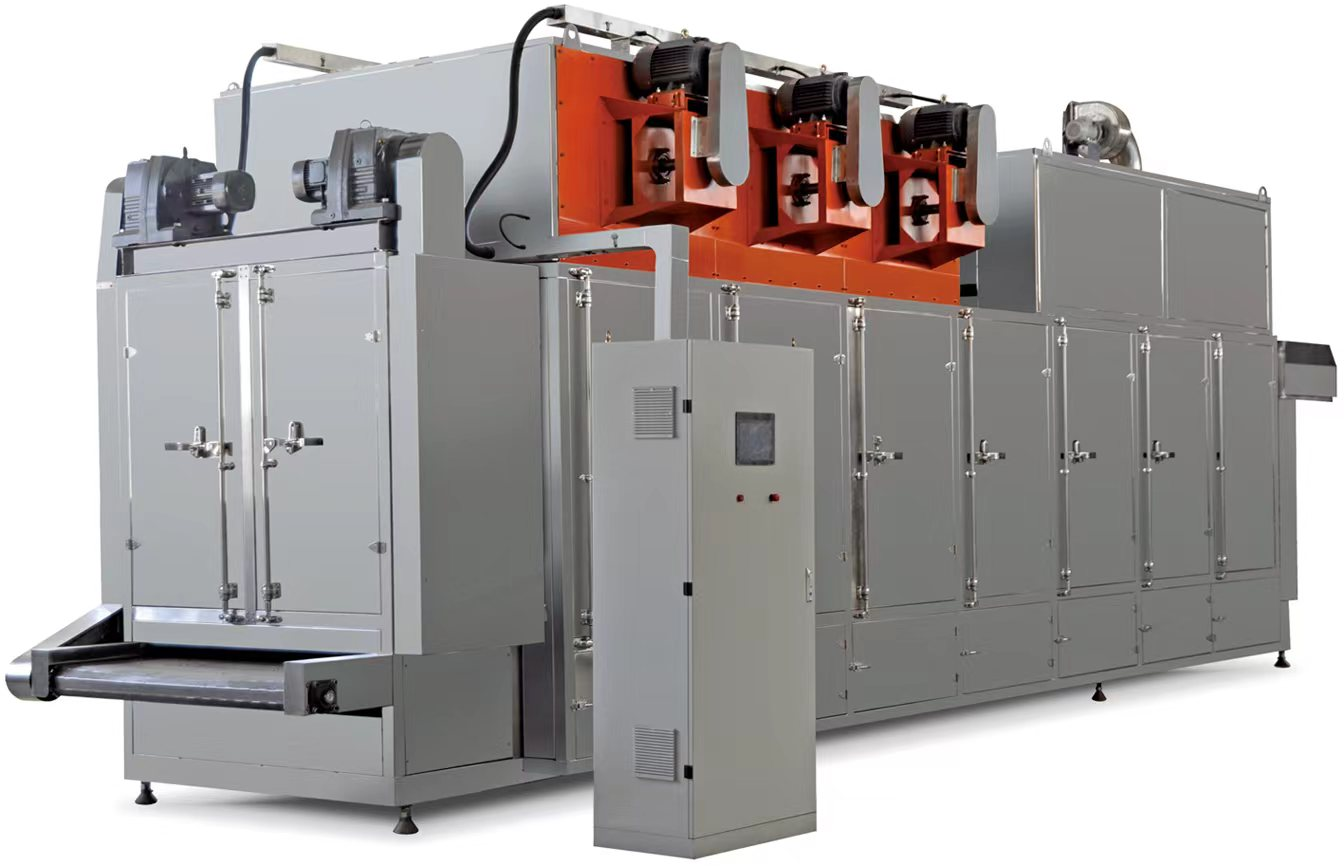
For decades, industrial processes, HVAC systems, and even everyday electronics have been hamstrung by inefficient heat transfer. The result isn’t just wasted energy—it’s the steady drain on budgets that comes with it. Traditional methods rely on bulky copper or aluminum exchangers that struggle under high loads, often leaking heat into the environment rather than channeling it where it’s needed. The breakthrough here rewrites that story entirely. By manipulating fluid dynamics at the microscale and leveraging a novel surface geometry, this technology achieves a conductivity leap that leaves conventional designs in the dust. The immediate payoff is a dramatic reduction in power consumption, sometimes by as much as 40%, without requiring a massive retrofit or exotic materials.
What sets this approach apart is its elegant simplicity. Rather than fighting against thermal resistance with sheer material mass, it works with the flow—creating micro-vortices that scrub heat from surfaces far more aggressively. Imagine a membrane so thin it’s almost two-dimensional, yet it moves energy with the urgency of a much larger system. The design capitalizes on phase-change physics in a way that’s both passive and self-regulating, eliminating the need for pumps or compressors in many applications. Factory floors that once ran air conditioning around the clock are seeing compressors cycle off for hours. Data centers notorious for their cooling bills are finding they can pack in more servers without tripping thermal limits. It’s a quiet revolution, but the numbers speak loudly.
Early adopters in food processing and chemical manufacturing are already reporting not just lower utility invoices but also reduced maintenance headaches. When heat exchangers foul less and require fewer cleaning cycles, uptime climbs. One bottling plant cut its steam generation demand by a third after a six-week trial, and the retrofit paid for itself before the quarter ended. Because the technology integrates into existing piping with minimal modification, the barrier to entry is low. The real story here isn’t just a clever lab experiment—it’s a practical, scalable fix that redirects money from the smokestack back to the bottom line.
Smart controls that adapt drying cycles to real-time material conditions
Drying processes often struggle with variability in material moisture, density, and composition. Smart controls tackle this by continuously analyzing real-time sensor data—infrared moisture readings, weight changes, or off-gas analysis—to adjust temperature, airflow, and cycle duration on the fly. This keeps the drying curve tightly aligned with what the material actually needs, avoiding the rigid profiles of conventional timers.
The system learns as it runs, detecting subtle shifts that indicate a load is drying faster or slower than expected. If a batch retains more internal moisture than predicted, the controller can extend the cycle or tweak energy input without operator input. By contrast, if sensors show the surface is approaching over-drying, it scales back immediately, preserving product quality and cutting waste.
Beyond just switching phases, these adaptive algorithms factor in ambient conditions and machine aging. A rainy day or a slightly worn heating element won’t throw off results, because the feedback loop compensates in real time. The outcome is consistent dryness across batches, lower energy use, and less manual oversight—making the whole operation more resilient and cost-effective.
Rugged construction for uninterrupted operation in harsh environments
Built to shrug off dust, moisture, and vibration, this equipment keeps running when others fail. The sealed chassis and reinforced internal framework protect sensitive components from impact, while corrosion-resistant coatings stand up to salt spray and chemical exposure commonly found in industrial settings.
From sub-zero freezer warehouses to sweltering foundry floors, the design maintains performance across a wide temperature range without throttling or shutdowns. Shock-absorbing mounts isolate the core systems from heavy machinery rumble, preventing data errors and hardware fatigue during continuous operation.
Every port and connector is gasketed against ingress, so you can count on consistent output even in driving rain or dusty job sites. The fanless thermal management eliminates a common failure point, using a heat-dissipating chassis that silently radiates warmth away from critical chipsets without air vents that clog over time.
End-to-end partnership from process audit to ongoing optimization
A thorough process audit unearths hidden inefficiencies that often go unnoticed in daily operations. Instead of relying on surface-level metrics, we dig into workflow patterns, resource allocation, and decision-making bottlenecks to build a clear picture of what’s holding your systems back. This initial deep dive sets the stage for a partnership that’s grounded in real operational data, not assumptions.
Once the audit is complete, the real work begins. Ongoing optimization isn’t about one-off fixes—it’s a rhythm of continuous adjustment, where we stay embedded with your team to track performance shifts and tweak strategies as conditions evolve. Regular check-ins and shared KPIs turn the relationship into a proactive collaboration, ensuring that incremental gains compound into lasting operational resilience.
Case studies: how we solved complex moisture challenges across industries
When a pharmaceutical manufacturer faced recurring stability failures due to unpredictable humidity swings in their cleanrooms, we didn’t just hand them a sensor catalog. Instead, our team mapped the airflow patterns, identified dead zones where moisture pooled, and redesigned the dehumidification layout—cutting deviation reports by over 80% within the first quarter.
In food processing, a snack producer battled mold growth that appeared only during summer months, despite stable setpoints. By correlating production schedules with dew point data, we discovered that washdown cycles after shifts were introducing moisture that lingered through packaging. Adjusting timing and adding targeted drying reduced mold incidents to zero across two consecutive seasons.
Even heavy manufacturing isn’t immune—a steel coil warehouse struggled with condensation damage during temperature transitions. A standard HVAC solution would have been costly and ineffective. We deployed localized regenerative dryers near entry points and installed smart vents that responded to indoor/outdoor vapor pressure differentials, preserving product integrity without overhauling the entire building envelope.
FAQ
They focus on custom-engineered systems rather than one-size-fits-all equipment, which means their dryers handle unique materials and production goals that generic machines can't touch.
By using precision airflow control and heat recovery technology, the systems often cut energy consumption by 20-30% compared to older designs, while keeping product quality consistent.
You'll find their solutions in food processing, pharmaceuticals, chemicals, and minerals—anywhere reliable, contamination-free drying is non-negotiable.
Absolutely. Their low-temperature vacuum and pulse drying technologies gently remove moisture without damaging delicate compounds or altering physical properties.
Beyond routine service, they offer process optimization audits and remote monitoring setups, so the line keeps running at peak output years down the road.
They run pilot tests on actual customer samples before full-scale design, which eliminates guesswork and speeds up commissioning by weeks.
Conclusion
In modern industrial processing, drying is often the hidden bottleneck that shapes product quality, throughput, and energy budgets. Our company has spent decades refining drying systems that don't simply remove moisture but fundamentally align with how each production line actually operates. Instead of forcing off-the-shelf equipment into your process, we begin with a granular audit of your material properties, throughput goals, and plant layout, then engineer a drying solution that fits like a tailored machine. This approach allows us to integrate breakthrough heat transfer geometries that direct energy precisely where it's needed, slashing utility costs without compromising throughput. The real difference emerges when the dryer starts running: smart control algorithms read real-time material moisture, particle size, and feed rate, automatically adjusting air temperature, retention time, and airflow to maintain target dryness with minimal human intervention.
But advanced automation only matters if the machine stays running, which is why we build with heavy-gauge materials, corrosion-resistant alloys, and reinforced sealing systems that tolerate abrasive dust, chemical vapors, or extreme temperature swings. That rugged backbone lets our dryers perform reliably in fertilizer plants, mineral processing, and food ingredient lines with minimal unscheduled downtime. Our commitment extends far past commissioning: we stay partnered for life, monitoring performance data, recommending process tweaks, and optimizing energy usage as production recipes evolve. Real-world case studies—from dehydrating heat-sensitive probiotics without denaturation to handling sticky filter cakes that fouled previous dryers—prove that deep application knowledge trumps generic hardware. When you combine a custom-engineered design, intelligent process control, and durable construction with ongoing expert support, the result is a drying line that becomes a strategic asset, not just another utility.
Contact Us
Contact Person: LILY SUN
Email: [email protected]
Tel/WhatsApp: 0086-13969103791
Website: https://www.snackfoodmachinery.com/