
Electric Heating Reactor Import Challenges and How to Overcome Them
2026-11-18
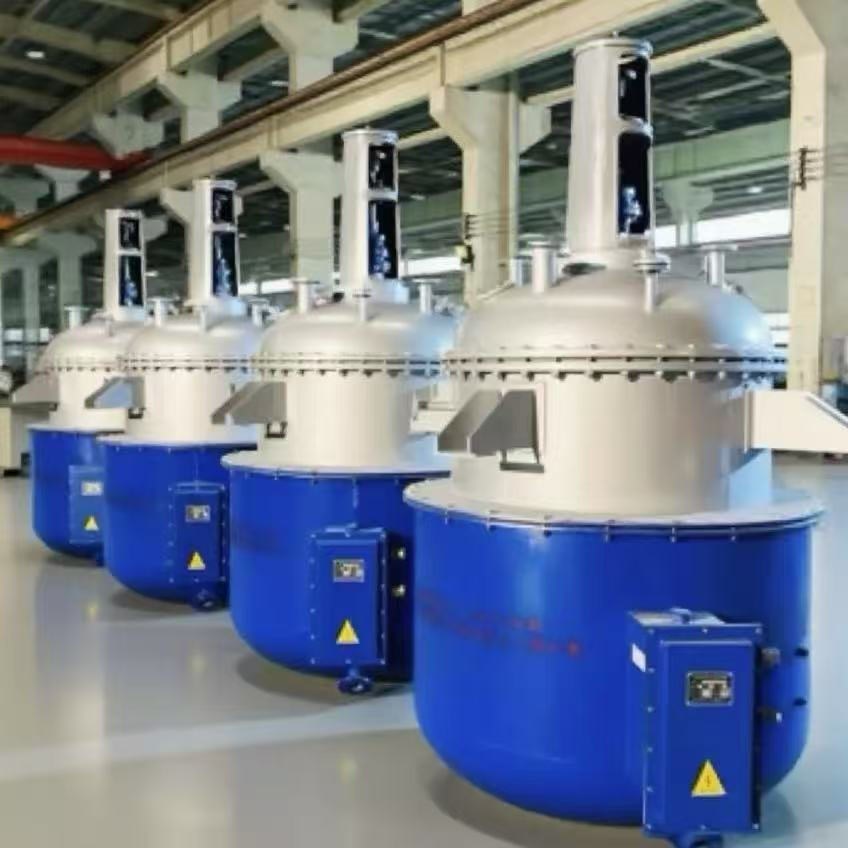
Importing an electric heating reactor rarely goes wrong in the catalog—it goes wrong at the port, during wiring, and when local inspectors ask for documentation you were never sent. Between regional voltage mismatches, hazmat permits, and control panels that refuse to communicate with your plant systems, the apparent savings on an overseas unit can vanish quickly. This guide breaks down the real bottlenecks and practical fixes, including how working with Shenzhou Chemical Industry shortens the gap between spec sheet and startup.
When Tariff Codes Turn a Simple Reactor Order into a Customs Dispute
The trouble started with a single digit. A chemical plant in Ohio had bought a jacketed stainless steel reactor from a supplier near Hamburg, and the freight forwarder filed it under 8419.89 as machinery for the treatment of materials by a process involving a change of temperature. A few days after the vessel reached the port of Newark, customs reclassified the shipment under 8479.82, which covers mixing and kneading machines. The duty difference was only a few percentage points, but the port exam, the bond adjustment, and the legal review turned a two-week delivery window into a nine-week standoff.
The exporter had described the equipment as a jacketed polymerization reactor, but that phrase split into two competing headings. One side pointed to the heating and cooling jacket; the other pointed to the agitator and the catalyst feed nozzles. Every exchange added another document: isometric drawings, nozzle schedules, plate thickness certificates, even the welding procedure records. The importer eventually hired a customs broker who had handled similar disputes in the chemical sector, and she argued that the unit’s essential character was determined by the reaction vessel, not by the agitator bolted to its head.
By the time the entry was corrected and the reactor finally cleared, the demurrage charges had reached almost a third of the equipment’s invoice value. The plant manager put it bluntly: the real cost was never the duty itself, but the delay at the dock. Since then, the company obtains a tariff classification opinion before cutting the purchase order, and the reactor maker now ships with a one-page classification brief taped inside the crate.
Voltage, Frequency, and the Hidden Cost of Compatibility Assumptions
Many embedded systems start with a quiet assumption: the board will always see 3.3V logic and a clean 50Hz or 60Hz mains reference. Designers pick a sensor, a clock crystal, or a power regulator based on a datasheet that looks universal, then ship without questioning whether the next production batch or a different regional grid will behave the same way. The real cost appears later, when a perfectly functional prototype becomes a field return because a marginal voltage rail drops below a brownout threshold, or because a timer tied to line frequency drifts past an acceptable window after a generator replacement.
Compatibility assumptions hide inside pin mappings, clock domains, and power sequencing. A module rated for 5V might tolerate 3.3V inputs on a bench supply, but that tolerance erodes at temperature extremes or when a different vendor supplies the same part number with slightly relaxed specs. Similarly, assuming a 60Hz zero-crossing detector works identically on a 50Hz grid can break soft-start routines, dimming curves, or phase-angle control loops. The hidden cost isn't just the rework; it's the accumulated engineering time spent chasing intermittent resets and calibration drift that always seems to appear at the customer's site.
A more practical approach treats voltage and frequency as ranges with tolerance bands, not fixed values. Adding brownout detectors with hysteresis, re-clocking asynchronous inputs, and decoupling the control loop from mains frequency unless absolutely necessary all reduce the blast radius of an incorrect assumption. The cheapest fix is usually a few extra lines of conditional code or a wider input voltage buck converter, but the most valuable change is documenting why a particular margin exists. When the next engineer revisits the design, that note will save more time than any clever workaround.
Certification Paperwork That Slows Clearance More Than the Hardware Itself
A shipment of machined valve bodies can clear a port in under an hour once a customs officer glances at the crates. The same shipment can sit for three weeks while an export compliance officer in another time zone asks for a revised end-user statement, then a notarized copy of the same document, then a clarification of the notary's stamp. The hardware does not change. It has already passed pressure tests, dimensional checks, and final inspection. What changes is the paper trail, which grows thicker every time someone adds a request instead of a signature.
Much of the slowdown comes from documents that duplicate information already visible on a commercial invoice or packing list, but in formats that no two agencies accept. A certificate of origin may need to be issued by a chamber of commerce, while the destination authority wants a separate consularized version. The end-user certificate must match the exact wording in the letter of credit, but the bank's wording does not match the exporter's internal template, so both sides wait. Meanwhile the hardware sits in a bonded warehouse accruing storage fees, fully inspected and ready to ship, while the actual constraint is a PDF that has not been signed in the right color of ink.
The real friction is not security screening but administrative ping-pong. One missing box on a form can trigger a chain of emails that spans five departments and two languages. By the time the final approval arrives, the original technical data may need to be revalidated because it has passed an internal expiration date. The irony is that most of these certifications are meant to reduce risk, yet they introduce a different kind of risk: a supply chain that moves at the speed of a filing cabinet rather than a freight forwarder.
Why Factory Test Reports Rarely Survive the Journey Unscathed
A factory test report starts out as a tidy snapshot: known loads, calibrated instruments, a controlled room, and a technician who has time to note the small deviations. That snapshot rarely matches the conditions waiting at the other end. The same pump that performs beautifully on a test stand at 21°C can behave differently once it is bolted next to a vibrating compressor in a humid plant. The report is not wrong, but the context it carries is fragile, and context tends to be the first casualty once the document leaves the test bay.
Then come the handlers. Project engineers trim pages to speed up review, sales staff highlight a few convenient figures, and site teams add margin notes that never make it back to the original file. Somewhere in that chain, test parameters get separated from results, units get converted in a hurry, or an old revision gets attached to a new purchase order. By the time the report reaches someone who actually needs to make a decision, it may be a palimpsest of edits rather than a record of what was tested.
Most recipients also read selectively. They look for a pass stamp, a curve, or a final torque value and skip the preconditions that made those numbers meaningful. That habit is understandable under schedule pressure, but it means the report often arrives intact only in the literal sense. The deeper journey, from one set of operating assumptions to another, is where the original meaning gets lost.
Finding an Overseas Supplier You Would Actually Trust with a Critical Reactor
Trust does not start with a polished catalog or a responsive sales rep. When the part is headed into a critical reactor, the first real filter is evidence. Ask for material certificates, heat codes, and non-destructive testing reports before commercial terms even come up. A supplier that stalls on those records is giving you a clear answer.
Once the paperwork checks out, send someone who knows metallurgy or welding, not just a procurement officer. Walk the shop floor, ask how they handle non-conformances, and look at how filler metal is stored. Good suppliers do not hide rework logs. Call their existing customers in reactor environments and ask how the supplier behaved when something went wrong, because that moment matters more than the initial delivery date.
Put the contract together around inspection hold points, witness tests, and clear consequences for failed third-party checks. Run a smaller order or a detailed audit before handing over the critical scope. Trust comes from behavior under pressure, so watch how fast they report problems and whether they fix the root cause. That is the kind of overseas partner worth keeping.
Post-Arrival Support Gaps and How to Close Them Before Signing
Post-arrival support often looks complete on a brochure but falls apart in the details that matter after the first night. A provider might include airport pickup and a welcome packet, yet leave you stranded when it comes to registering with the local municipality, setting up a mobile plan that does not require a local guarantor, or finding a doctor who accepts new patients. The gap is rarely about good intentions; it is about a lack of named responsibilities and realistic timelines.
Before signing, ask for the part of the service that is hardest to fake: a written breakdown of the first month. It should name who handles each step, what documents you need in advance, and what happens if a step takes longer than expected. If the answer circles back to “we offer full support” without specifics, treat that as the gap itself. Providers that close these gaps well usually have a playbook, not just promises, and they are willing to walk you through it before you commit.
FAQ
The biggest surprise is rarely the product itself; it is the documentation gap. A vendor may provide a general certificate while the destination port asks for pressure vessel registration aligned with local code, so clearance stalls until the buyer produces the right drawings.
A machine set up for 380 V and 50 Hz may overheat or cause nuisance trips on a 60 Hz supply. The fix usually involves a step-up or step-down transformer, but the heating elements, pump motors, sensors and PLC inputs all need to be checked before the first run.
They can fall under industrial machinery or electric heating equipment depending on the materials, wattage and vessel design. A clear drawing that separates the pressure vessel from the heating and control assembly makes it easier for the broker to assign the right tariff code.
Insist on export-grade bracing, vacuum-sealed control panels, and separate packaging for removable probes. When the crate lands, record the unboxing and run an insulation resistance check before signing anything, because hidden internal damage is far harder to claim later.
Bring a local service engineer into the project early, or have the supplier train your in-house team through live video sessions. Buying a recommended spare parts kit with the original order also prevents a two-week courier delay from shutting down production.
Ask for heater element datasheets, thermocouple or RTD specifications, wiring diagrams with terminal numbers, pressure vessel inspection certificates, and a country-of-origin statement for major components. If any document is vague, hold the balance until it is corrected.
CE marking alone does not satisfy every jurisdiction. The destination may require ASME, PED, NR-13, or local electrical authority approval, so a unit accepted elsewhere may still need third-party inspection or modification before it can be legally operated.
Look beyond the reactor price. Freight terms, export packing, customs documentation fees, commissioning support, and spare parts can vary widely. A lower upfront price can disappear quickly if the supplier leaves those items out of the scope.
Conclusion
Importing an electric heating reactor rarely goes wrong because the equipment itself is defective; it goes wrong in the spaces between purchase order and cleared delivery. A misread tariff classification can hold a standard order at the border for weeks while brokers argue over whether it belongs under one code or another. The safer approach is to have the supplier or a local customs agent pre-classify the unit and share the ruling before payment, not after the shipment is already in transit. Electrical compatibility is just as easy to overlook. A reactor built for a 50 Hz, 400 V system may run but will not run as intended on a 60 Hz, 480 V supply unless heater ratings, control wiring, and motor specifications are confirmed line by line. Too many buyers discover this only when the vessel arrives and the controls behave erratically. Certification requirements create a second delay layer. CE, UL, or local hazardous-area documentation that is incomplete, unsigned, or copied from a different model can stall clearance longer than any physical inspection. Rather than treating paperwork as an afterthought, successful importers ask for a pre-shipment document pack and verify it against the exact model number before it leaves the factory.
Factory test reports often look authoritative in a PDF but arrive creased, water-damaged, or missing the pages that matter for the local inspector. Asking the supplier to send notarized or digitally signed copies ahead of the shipment and placing a duplicate set inside a protective pouch on the crate prevents a minor paperwork gap from becoming a demurrage charge. Supplier selection matters more than the reactor specification itself. A vendor who is quick with a quote but vague about past export experience will rarely be responsive when a heating element fails after installation. Checking whether they have shipped to your region, asking for after-sales contacts, and getting written commitments for spare parts and remote troubleshooting can close the support gap before it opens. The most practical way to manage these risks is to treat the import as a compliance and logistics project, not just a purchase. That means aligning tariff classification, electrical ratings, certification documents, test reports, and post-arrival support in one pre-shipment checklist, then holding the supplier accountable to each item before the vessel leaves the factory.
Contact Us
Contact Person: Mr. Wang
Email: [email protected]
Tel/WhatsApp: 8613705299955
Website: https://vip.e-baixing.com/szhgyw