
High Efficiency Diaper Manufacturing: Process and Machine Innovations
2026-03-09
In today's fast-moving world of baby care products, efficiency in diaper manufacturing isn't just a nice-to-have—it's a necessity. At Womeng, we're pioneering new frontiers in diaper production through cutting-edge process innovations and state-of-the-art machinery. From sustainable materials to smart automation, the industry is transforming at an unprecedented pace. But what does it really take to produce high-quality diapers efficiently while meeting growing demand? In this blog, we'll explore the latest breakthroughs that are reshaping manufacturing lines, reducing waste, and setting new standards for performance. Join us as we uncover how Womeng is leading the charge in this dynamic field—and why you should care. Let's dive in!
Automated Material Handling in Diaper Production
In modern diaper production facilities, automated material handling systems play a critical role in streamlining operations and boosting efficiency. These systems are designed to transport raw materials such as superabsorbent polymers, nonwoven fabrics, and elastic components from storage areas directly to the manufacturing lines with minimal human intervention. By utilizing conveyors, robotic arms, and automated guided vehicles (AGVs), factories can reduce manual handling errors, speed up material flow, and maintain consistent supply chains, ensuring that production lines run smoothly without delays.
Beyond basic transportation, these automated setups incorporate smart technologies like sensors and IoT devices to monitor material quality and inventory levels in real time. For instance, sensors can detect moisture content in materials or track the exact quantities of components used per batch, allowing for precise adjustments and reducing waste. This integration not only enhances product consistency but also supports sustainability efforts by optimizing resource usage and minimizing overproduction, which is particularly valuable in high-volume diaper manufacturing where even small inefficiencies can lead to significant costs.
Looking ahead, the adoption of advanced automation in material handling is transforming diaper production into a more agile and responsive process. Automated systems can be programmed to handle diverse product variations, enabling quick switches between different diaper sizes or types without lengthy downtime. This flexibility helps manufacturers meet dynamic market demands, from infant diapers to adult incontinence products, while maintaining stringent hygiene standards through reduced human contact. As automation technologies continue to evolve, they promise further innovations in speed, accuracy, and overall operational resilience in this essential industry.
Advanced Adhesive Systems for Enhanced Product Durability
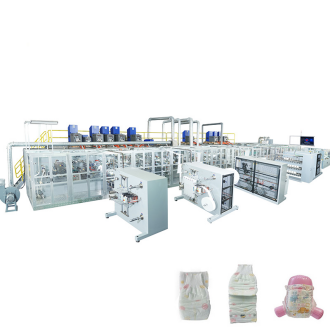
Ever had a product break down because the glue just gave up? That’s where advanced adhesive systems step in—they’re engineered to stick around, literally. These systems aren’t your average superglue; they’re smart formulations designed to bond materials under stress, whether it’s heat, moisture, or heavy loads. By tailoring adhesives to specific applications, manufacturers can create products that last longer without unexpected failures, saving both money and frustration in the long run.
Precision Cutting and Shaping Technologies
Precision cutting and shaping technologies, such as laser cutting and CNC machining, enable the production of intricate and exact components vital to industries like aerospace, automotive, and medical devices.
These methods allow for material-specific approaches, including waterjet cutting for heat-sensitive materials or EDM for hardened metals, ensuring minimal waste and high accuracy.
Energy-Efficient Drying and Curing Processes
In today's industrial landscape, energy-efficient drying and curing processes are no longer just an option but a necessity for both economic and environmental sustainability. These methods focus on optimizing heat transfer and reducing energy consumption without compromising product quality. For instance, advanced infrared and microwave technologies allow for targeted heating, which minimizes energy waste compared to traditional convection ovens that heat entire spaces. By integrating smart sensors and automation, systems can adjust parameters in real-time based on material moisture levels or curing stages, leading to significant energy savings and faster turnaround times. This approach not only cuts operational costs but also reduces carbon footprints, aligning with global green initiatives.
Beyond basic efficiency, innovative techniques like hybrid drying and curing are gaining traction, combining multiple energy sources to enhance performance. A prime example is using solar-assisted heat pumps alongside conventional systems to pre-warm air or materials, thereby slashing reliance on fossil fuels. In sectors such as automotive coatings or electronics manufacturing, low-temperature curing processes have emerged, leveraging UV or electron beam technologies that cure materials at ambient or near-ambient temperatures. This not only conserves energy but also prevents thermal damage to sensitive components, resulting in higher-quality finishes and extended product lifespans. Such methods demonstrate how tailored solutions can outshine standard practices, offering a competitive edge in markets where precision and sustainability are key.
Adopting these processes requires careful planning and investment, but the long-term benefits are undeniable. Companies that implement energy-efficient drying and curing often see reduced utility bills, enhanced process consistency, and improved compliance with environmental regulations. Moreover, by minimizing heat loss and optimizing cycle times, these systems contribute to a leaner production flow, boosting overall productivity. As industries evolve, staying ahead means embracing these advancements—transforming what was once a routine step into a strategic advantage that drives both innovation and conservation.
Innovative Quality Control with Real-Time Monitoring
Imagine a production line where every component, from raw materials to finished products, is tracked in real time through advanced sensors and smart devices. This cutting-edge approach to quality control enables immediate detection of anomalies, such as deviations in temperature, pressure, or dimensions, allowing for swift corrective actions before defects escalate. By integrating IoT technology and machine learning algorithms, manufacturers can move beyond traditional batch testing to a continuous, data-driven process that ensures consistent quality and reduces waste.
Beyond mere detection, real-time monitoring systems empower teams with actionable insights through intuitive dashboards that visualize key performance metrics. For instance, in pharmaceutical manufacturing, these tools can track critical parameters like humidity and sterility, ensuring compliance with strict regulatory standards while boosting operational efficiency. The ability to access live data from anywhere facilitates proactive decision-making and fosters a culture of continuous improvement, ultimately leading to higher customer satisfaction and stronger brand reputation.
What sets this innovation apart is its adaptability across diverse industries, from automotive assembly lines to food processing plants. By leveraging cloud-based analytics and edge computing, companies can scale their quality control efforts seamlessly, customizing thresholds and alerts to meet specific product requirements. This dynamic framework not only enhances reliability but also accelerates innovation, as real-time feedback loops enable rapid prototyping and iterative refinements, driving competitive advantage in today's fast-paced markets.
Sustainable Materials and Waste Reduction Strategies
In today's world, focusing on sustainable materials and waste reduction strategies is essential for building a greener future. Many businesses and communities are turning to innovative approaches, such as using biodegradable materials in packaging and encouraging circular economy models that prioritize reuse and recycling. This shift not only helps minimize environmental impact but also promotes long-term economic stability by reducing dependency on finite resources.
A key aspect of effective waste reduction involves rethinking product design and manufacturing processes. By prioritizing materials like bamboo, recycled plastics, or organic textiles, companies can create products that are both durable and eco-friendly. Additionally, implementing waste separation at the source and supporting local recycling initiatives can significantly cut down landfill contributions, fostering a culture of sustainability that resonates with consumers and stakeholders alike.
To stay ahead in this evolving landscape, organizations are adopting strategies like lifecycle assessments to track environmental impacts from production to disposal. Collaborating with suppliers for sustainable sourcing and educating teams on best practices ensures that waste reduction becomes an integral part of operations, leading to measurable improvements in resource efficiency and a positive contribution to global environmental goals.
FAQ
Recent innovations, like high-speed rotary machines and automated material handling, have drastically cut cycle times and boosted output, making production lines more efficient and cost-effective.
Key advancements include using superabsorbent polymers (SAP) for better moisture retention, seamless bonding techniques to reduce waste, and real-time quality control systems that enhance product consistency.
Sustainability is prioritized through energy-efficient motors, recyclable material use, and water-saving processes, reducing environmental impact while meeting consumer demand for eco-friendly products.
Smart sensors and IoT enable predictive maintenance, monitor machine performance in real-time, and adjust parameters automatically, minimizing downtime and optimizing resource use.
Challenges include high initial investment costs, the need for skilled operators, and integrating new technologies with existing lines without disrupting production.
Automation, through robotics and AI-driven systems, handles repetitive tasks like folding and packaging, slashing labor costs and improving accuracy and speed.
Trends include the adoption of AI for demand forecasting, development of biodegradable materials, and modular machine designs that allow for easy upgrades and customization.
Conclusion
The pursuit of high efficiency in diaper manufacturing is fundamentally transforming production landscapes through targeted innovations in processes and machinery. Core advancements include automated material handling systems that streamline raw material flow, significantly reducing manual intervention and enhancing throughput. This is complemented by precision cutting and shaping technologies, which ensure uniform product dimensions with minimal waste. Concurrently, energy-efficient drying and curing processes not only accelerate production cycles but also lower operational costs and environmental impact. Together, these innovations create a robust framework for scalable, cost-effective manufacturing that meets growing global demand while maintaining stringent quality standards.
Beyond mechanical efficiency, innovations extend to material science and quality assurance, driving durability and sustainability. Advanced adhesive systems, for instance, enhance product integrity by providing stronger bonds that withstand rigorous use, directly contributing to enhanced durability. Innovative quality control with real-time monitoring leverages sensors and data analytics to detect defects instantaneously, ensuring consistent output and reducing recalls. Furthermore, sustainable materials and waste reduction strategies are integrated into production lines, promoting circular economy principles and minimizing environmental footprints. This holistic approach positions manufacturers to deliver high-performance diapers that balance efficiency, reliability, and eco-friendliness in a competitive market.
Contact Us
Contact Person: Jessie Lai
Email: [email protected]
Tel/WhatsApp: 86-188594442931
Website: https://www.wm-machinery.com