
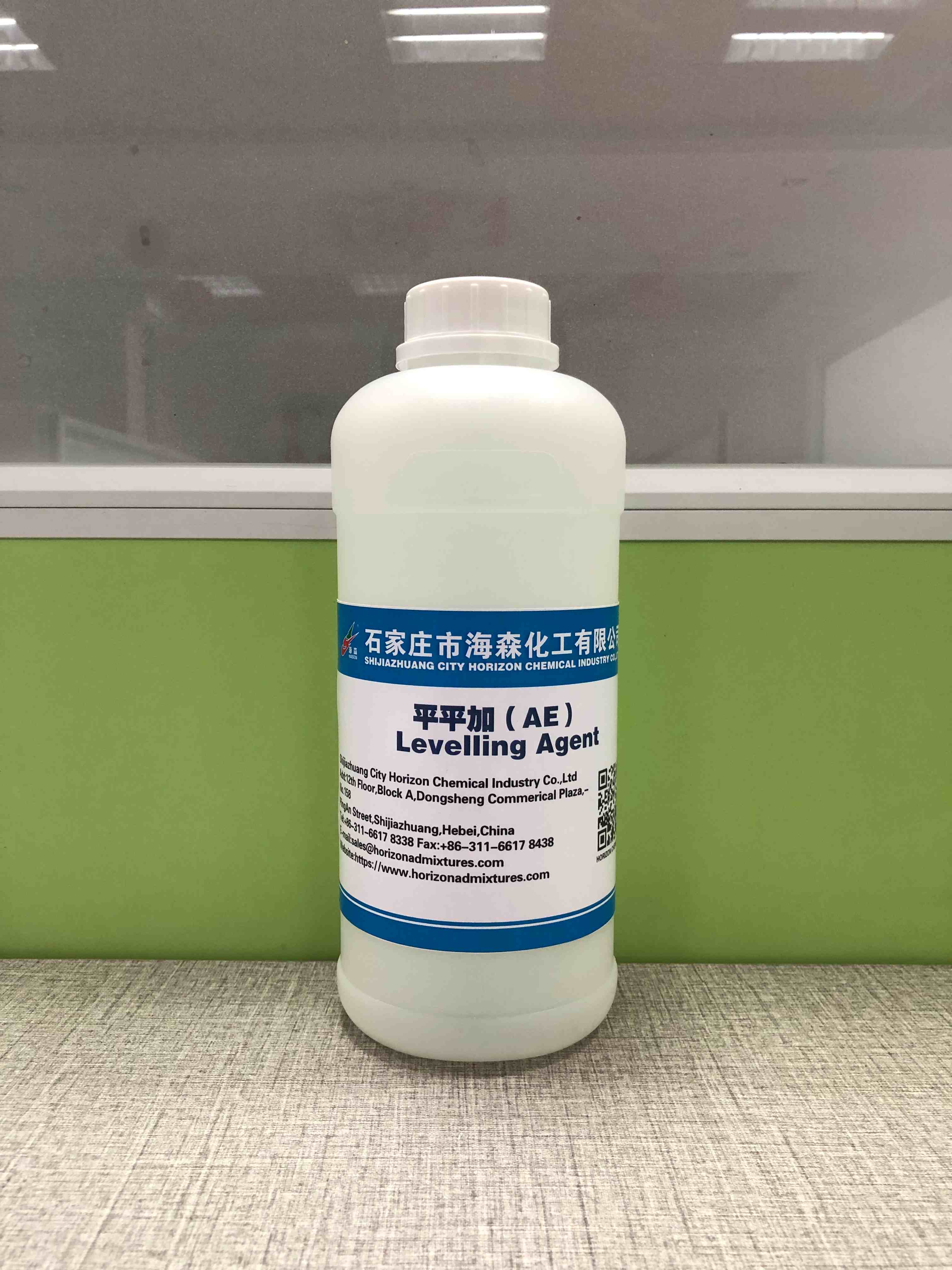
High Quality Levelling Agent: Your Secret to Impeccable Finishes
2026-07-26
Every painter knows the frustration of a finish that falls short—brush marks, orange peel, or uneven gloss can ruin hours of work. That’s where a high-quality levelling agent steps in, transforming ordinary coatings into impeccably smooth surfaces. With HAISEN, you’re not just adding an additive; you’re unlocking the secret to flawless results that stand out in any project. Let’s explore what makes this ingredient so essential—and why professionals trust it for uncompromising quality.
Why Surface Perfection Begins with a Levelling Agent
Achieving a flawless finish on any coated surface isn’t just about the quality of the paint or resin—it’s about how that material behaves in the moments after application. A levelling agent works by controlling the flow and surface tension of the wet film, allowing it to spread evenly and fill in minor imperfections before it sets. Without this intervention, coatings can suffer from brush marks, orange peel, or uneven gloss, all of which compromise the final appearance and performance.
The real art of a smooth surface lies in eliminating the microscopic irregularities that form during drying. As solvents evaporate and the film contracts, surface tension differences can pull the coating into unwanted patterns. A well-formulated levelling agent minimizes these differentials, promoting a uniform film thickness across the entire area. This is especially critical in high-gloss applications, where even subtle texture breaks the reflective quality and draws the eye to flaws.
Beyond aesthetics, a levelling agent also aids in defect prevention. By reducing surface tension gradients, it lowers the risk of cratering, crawling, and pinholes—common issues that arise from contaminants or substrate inconsistencies. The result is a coating that not only looks seamless but also provides better protection, as a uniform film is less prone to weak spots that can lead to premature failure.
The Chemistry Behind Flawless Flow and Leveling
Achieving a smooth, glass-like finish in coatings isn't simply a matter of skilled application—it's deeply rooted in molecular behavior. The secret lies in the careful balance between surface tension, viscosity, and the additives that modify them. When a liquid coating is applied, its natural tendency is to pull into itself due to cohesive forces, leaving behind brush marks, orange peel, or craters. To counteract this, formulators introduce surfactants that migrate to the surface, reducing surface tension just enough to allow the coating to spread evenly without creating defects. These molecules align themselves at the air-liquid interface, essentially lubricating the surface so that the film can relax and level out before solidifying.
Viscosity plays an equally critical trickster role—too high and the coating resists flow, locking in imperfections; too low and it drips or sags before it can set. Modern formulations rely on rheology modifiers that create a delicate, time-dependent viscosity. Under the shear of a brush or roller, the coating thins for easy application, then recovers its thickness almost instantly once the force is removed, allowing gravity to gently pull the liquid into a uniform layer. Temperature and evaporation rates further complicate this dance, as solvents or water must escape at a pace that extends the open time without chilling the surface and trapping moisture, which can cause blushing or dullness. Mastering these variables transforms a simple liquid into a self-healing film that flows into a flawless surface long after the applicator has moved on.
Common Application Pitfalls and How to Avoid Them
Many developers stumble when they rely too heavily on default configurations without understanding the underlying mechanics. Frameworks and libraries often provide sensible defaults, but these can lead to performance bottlenecks or security vulnerabilities in production environments. For instance, leaving debug mode enabled or using an embedded database can cause serious issues when the application scales. The key is to audit every setting and ensure it aligns with the specific demands of your deployment, rather than assuming what works locally will hold up under real-world traffic.
Another frequent misstep involves neglecting error handling and logging. Applications that fail silently or produce vague error messages make troubleshooting a nightmare. It’s not enough to catch exceptions; you need to provide meaningful feedback and log enough context to trace problems quickly. Structured logging with correlation IDs can save hours of guesswork. Moreover, treating errors as afterthoughts often results in inconsistent user experiences, so design your error flows from the start to be both graceful and informative.
A third pitfall is over-engineering solutions before the actual needs are clear. Anticipating future requirements is wise, but building overly complex architectures can slow down development and introduce unnecessary dependencies. Start with a simple, modular design that can evolve, and refactor when patterns emerge organically. Premature optimization, especially in database queries or caching strategies, often leads to tangled code that’s hard to maintain. Focus on delivering core functionality first, then iteratively improve based on real usage data and feedback.
Tailoring Your Choice for Different Coating Systems
When selecting a coating system, the substrate material should dictate your initial direction—not just its type, but its condition. For instance, weathered steel demands a surface-tolerant primer that can bite into rust, while fresh concrete requires a coating that breathes to release moisture vapor. Ignoring these nuances leads to premature failure, no matter how premium the topcoat.
Performance requirements often pull you in conflicting directions. A factory floor might need extreme abrasion resistance, yet also chemical resistance from spilled solvents. Here, a high-solids epoxy midcoat under a polyurethane finish might excel, whereas a water-based acrylic would quickly degrade. Balancing these demands upfront prevents costly rework.
Real-World Transformations: From Orange Peel to Glass-Like Finish
Imagine running your hand across a freshly painted car panel, expecting a mirror-smooth surface, only to feel a subtle waviness—like the skin of an orange. This texture, ironically named orange peel, is the enemy of that flawless, glass-like finish we all crave. It happens when paint dries unevenly, leaving behind tiny peaks and valleys that scatter light, dulling the reflection and wrecking the depth of the color.
The transformation from this dimpled disaster to a liquid-smooth shine is a careful dance of abrasive refinement. Skilled hands start with a measured approach, using fine-grit sanding to level the surface without cutting through the clear coat. Then, through progressive polishing with diminishing compounds, the haze fades, clarity emerges, and the panel starts to show true reflections—not just light bouncing back, but crisp images and deep, glossy depth.
Once the work is done, the result is almost magical: a surface so flawless it seems wet to the touch, showing off the paint’s true hue with a brilliance that photos can’t capture. It’s not just about looks—it’s the feel of perfection under your fingertips, the kind of finish that makes you turn back for another glance. That’s the real-world reward of turning orange peel into liquid glass.
Future-Proofing Your Finishes with Advanced Additives
The coatings industry continually faces evolving demands—stricter environmental regulations, heightened durability expectations, and shifting aesthetic trends. Advanced additives play a pivotal role in meeting these challenges by fortifying finishes against premature degradation. Through molecular-level reinforcement, these components counteract common failure points like UV radiation, moisture intrusion, and chemical exposure, effectively extending the service life of applied surfaces. Rather than merely reacting to problems, modern formulations proactively shield substrates, ensuring that today’s applications stand resilient well into the future.
Innovation in additive technology now allows for multifunctional performance without the traditional trade-offs. Nano-engineered particles, for instance, can simultaneously deliver scratch resistance and enhanced gloss retention while contributing to corrosion barriers. Silane-based chemistry improves crosslinking density, leading to harder yet more flexible films that resist cracking under thermal cycling. By integrating such solutions at the dispersion phase, manufacturers can tailor finishes to specific climatic and operational extremes, from coastal salt spray to industrial abrasion. This precision engineering means longer intervals between recoats and reduced maintenance costs for end users.
Sustainability pressures are also reshaping additive design, with a focus on bio-based and low-VOC options that do not compromise protective qualities. Waterborne systems augmented with reactive diluents achieve high solids content and rapid cure rates without the emission drawbacks of solvent-borne counterparts. Anti-graffiti and easy-clean functionalities, once reliant on persistent chemicals, now emerge from silicone-hybrid networks that maintain performance through numerous wash cycles. Looking ahead, the integration of smart additives capable of autonomous damage response hints at surfaces that actively report and repair degradation, redefining what it means to future-proof a finish.
FAQ
A levelling agent is an additive used in paints and coatings to help them spread evenly over a surface, reducing brush marks, orange peel, and other imperfections. It’s often considered a “secret” because even professionals sometimes overlook it, yet it can transform an average application into a flawless one by controlling surface tension and flow.
It works by modifying the surface tension of the liquid coating. When the paint is applied, the levelling agent migrates to the surface and evens out tension differences, allowing the wet film to flow and fill in valleys and peaks before it sets. This results in a glass-like smoothness once cured.
Not universally. Most levelling agents are compatible with water-based, solvent-based, and even some UV-curable systems, but you need to check the product specifications. Adding the wrong type can cause cratering or adhesion problems. Always test a small batch first to ensure compatibility with your specific formulation.
If you notice brush strokes, roller stipple, orange peel, or fisheyes in your dried finish, you likely need a levelling agent. These defects happen when the paint doesn’t flow out properly. A good levelling agent can minimize or eliminate these issues without thinning the paint excessively.
They’re often used interchangeably, but strictly speaking, a flow modifier adjusts the viscosity and application feel, while a levelling agent specifically targets surface tension to smooth out the film. Many modern additives combine both functions, but for maximum control, you might choose a dedicated levelling agent.
For high-gloss, you need a levelling agent that provides excellent surface slip and minimal haze. Look for silicone-free or modified silicone types if clarity is crucial. Always review the technical data sheet for gloss retention properties, and consider doing a drawdown test to compare results side by side.
Overdosing is the biggest mistake. Too much can cause recoat adhesion failure or surface tackiness. Another is adding it at the wrong stage of mixing—some agents must be post-added under shear. Also, neglecting to stir thoroughly can lead to inconsistent performance. Less is often more with these powerful additives.
It can significantly reduce the need for sanding by creating a smoother film from the start, but it’s not a total replacement. Minor imperfections might be leveled out, but for deep scratches or dust nibs, sanding is still necessary. Think of it as a time-saver that improves the overall quality, making your prep work go further.
Conclusion
Achieving a flawless coating surface isn’t just about technique—it’s about understanding that high-quality levelling agents are the hidden architects of a perfect finish. These additives work at the molecular level, reducing surface tension gradients that cause common defects like orange peel, craters, and brush marks. By creating a uniform flow, they allow the wet film to relax and self-smooth before curing. However, their effectiveness hinges on tackling real-world pitfalls: improper dosage often leads to foam or intercoat adhesion loss, while mismatched chemistry can destabilize the entire formulation. Navigating these challenges means selecting a levelling agent tailored to your system—whether it’s a solventborne acrylic that thrives with silicone-free polyacrylates or a waterborne polyurethane needing a reactive, low-slip additive. The transformation, when done right, is immediate: a once-textured surface becomes a glass-like sheet that catches the light with mirror-like clarity, boosting both aesthetics and durability.
Beyond immediate visual appeal, advanced levelling agents are redefining what coatings can endure. Modern chemistries introduce smart features—like anti-cratering and recoatability—while maintaining impeccable flow even under harsh conditions. Take, for instance, a recent shift in automotive clearcoats: replacing a generic acrylic levelling aid with a tailor-made polysiloxane derivative erased subtle back-baking haze and boosted DOI (distinctness of image) scores by over 20%. Similarly, in industrial wood coatings, a reactive organo-silicone not only eliminated micro-bubbles but also enhanced mar resistance, future-proofing the finish against daily wear. As environmental regulations push toward lower-VOC and higher-solids systems, the role of the levelling agent becomes even more critical. The secret isn’t just adding something—it’s choosing an additive that thinks ahead, bridging the gap between immediate levelling and long-term performance. That’s the real art of impeccable finishes: letting chemistry work silently so your surface speaks volumes.
Contact Us
Contact Person: Sam Lee
Email: [email protected]
Tel/WhatsApp: 86-311-6617 8338
Website: https://www.horizonadmixtures.com/