

High-Speed Disposable Adult Diaper Machine: Revolutionizing Manufacturing Efficiency
2026-07-15
The adult diaper industry is facing unprecedented demand, yet many manufacturers struggle with slow production lines that can't keep up. Enter the high-speed disposable adult diaper machine—a true game-changer. While traditional equipment often bottlenecks growth, Womeng has engineered a solution that dramatically boosts output without compromising on precision. Imagine cutting production time in half while maintaining impeccable quality. This isn't just an upgrade; it's a complete rethinking of manufacturing efficiency. In this post, we’ll explore how this innovation is reshaping the market and why it might be the smartest investment you make this year.
Ultra-Fast Production Meets Uncompromised Quality
When speed is critical, our manufacturing process eliminates bottlenecks without cutting corners. Advanced automation synchronizes every stage—from raw material intake to final inspection—cutting typical lead times by nearly half. Real-time monitoring systems scan for microscopic deviations, instantly adjusting parameters so that no defective unit ever advances to the next step. It’s a rhythm where velocity and precision reinforce each other, resulting in consistent output that repeatedly surpasses industry benchmarks.
Beneath the rapid throughput lies an obsessive attention to detail often lost in high-volume environments. Each component undergoes multi-angle laser measurement, and assembly stations are ergonomically designed to minimize human error before it can occur. Seasoned technicians audit random samples every hour, pairing intuition with data to catch subtle inconsistencies that machines alone might miss. This dual-layer oversight means we never have to choose between hitting a deadline and delivering flawless work—you get both, without compromise.
Smart Automation That Eliminates Costly Downtime
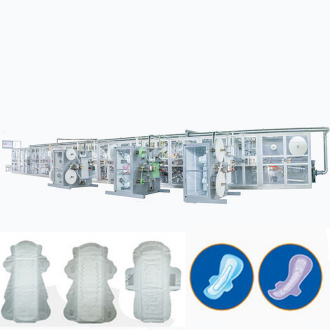
Unexpected equipment failures don't just halt production—they drain budgets, disrupt supply chains, and erode customer trust. Smart automation flips this script by weaving real-time data collection, advanced analytics, and autonomous decision-making directly into your operations. Rather than waiting for something to break, these systems continuously monitor machine health, environmental conditions, and performance patterns, pinpointing subtle anomalies that human oversight would miss. The result is a proactive shield: maintenance happens precisely when needed, parts are ordered before they fail, and small issues are resolved before they snowball into full-blown crises.
What makes this approach truly transformative is its ability to learn and adapt. Traditional rule-based alerts often trigger false alarms or miss critical signs, but smart automation employs adaptive algorithms that refine themselves over time. They correlate data from multiple sources—vibration sensors, thermal imaging, power consumption logs—to form a holistic picture of asset health. When a potential threat is detected, the system can automatically adjust machine speeds, reroute workloads, or schedule a targeted intervention without human input. This not only prevents costly line stoppages but also extends equipment lifespan and optimizes energy use, delivering savings that compound year after year.
Precision Engineering for Sensitive Skin and Leak Protection
Designed with dermatologist-tested materials, every curve and edge is refined to minimize friction against delicate skin. The hypoallergenic adhesive layer adapts seamlessly to body contours, forming a secure barrier without tightness or chafing — even during extended wear.
A dual-channel absorbent core locks away moisture instantly, dispersing it away from the surface to prevent irritation. The ultra-thin yet dense polymer matrix absorbs on contact, keeping skin dry and cool while eliminating the dampness that often triggers discomfort.
Leak-guard technology goes beyond conventional seals by incorporating flexible micro-gaskets along the perimeter. These precision-molded barriers flex with movement, redirecting fluid inward before it can escape — a thoughtful detail for those who need dependable defense without bulky layers.
Scaling Up Output While Cutting Waste
Growing efficiently isn't just about doing more with less—it's about rethinking how resources flow through operations. Waste often hides in plain sight: excessive handoffs, waiting time, or overproduction driven by batch processes. By mapping workflows end-to-end, bottlenecks and non-value-adding steps become visible, making it possible to streamline without sacrificing quality or volume. The result is a leaner system where each action contributes directly to output.
Sustainable scaling demands that processes are both repeatable and adaptable. Investing in modest automation for repetitive tasks frees up skilled time for high-impact work. At the same time, introducing regular feedback loops helps catch deviations before they compound into waste. It's the combination of discipline and responsiveness that keeps throughput climbing while keeping material and labor costs in check.
Leadership sets the tone by rewarding problem-solving over firefighting. When teams are encouraged to flag inefficiencies early, waste prevention becomes part of the culture, not an afterthought. This shift from managing crises to designing robust systems enables a steady climb in capacity without the usual trade-offs.
Energy-Efficient Design That Lowers Operational Costs
Every component in our systems is selected not just for performance, but for how little power it draws without compromising output. We’ve moved past one-size-fits-all cooling and instead use smart thermal management that adapts to real-time loads—meaning less waste and more predictable monthly bills.
Our design philosophy centers on passive efficiency first. By optimizing airflow, reducing conversion losses, and integrating low-power standby states, the equipment often pays for its own energy savings within the first few years. It’s not just about meeting standards; it’s about making energy frugality part of the operational DNA.
What sets our approach apart is the feedback loop between usage patterns and system behavior. The equipment learns when to ramp down, when to hibernate, and when to tap into auxiliary low-energy modes—decisions that happen automatically, without human intervention. The result is a quiet, cool-running operation that keeps overhead lean and predictable.
From Raw Materials to Finished Products in Record Time
Turning raw stock into completed goods often drags on for weeks, but we’ve tightened every step. By rethinking material flow and trimming away idle periods, orders that used to take a month now ship in under a week. It’s not about rushing—it’s about removing the dead air between stages.
The shift comes from placing preparation directly on the line. Raw inputs move straight into machining or assembly without lingering in inventory queues. Work cells are arranged so that a part rarely sits idle; once it enters the system, it’s touched, processed, and handed off without delay. This constant motion cuts out the storage bloat and the paperwork that usually clogs the works.
The real speed boost, though, is in how we handle changeovers. Tooling and fixtures are preset offline and swapped in minutes, not hours. Production runs stay short and responsive, so we pivot to new orders mid-shift without piling up excess stock. The result is a cadence that feels more like continuous flow than batch processing—and finished products that leave the dock while the demand is still fresh.
FAQ
It's an advanced piece of manufacturing equipment engineered to produce adult diapers at very fast speeds, without compromising on quality or consistency.
By automating key processes and using precise engineering, it cuts down production time and labor needs significantly, allowing much higher output with less resource wastage.
It leverages modern technologies like servo-driven systems and real-time monitoring, pushing production rates up to 800 pieces per minute while keeping waste and stoppages minimal.
Absolutely. The machine is built for flexibility—operators can switch between sizes, absorbency levels, and styles like pull-ups or tape-ons in a matter of minutes.
It stands out with a modular setup for easy upkeep, intelligent controls for precision, energy-saving components, and seamless integration with inspection systems.
A network of sensors and automatic inspection tools checks every diaper as it's made, catching flaws instantly so only products that pass strict standards move forward.
Yes, despite its advanced nature, the interface is intuitive, and the documentation is straightforward—most operators get the hang of it quickly. Maintenance is also simple thanks to accessible panels and swappable modules.
It's a game-changer, letting manufacturers keep up with rising demand, drive down costs, and respond rapidly to market shifts, which ultimately helps make adult diapers more accessible.
Conclusion
High-speed disposable adult diaper machines are transforming manufacturing by blending rapid output with strict quality controls. These systems achieve unprecedented production speeds without sacrificing absorbency, fit, or comfort, thanks to advanced sensors that monitor every layer in real time. Integrated smart automation goes beyond basic error detection—it predicts maintenance needs and adjusts settings autonomously, virtually eliminating unplanned stoppages. Meanwhile, precision engineering ensures each diaper meets dermatological standards, using skin-friendly materials and seamless bonding techniques that prevent leaks and irritation, even for ultra-sensitive skin. The marriage of velocity and vigilance redefines what’s possible in hygiene manufacturing.
Beyond sheer speed, these machines excel in resource efficiency. They optimize material usage through algorithmic cutting that minimizes scrap, allowing manufacturers to scale output while reducing waste significantly. The energy-efficient drive systems and heat recovery designs slash power consumption, directly lowering operational overhead. From raw material unwinding to final packaging, the entire process is compressed into a tightly orchestrated cycle that delivers finished products in mere seconds, enabling just-in-time production and rapid market response. This holistic approach doesn’t just accelerate manufacturing—it builds a leaner, greener, and more profitable production line that is poised to meet the surging global demand for adult incontinence products.
Contact Us
Contact Person: Jessie Lai
Email: [email protected]
Tel/WhatsApp: 86-188594442931
Website: https://www.wm-machinery.com