
High Voltage Steel Pipe Tower: Top Solutions for Resilient Grids
2026-07-23
In an era where grid reliability can make or break economies, the unsung heroes of power transmission are often towering steel structures that withstand nature's fury. High voltage steel pipe towers are redefining what it means to build resilient grids—combining strength, efficiency, and longevity. But what separates a standard tower from a truly future-ready solution? At Anbang, we're not just manufacturing poles; we're engineering resilience into every weld and flange. Dive into the top solutions that are quietly fortifying the world's energy backbone.
The Backbone of Modern Power Transmission: Why Steel Pipe Towers Excel
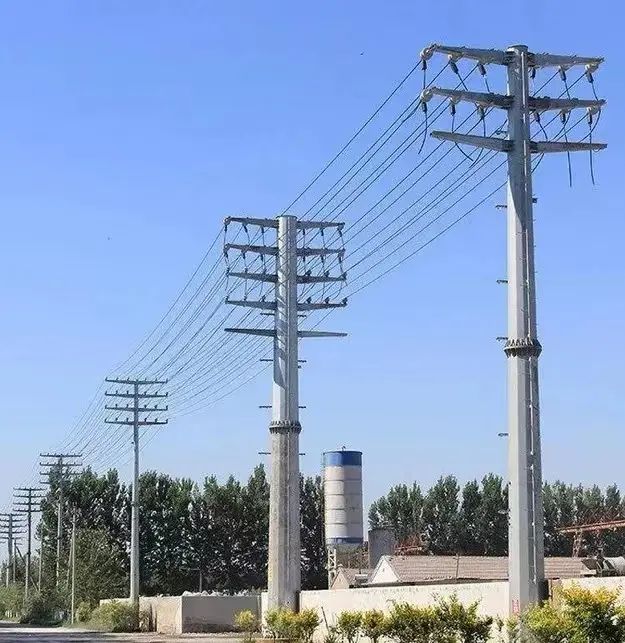
Steel pipe towers have quietly reshaped the landscape of modern power transmission, offering a blend of strength and adaptability that traditional lattice towers often struggle to match. Their closed, cylindrical design isn’t just an aesthetic upgrade—it provides superior resistance to wind and ice loads by minimizing drag and eliminating the nooks where ice can accumulate. This inherent robustness allows them to support heavier conductors and higher voltage lines, making them the go-to choice for upgrading aging infrastructure in densely populated regions.
Beyond structural integrity, these towers bring operational simplicity to the field. Fabricated in fewer pieces and with smoother surfaces, they’re quicker to assemble onsite and far less inviting to corrosion, thanks to easier access for galvanizing and painting. Maintenance crews appreciate the reduced need for climbing and inspection, as the uniform profile leaves fewer hidden joints where rust or fatigue can start. In coastal or industrial areas where airborne salts and pollutants slowly eat away at metal, steel pipe towers consistently outlast their angular counterparts, driving down long-term ownership costs.
What truly sets them apart in today’s energy landscape is their flexibility in tight spaces. Urban planners and environmental agencies favor the compact footprint, which uses up to 40% less land than a conventional lattice base—a critical advantage when routing lines through protected forests or alongside highways. Utility companies also report fewer bird collisions and smoother right-of-way negotiations, turning what was once a purely engineering decision into a strategic asset for project approval and community acceptance.
Engineering Resilience: How These Towers Withstand Extreme Conditions
These structures don’t just fight wind and water—they dance with them. Take the tuned mass damper, a giant pendulum hidden near the top of many super-tall towers. When gales whip the building into a sway, the damper swings in the opposite direction, pulling the skeleton back toward center. It’s not about resisting the force entirely but about dissipating the energy over time, much like pushing a child on a swing more gently until they slow. This elegant choreography keeps occupants comfortable and prevents structural fatigue.
Beneath the ground, the story gets grittier. Engineers often anchor towers to bedrock with deep piles or caissons that plunge through soft soil like roots searching for solid ground. In seismic zones, that connection isn’t rigid—bearings made of layered rubber and steel act like shock absorbers, letting the earth shudder underneath while the building above sways with a slower, safer rhythm. Materials also play a quiet hero: high-performance concrete mixed with plasticizers can flow into impossibly cramped rebar cages, hardening into columns that flex instead of snapping.
The exterior shape matters just as much. You’ll notice many modern towers twist slightly as they rise or taper aerodynamically, sloughing off wind curls that could otherwise build into destructive crosswinds. Some have open sky gardens every few floors, allowing gusts to pass through rather than slam against a solid face. Even the cladding gets in on the act—facades with tiny vents equalize pressure differences so windows don’t pop out during a cyclone. Every line and angle is a negotiation with the elements, refined in wind tunnels until the profile becomes a poem of resistance.
Smart Design Innovations Reducing Installation Time and Costs
A growing number of manufacturers are moving away from traditional, labor-intensive installation methods by embedding clever design choices directly into their products. Instead of relying on specialized teams and drawn-out on-site assembly, the latest solutions use interlocking components, color-coded connectors, and self-aligning brackets that virtually eliminate guesswork. This shift not only slashes the clock time required for deployment but also reduces the need for expensive, highly trained installers, allowing even smaller teams to complete projects without sacrificing quality.
Another underappreciated innovation is the integration of prefabricated sub-assemblies that arrive partially or fully connected out of the box. By consolidating multiple parts into a single, tested module, the room for human error plummets and the hours spent deciphering complex diagrams disappear. Some designs now incorporate push-to-lock mechanisms and tool-free fasteners, transforming what was once a two-day installation into an afternoon task. These choices also cut down on wasted materials and rework, which often drive up hidden costs beyond the initial estimate.
Perhaps the most impactful advance is the use of adaptive design platforms that flex across different site conditions without requiring custom fabrication. Adjustable mounting systems, telescoping brackets, and guided alignment features let one product work in multiple scenarios, trimming both inventory complexity and the time spent adapting on the fly. By aligning product development with real-world installation challenges, these smart solutions make the entire process faster, cleaner, and far more cost-effective for everyone involved.
Longevity in Service: Corrosion Resistance and Low Maintenance Needs
Materials that stand up to harsh environments without rusting or degrading naturally demand less attention over their lifespan. This inherent toughness means fewer replacements and repairs, directly extending the useful life of the structure or component. When corrosion is kept at bay, the integrity of the material remains intact, bypassing the slow weakening that plagues ordinary metals.
The connection between low upkeep and prolonged service is straightforward: systems that don't require constant intervention can perform reliably for decades. Designing with elements that resist chemical attack and weathering eliminates the cycle of frequent inspections, coatings, and part swaps. It's a quiet kind of endurance – the result of choosing the right materials from the start, rather than relying on ongoing treatment.
Sustainable Foundations: Eco-Friendly Steel for Greener Grids
Steel has long been the backbone of our energy infrastructure, but its production has historically come with a steep environmental price. Today, the shift toward eco-friendly steel is transforming how we build power grids, offering a way to support renewable energy expansion without undermining the very goals of sustainability. By using recycled materials, adopting electric arc furnace technologies, and integrating green hydrogen into the steelmaking process, manufacturers can drastically cut carbon emissions compared to traditional blast furnaces. This isn’t just a marginal improvement—modern low-carbon steel can reduce the carbon footprint by up to 80% while maintaining the strength and durability required for transmission towers, substation structures, and other critical components.
What makes this approach truly foundational is that it aligns the material lifecycle with the long-term vision of a net-zero grid. Eco-friendly steel isn’t just about cleaner production; it also enables more resilient and adaptable infrastructure. For instance, high-strength, low-alloy variants allow for lighter tower designs that use less material without sacrificing performance, reducing both raw resource demand and transportation emissions. At the end of their service life, these components are fully recyclable without loss of quality, closing the loop in a circular economy. As grid planners face the challenge of integrating intermittent renewable sources and extending infrastructure into harsher environments, relying on steel that is both environmentally benign and technically superior becomes a strategic imperative rather than a niche choice.
Beyond the numbers, choosing sustainable steel sends a clear signal throughout the supply chain. It encourages utilities, regulators, and investors to see grid modernization as an opportunity to embed carbon accountability from the ground up. Projects that specify verified low-emission steel can more easily meet environmental permitting requirements and attract green financing. Moreover, the localized sourcing of scrap-based steel often reduces dependence on overseas heavy industries, fostering regional economic resilience. Ultimately, building greener grids isn’t just about adding solar panels and wind turbines—it’s about reassessing every material we use. Eco-friendly steel fuses innovation with pragmatism, ensuring that the foundations of tomorrow’s energy systems are as clean as the electrons they carry.
Future-Ready: Integrating High Voltage Towers into Smart Networks
The evolution of power grids demands infrastructure that communicates, adapts, and self-regulates. High voltage towers, once static steel giants, are being reimagined as active nodes within intelligent networks. By embedding sensors and real-time monitoring systems, these structures can now relay critical data on load balances, weather impacts, and structural health directly to control centers. This shift transforms them from passive carriers into dynamic participants, enabling predictive maintenance and rapid fault isolation without human intervention.
Modernizing these towers also means weaving them into the digital fabric of distributed energy resources. As renewables feed erratic supply into the grid, towers equipped with edge computing capabilities can make microsecond decisions to stabilize voltage and reroute power. The challenge lies in retrofitting legacy assets with non-invasive technology that respects their original engineering while injecting new intelligence—an approach that avoids massive rebuilds and keeps the transition budget-conscious.
Crucially, this integration opens pathways for multi-use infrastructure. Tower corridors doubling as fiber optic backbones or hosting small-cell antennas bridge the gap between energy and telecommunications networks. Such convergences not only maximize land use but also create redundant communication channels vital for grid resilience. The tower of tomorrow isn't just a conduit for electrons; it's a hardened platform for the overlapping necessities of a connected society.
FAQ
These towers offer exceptional strength and durability, enabling them to withstand extreme weather and heavy loads. Their design also allows for easier maintenance and longer service life.
Steel pipe towers have a continuous, smooth surface that reduces wind resistance and ice accumulation, making them less susceptible to damage during storms. Their robust construction also provides better protection against corrosion.
Advances in manufacturing, such as automated welding and hot-dip galvanizing, have improved quality and reduced costs. Additionally, modular designs enable faster installation in remote or challenging terrains.
Yes, their compact footprint and sleek appearance make them ideal for urban settings. They can be designed to blend with surroundings while supporting heavy conductor bundles for efficient power delivery.
They require minimal maintenance due to high resistance to environmental factors. Their structural integrity ensures consistent performance over decades, reducing unplanned outages and repair costs.
Engineers design these towers with flexible connections and base isolation systems to absorb seismic energy. Detailed site-specific analysis ensures they meet safety standards without compromising function.
Absolutely. Manufacturers can tailor dimensions, material grades, and coating systems to match voltage levels, terrain, and climate. This flexibility optimizes performance and cost-effectiveness.
They facilitate the transmission of power from remote solar and wind farms to load centers. Their ability to handle high voltages with low losses makes them essential for long-distance renewable energy corridors.
Conclusion
High voltage steel pipe towers form the backbone of modern transmission grids, combining strength and adaptability to meet growing energy demands. Their tubular design inherently resists buckling and fatigue, allowing them to endure hurricane-force winds, ice loads, and seismic events without compromising performance. Unlike lattice structures, the smooth profile minimizes wind drag and reduces points of failure, offering a robust solution for critical infrastructure. Smart engineering innovations, such as modular sections and pre-engineered connections, slash installation time and on-site labor, significantly cutting project costs while maintaining exceptional reliability. These towers also excel in longevity; advanced galvanizing and weathering steel alloys fend off rust, minimizing maintenance and extending service life well beyond conventional alternatives.
Beyond resilience, high voltage steel pipe towers embrace sustainability through the use of recycled steel and production processes that lower carbon footprints. Their slender footprint preserves land and ecosystems, aligning with environmental best practices. As grids evolve into smart networks, these towers easily accommodate sensors, communication hardware, and real-time monitoring systems, enabling predictive maintenance and efficient load management. This seamless integration supports bidirectional power flow from renewable sources, making them pivotal in tomorrow’s decentralized, green energy landscape. By merging durability with eco-conscious design, steel pipe towers stand out as a future-ready choice for utilities aiming to balance reliability and environmental stewardship.
Contact Us
Contact Person: antor khan
Email: [email protected]
Tel/WhatsApp: 8613863903569
Website: https://www.qdabtower.com/