

Industrial Vehicle Manufacturer Insights: Driving Efficiency and Innovation in Material Handling
2026-07-16
In today's fast-paced material handling landscape, the pursuit of efficiency and innovation is no longer optional—it's essential. Industrial vehicle manufacturers are redefining how goods move, and at the forefront of this evolution stands HANGCHA, a brand synonymous with cutting-edge solutions. As we dig into the key insights driving the industry, you'll discover how smart design and relentless innovation are shaping the warehouses of tomorrow.
Redefining Workflows Through Autonomous Mobile Robots
The steady hum of wheels gliding across a factory floor signals more than just motion—it marks a fundamental shift in how tasks are orchestrated. Autonomous mobile robots don't simply follow predetermined paths; they weave through dynamic environments, making real-time decisions that reshape the flow of materials and data. By taking on repetitive transport and retrieval duties, they allow human workers to step back from the monotony of hauling carts and focus on exceptions, problem-solving, and creative problem-solving that machines can't yet touch.
In settings ranging from bustling warehouses to sterile hospital corridors, these robots act as a quiet coordinating layer. They link islands of automation, bridging gaps between fixed conveyors and manual workstations with a fluidity that static systems can't match. A robot might prioritize a hot order mid-route, avoid a sudden obstacle, or synchronize with an elevator to deliver supplies to a different floor—all without human intervention. This adaptability turns a linear production schedule into a living, breathing network where tasks are completed in parallel, bottlenecks dissolve, and throughput climbs without the need to overhaul existing layouts.
The true redefinition, however, lies in how teams and algorithms collaborate. When a fleet of robots shares a common map and learns from collective experience, the entire workspace becomes a responsive organism. Managers start to think less about rigid zones and more about flow patterns, leveraging the robots’ data to continuously refine operations. It's a shift from commanding machines to partnering with them—a quiet workplace evolution where efficiency emerges not from replacing people, but from giving them a fleet of tireless, intelligent assistants that reshape the very rhythm of work.
The Shift Toward Electric and Hydrogen-Powered Fleets
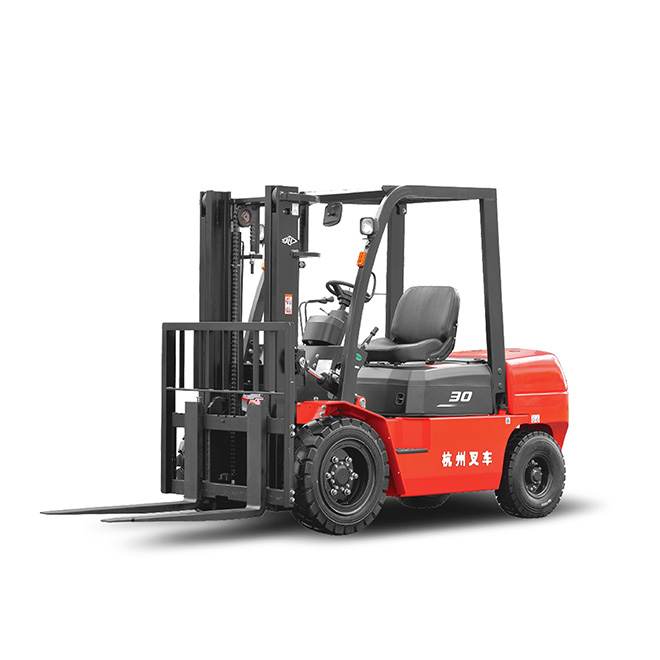
Fleet operators across the globe are rethinking their fuel strategies, with many turning to electric vehicles for last-mile deliveries and urban routes where charging infrastructure is densest. The silence of an electric motor and the absence of tailpipe emissions are reshaping city logistics, but the true transformation lies deeper: battery advancements are pushing range anxiety further into the rearview mirror, while depot-based charging and smart grid integration allow for overnight replenishment with minimal disruption. The economics, once a hurdle, now tilt favorably as maintenance costs plummet and energy prices stay comparatively stable. This isn’t just a green badge—it’s a fundamentally leaner way to run a fleet.
Yet the road to zero emissions isn’t paved solely with lithium-ion. Hydrogen fuel cells have carved out a quiet but critical niche for heavy-duty and long-haul transport, where battery weight and downtime for charging remain impractical. A hydrogen-powered truck can refuel in minutes and cover hundreds of miles, mirroring the convenience of diesel without the carbon debt. Fleets that adopt hydrogen aren’t just buying vehicles; they’re entering an ecosystem that’s slowly being stitched together—from green hydrogen production facilities to high-pressure refueling stations along freight corridors. The upfront investment is steep, but for logistics companies that can’t afford idle time, the calculus is shifting.
What’s often overlooked is the hybrid mentality now emerging among forward-thinking fleet managers. They’re mixing electric vans for predictable, short-range loops and reserving hydrogen cells for the backbone routes that cross state lines and mountain passes. It’s a mosaic approach, guided not by dogma but by data—telematics that reveal usage patterns, energy costs, and total cost of ownership. This pragmatic shift is quietly outrunning policy mandates, driven by the simple truth that electrification and hydrogen, together, offer a resilience that neither can provide alone.
Harnessing Telematics Data for Predictive Maintenance
Modern fleets generate an immense stream of sensor readings—engine load, hydraulic pressures, brake wear indicators—all flowing in near real time from mobile machinery. Instead of letting this information pile up in a database, progressive maintenance teams channel it into failure-pattern libraries that grow smarter with every machine cycle. By triangulating deviations across multiple subsystems, they can spot a deteriorating pump bearing long before metal shavings appear in oil samples.
The real breakthrough comes from correlating telemetry with external conditions. A construction excavator operating in abrasive dust may trigger voltage spikes in its cooling fan circuit weeks before a burnout—but only if the model accounts for that site’s particulate load. Combining proprietary repair logs with public weather data and terrain maps creates a layered view where seemingly normal sensor values reveal hidden stress accumulation. This context-aware approach moves beyond simple threshold alerts into genuine early warning.
What separates leaders from laggards is the feedback loop between field experience and algorithm refinement. When a technician confirms a predicted failure or flags a false alarm, that judgment reweights the entire detection network. Over time, the system learns which signal combinations matter most for each machine variant, eliminating the generic, one-size-fits-all alerts that desensitize crews. The result is a maintenance schedule shaped by actual usage fingerprints rather than conservative calendar counts.
Ergonomic Design and Advanced Operator Assistance
Machines built with genuine ergonomic principles feel like an extension of the operator’s own movements. Controls fall naturally to hand, visibility remains clear without awkward body contortions, and seating adjusts to support different body types during long shifts. Subtle design choices—like angled displays, vibration‑dampened platforms, and intuitive control layouts—reduce physical strain far more effectively than simply adding padding or larger grab handles.
Advanced assistance features step in exactly when fatigue or complexity might compromise performance. Smart systems monitor critical parameters and offer gentle nudges rather than jarring alarms: dynamic load charts that adapt in real time, semi‑automated precision modes for repetitive tasks, and unobtrusive stability warnings that appear only when truly needed. These aids don’t take over the operation; they quietly fill attention gaps, allowing the operator to stay focused on the broader worksite picture.
The real benefit emerges when ergonomics and digital assistance are treated as one interconnected system. A well‑designed cabin amplifies the effectiveness of operator aids, because a comfortable person processes information faster and reacts more accurately. Meanwhile, assistance technologies reduce the mental workload, which in turn lessens the physical tension that builds up during high‑stakes maneuvers. Together, they create a working environment where safety and productivity grow from the same root: respect for how human beings actually function.
Modular Configurations for Dynamic Warehousing Needs
Traditional warehouse setups often lock operations into rigid layouts that can't keep pace with shifting inventory profiles or seasonal demand spikes. Modular configurations flip that script, offering a building-block approach where racking systems, workstations, and even entire storage zones can be reconfigured without major construction. This means a facility handling bulk pallets one quarter can seamlessly pivot to high-density pick modules the next, all while maintaining throughput and minimizing downtime.
The real advantage lies in how these systems adapt to product dimensions, velocity, and order profiles. Adjustable shelving, movable mezzanines, and clip-on beam levels let managers fine-tune slotting on the fly, squeezing more storage density out of every square foot. When coupled with scalable automation—think conveyors that can be lengthened or shortened, or robotic goods-to-person stations dropped into existing grids—the result is a warehouse that flexes with business cycles, not against them.
From a practical standpoint, modular design also slashes long-term costs. Instead of leasing additional space to handle a temporary surge, companies can restructure within their current footprint. Once the peak passes, the layout reverts just as quickly, avoiding stranded capacity. It's a smarter way to future-proof logistics operations: build for what you need today, but leave the blueprint open for whatever tomorrow brings.
Integrating Material Handling Equipment with Smart Factory Networks
Material handling equipment like automated guided vehicles and robotic arms have evolved from simple transport tools to intelligent nodes within a factory’s digital ecosystem. When woven into a smart factory network, these machines share real-time location and status data with production systems, enabling dynamic routing and adaptive workflows. The shift moves material flow from a fixed sequence to a responsive, data-driven process that adjusts to bottlenecks, urgent orders, or inventory levels without operator intervention.
Seamless integration hinges on communication standards and edge computing. Instead of funneling all sensor data to a central server, smart conveyors and sorters often process information locally, sending only critical alerts or actionable insights to the manufacturing execution system. This reduces latency and bandwidth strain while allowing the equipment to self-optimize for energy use and throughput. The result is a network of material handlers that collectively learn and improve, much like a distributed intelligent organism.
The true payoff emerges in predictive maintenance and inventory orchestration. Vibration sensors on lift trucks and conveyors feed machine learning models that forecast failures, syncing with maintenance schedules to prevent unexpected downtime. Meanwhile, connected storage systems automatically trigger reorders when RFID tags indicate low stock, ensuring material availability without excessive buffer inventory. These quiet interactions blur the line between physical movement and software intelligence, turning the factory floor into a self-regulating environment where material, machines, and data flow together.
FAQ
Many focus on integrating smart powertrains and lightweight materials to reduce energy consumption. Others streamline production through modular design, allowing quicker assembly and easier maintenance. Real-time data analytics also help fine-tune logistics and fleet management.
Automation is moving beyond simple guided vehicles. Modern systems use advanced sensors and machine learning to navigate dynamic environments, predict maintenance needs, and coordinate seamlessly with warehouse management software, leading to fewer bottlenecks and higher throughput.
Electrification is central to reducing emissions and operating costs. Lithium-ion batteries offer faster charging and longer lifespans, while hydrogen fuel cells are gaining traction for heavy-duty applications, providing a cleaner alternative without sacrificing power.
They often use high-strength steel and composite materials in frames while optimizing structural design through computer simulations. This preserves load-bearing capacity and longevity while cutting overall weight, which improves maneuverability and energy efficiency.
Integration with legacy systems is a common challenge. Many facilities have existing infrastructure that isn't easily compatible with autonomous or connected vehicles. Workforce training and upfront investment costs also slow adoption, though long-term savings are substantial.
Ergonomics directly affect operator fatigue and precision. Features like adjustable seating, intuitive controls, reduced vibration, and climate management help maintain focus during long shifts, translating into fewer errors and more consistent output.
We're seeing a shift toward fully connected fleets that communicate with each other and central systems. Augmented reality for maintenance, on-demand manufacturing for custom parts, and circular economy principles for end-of-life recycling are all expected to gain momentum.
Conclusion
Industrial vehicle manufacturers are redefining material handling operations by deploying autonomous mobile robots (AMRs) that introduce flexibility and intelligence into previously rigid workflows. The transition to electric and hydrogen-powered fleets is gaining momentum, motivated by both environmental regulations and long-term cost reduction. By leveraging telematics data for predictive maintenance, companies can anticipate component failures and schedule timely interventions, cutting unplanned downtime and extending equipment lifespan. These advancements represent a fundamental shift toward data-driven, sustainable operations that enhance overall efficiency and resilience.
At the same time, a focus on ergonomic design and advanced operator assistance is improving workplace safety and productivity, minimizing physical strain and human error. Modular vehicle configurations allow rapid adaptation to varying warehousing demands, offering scalability without extensive reengineering. Seamless integration with smart factory networks further unlocks value by enabling real-time coordination between material handling equipment and broader production systems. Taken together, these strategies illustrate how manufacturers are driving innovation through practical, integrated solutions that anticipate the evolving needs of modern logistics.
Contact Us
Contact Person: Liuxue
Email: [email protected]
Tel/WhatsApp: +86-19084200370
Website: https://www.hf-ec.com/