

OEM Auto Carpet Protection Film Exporter Guide for Durable Automotive Interior Protection
2026-11-16
One overlooked layer often decides whether a delivered vehicle feels factory-fresh or already worn. For OEMs and exporters moving cars across climates, road conditions, and hurried service bays, carpet protection film has to do more than cover—it has to survive. This guide breaks down what actually matters, including adhesive behavior, tear resistance, and clean removal. Along the way, Shire serves as the standard for durable interior protection.
What Factory Buyers Check Before Signing Off
Before a buyer signs off on a factory order, they tend to work through the physical details first. The approved sample is placed next to a random pull from the production line and checked for things that often drift during a run: fabric weight, stitch density, hardware finish, and the exact color under daylight. If a zipper or button was switched without written approval, the sign-off stalls right there. Some buyers also open a few cartons at different pallet positions instead of only checking the top layer.
After that, it moves to documentation. A buyer will match the bill of materials, country-of-origin labels, compliance paperwork, and carton markings against what was quoted. Barcode placement and packing list accuracy get scrutinized because a wrong code at the warehouse can trigger chargebacks. Any gap between the paperwork and the physical goods usually means the approval is held until the factory corrects it.
Timing and responsibility are checked last. They confirm the production schedule still works with the freight cutoff and that any rework or delay penalties are understood. If the factory cannot clearly explain a variance, buyers usually refuse to sign until it is resolved in writing.
Film Layers That Handle Mud, Heels, and Repeated Cleaning
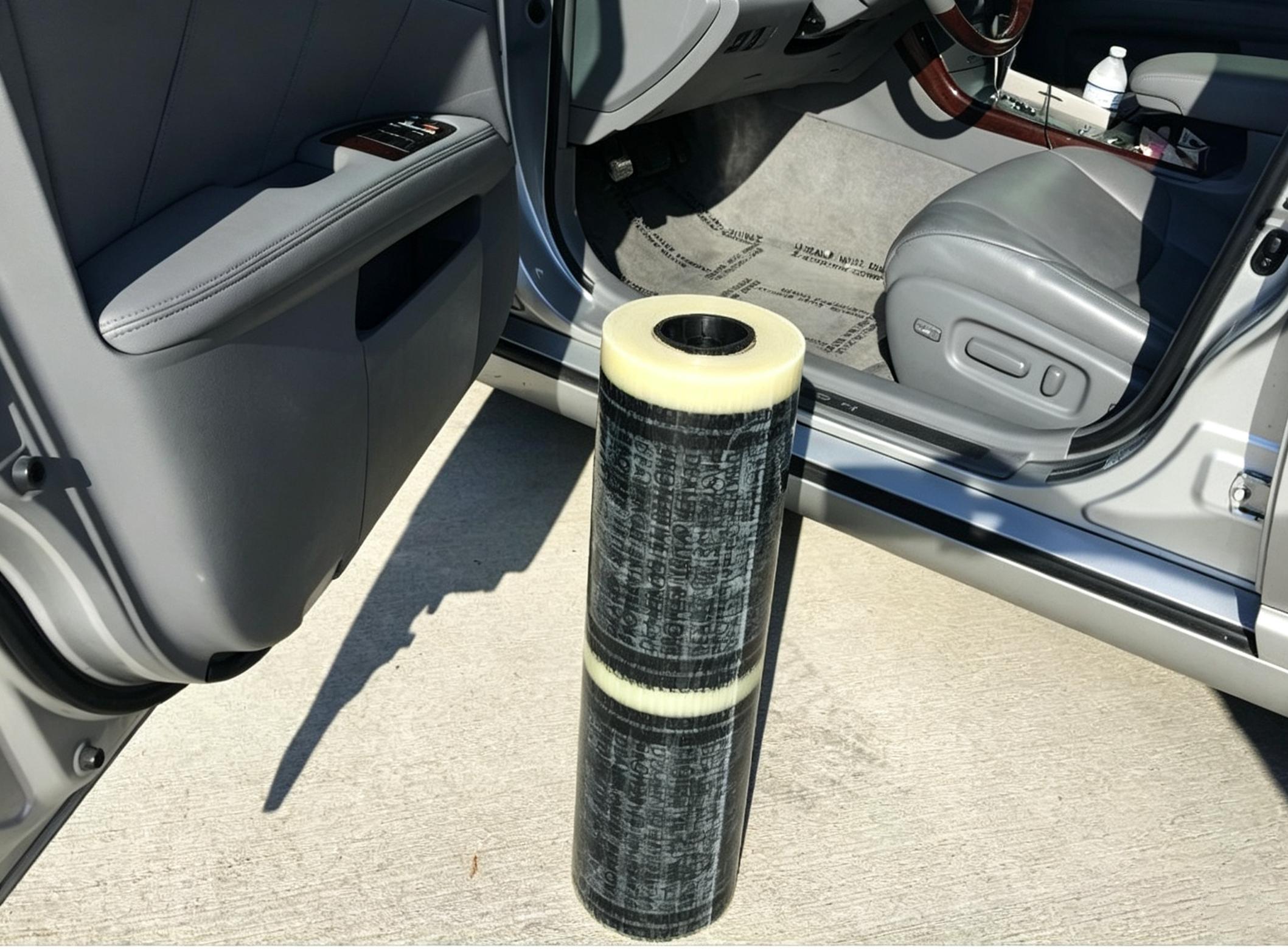
Mud and wet grit rarely get a chance to settle into the surface because the top film layer seals out moisture at the point of contact. Instead of letting damp soil bind to the floor, it keeps particles sitting loosely on top, so a quick sweep or wipe takes care of the worst of it before stains can form.
Heels present a different challenge: all that weight concentrated in a small spot. The film stack is tuned to spread that load just enough to avoid sharp indentations, then bounce back after the pressure moves on. Light scuffs from hard soles also stay superficial rather than cutting into the core.
Cleaning routines stay straightforward because the layers do not rely on a fragile topcoat. Mops, diluted neutral cleaners, and frequent passes can be used without dulling the finish or wearing through the protective skin. The edge of each plank or panel keeps its seal, so moisture from wet mopping does not creep underneath.
Adhesive Behavior in Cold Cabins and Hot Shipping Containers
Cold cabins push most pressure-sensitive adhesives well below their effective application window. At -10°C or lower, tack drops sharply, and a tape that grips instantly at room temperature may peel away without wetting the substrate. Epoxies and polyurethanes also slow down, sometimes stopping cure altogether before reaching handling strength. The failure often looks like adhesion loss, but the real issue is rheology: the adhesive never flowed into surface pores in the first place.
In hot shipping containers, the opposite problem dominates. Interior temperatures above 60°C can soften hot-melt and rubber-based systems enough to cause creep, squeeze-out, or even bond slippage under modest load. Some moisture-curing formulations skin over too fast, trapping uncured material beneath a dry surface. Choosing adhesives here means looking past the datasheet lap-shear number and checking whether the product can handle sustained heat without losing dimensional stability.
A practical fix is to match the adhesive’s service temperature range to the logistics chain, not just the end-use environment. For cold cabins, a low-temperature acrylic with a glass transition well below the expected minimum is usually safer than a general-purpose rubber adhesive. For hot containers, high-softening-point reactive systems or UV-stable structural adhesives tend to survive the journey with fewer surprises.
Cutting Patterns That Follow Real Floor Contours
Real floors rarely run dead straight. Skirtings settle, plaster bulges, door casings twist, and old subfloors dip or crown in ways that no drawing ever captures. Cutting patterns that actually follow these contours means working from the room itself, not from a cut list. A tape measure will get you close, but the last half-inch around a jamb or a curved hearth has to be taken directly off the surface with a template or a scribing tool.
Thin cardboard, builders' paper, or offcuts of underlayment work well for making a working template. Press the template into the corner, crease it against the edges, and cut away the excess until it drops cleanly around the obstruction. For harder materials, a simple pencil-and-washer trick or a purpose-made profile gauge can transfer bumps and recesses onto the board. Leave the line slightly fat, then shave back with a rasp, block plane, or sanding sponge so the board seats without forcing.
It helps to treat every cut as a fitting pass rather than a single finished edge. Corners are easier to deal with in short sections, especially where two irregular profiles meet. And remember that a tight scribe is not the same as a crushed joint—small movement gaps can often be hidden under a bead or baseboard while still allowing the floor to breathe. That balance between accurate tracing and practical clearance is what keeps the finished floor looking deliberate instead of forced.
Packing Rolls So They Arrive Install-Ready
A roll that leaves the warehouse looking perfect can still arrive with a flat spot, crushed edge, or popped core if the pack job assumes a smooth ride. Treat the ends as load-bearing points, not afterthoughts. Hard plastic or wood end caps sized to the core, plus a snug core plug, keep the roll from sliding sideways inside its own wrap. On heavier rolls, run edge protectors around the full circumference and strap through the core only, never across the face stock, so the tension loads the core instead of the material.
Moisture causes more install failures than rough handling, especially on porous face stocks. A full poly sleeve or vapor-barrier bag should be sealed before the roll goes on a pallet, and the roll ought to sit on closed-cell foam or a dry, raised deck rather than directly on a trailer floor. If the load may pass through temperature swings, leave the wrapper intact for at least a full day at the destination so condensation forms on the outside rather than inside the roll.
Make the unload obvious. Put an orientation label on the outer wrap showing which way the roll unwinds, and add a clear sleeve with the install sheet and any core adapter notes. When rolls are grouped on a pallet, keep the heaviest ones low and align the cores in the same direction. The receiving crew can then move from truck to machine without flipping rolls, guessing the unwind side, or cutting into the wrap just to check the diameter.
Small Batch Testing Before Scaling Export Orders
Before committing to large export volumes, many companies quietly run a handful of shipments through the full pipeline, asking questions that spreadsheets rarely answer. How does the packaging hold up after three extra handling cycles? Does the documentation flow confuse a first-time customs broker? A small test order turns these unknowns into visible, fixable details well before they become expensive mistakes.
The value shows up in the places no one thinks to check. Maybe the harmonized code works on paper but triggers a delay at a specific port. Or the local labelling requirement is stricter than the trade guide suggested. These discoveries feel ordinary during a pilot run, but at scale they would have stalled containers and drained customer confidence. Small batches create room to adjust the product, the paperwork, or the freight partner without the pressure of a high-stakes rollout.
Once the pilot exposes the real friction points, scaling becomes more predictable. Teams can revise packing lists, tighten the invoice format, or add a bilingual insert without rebuilding the whole process. The confidence comes not from a perfect first attempt, but from knowing that the next ten orders will carry fewer surprises than the first one did.
FAQ
OEM film is cut and slit to match specific vehicle floor contours before it reaches the assembly line, so installation is faster and there is less waste. Aftermarket rolls usually need manual trimming, which increases labor time and leaves uneven edges. The adhesive formula also differs: OEM grades are designed to release cleanly from low-pile carpet without pulling fibers or leaving residue after a few weeks in a hot cabin.
Ask for accelerated aging data rather than just thickness. A film can be 50 microns thick but still crack if the plasticizer content is too low. Request samples that have been subjected to heat cycling, UV exposure, and foot traffic simulation. Then check whether the film remains flexible, the adhesive stays stable, and the surface does not become brittle or slippery.
Look for a moderate peel strength that holds during vehicle movement but allows the film to be removed without tearing carpet fibers. Adhesives with high initial tack are convenient during installation but often become aggressive after heat aging. A safer profile is around 2 to 4 N/25mm peel strength on standard interior carpet, with no adhesive transfer when removed after 30 days at 60 degrees Celsius.
Most established exporters offer custom die-cut shapes, pre-scored fold lines, printed brand marks, and substrate-specific adhesive coatings. Some also adjust film color to match assembly line workflows, such as high-visibility blue for quick confirmation that protection has been applied. Providing a CAD drawing of the carpet area is usually enough to begin tooling.
Packaging determines how easily the film fits into existing line stations. Sheet-stacked boxes reduce peeling time for small floor sections, while continuous rolls suit long runs but may require a dispenser. Exporters should label each batch with roll direction, lot number, and storage temperature to prevent mixing different adhesive versions on the same line.
Confirm dimensional accuracy against a fresh carpet sample, not just the original drawing. Carpet pile density can change slightly between production batches, which affects how the film drapes. Also request a small pilot batch and apply it to actual flooring material under heat. If the edges lift or adhesive darkens the fibers, reject the batch before it ships.
A compact car may only need short-term coverage during transport, while a luxury SUV may sit in a holding yard for months under direct sun. The longer the exposure, the more important UV stabilizers and low-residue adhesive become. Similarly, thicker pile in premium cabins requires a softer film that conforms without bridging across the carpet surface.
Conclusion
Factory buyers who move quickly through a sample review often get burned later. Before signing off, they tend to flex the film, wipe it with a damp cloth, and check whether the edge memory stays flat after unrolling. A durable carpet protection film for OEM auto interiors has to handle more than light dust. It should survive muddy boots, sharp heels, and the kind of repeated scrubbing that happens after a test drive. That means the top layer needs enough abrasion resistance without turning stiff, while the core keeps its shape under pressure. Equally important is adhesive behavior. A film that bonds well in a mild warehouse can lift inside a cold cabin or become gummy after sitting in a hot shipping container, so buyers increasingly ask for temperature cycling data rather than a simple peel test.
Cutting patterns matter just as much as material. A generic rectangle rarely follows the curve around seat rails, center consoles, or door sills, and once installers start trimming on the line, the job slows down and waste climbs. Export-ready rolls are die-cut or plotted against real floor contours, with a small allowance for alignment rather than a one-size-fits-all shape. Then comes packing. Rolls should not arrive crushed, telescoped, or stuck to themselves after weeks at sea. Edge protectors, moisture barriers, and consistent winding tension keep the film install-ready. For most manufacturers, the sensible path is small batch testing on actual vehicle floors before scaling an export order. That catches everything from adhesive residue to fitment gaps early, when a correction still costs very little.
Contact Us
Contact Person: Jack Xu
Email: [email protected]
Tel/WhatsApp: 8615257328825
Website: https://www.temporaryprotectivefilm.com/