

OEM Container Refrigeration Room Custom Cooling Solutions for Industrial Cold Storage
2026-11-16
Industrial cold storage rarely fits a one-size-fits-all blueprint. Warehouse ceilings slope, ambient heat creeps through loading docks, and product tolerances demand precision far beyond off-the-shelf units. That’s where purpose-built OEM container refrigeration rooms come in—not as a compromise, but as a deliberate engineering choice. At PAULAIR, we’ve spent years turning unconventional cooling requirements into turnkey containerized systems that slot into existing operations without disruption. What follows isn’t a generic spec sheet; it’s a look at why custom cooling solutions are shifting from niche option to operational necessity for modern cold storage.
Custom Container Refrigeration That Handles Extreme Thermal Loads
Custom container refrigeration units built for extreme thermal loads go far beyond standard cold storage. They are engineered around the specific heat profile of your cargo, whether that means rapid pull-down of freshly harvested produce, maintaining tight tolerances for pharmaceutical shipments, or managing the intense thermal swings of high-density industrial materials. Every component from compressor staging to airflow design is sized and tuned to the actual peak load, not just a generic rating plate.
The real difference shows up in how these systems handle sudden spikes. Instead of a single oversized unit fighting the load, custom designs often split capacity across multiple staged compressors or variable-speed drives that ramp only as needed. This keeps temperature overshoot minimal and prevents moisture migration inside the container, which is what typically ruins sensitive loads. Reinforced insulation, specialized door gaskets, and strategic airflow ducting all work together to hold the set point even when ambient temperatures climb past 50°C or the container is exposed to direct sunlight on an open deck.
For operations dealing with high thermal mass or uneven heat distribution, custom refrigeration can include zoned cooling or thermal buffering. Some designs incorporate phase-change materials that absorb excess heat during peak hours, releasing it later when the load stabilizes. Others add active humidity control and ethylene scrubbing for mixed produce. These aren't off-the-shelf features; they come from mapping the actual temperature curve of your cargo over a full transit cycle, then building a system that matches it without wasting energy or compromising safety.
Matching OEM Cooling Capacity to Your Cold Storage Layout
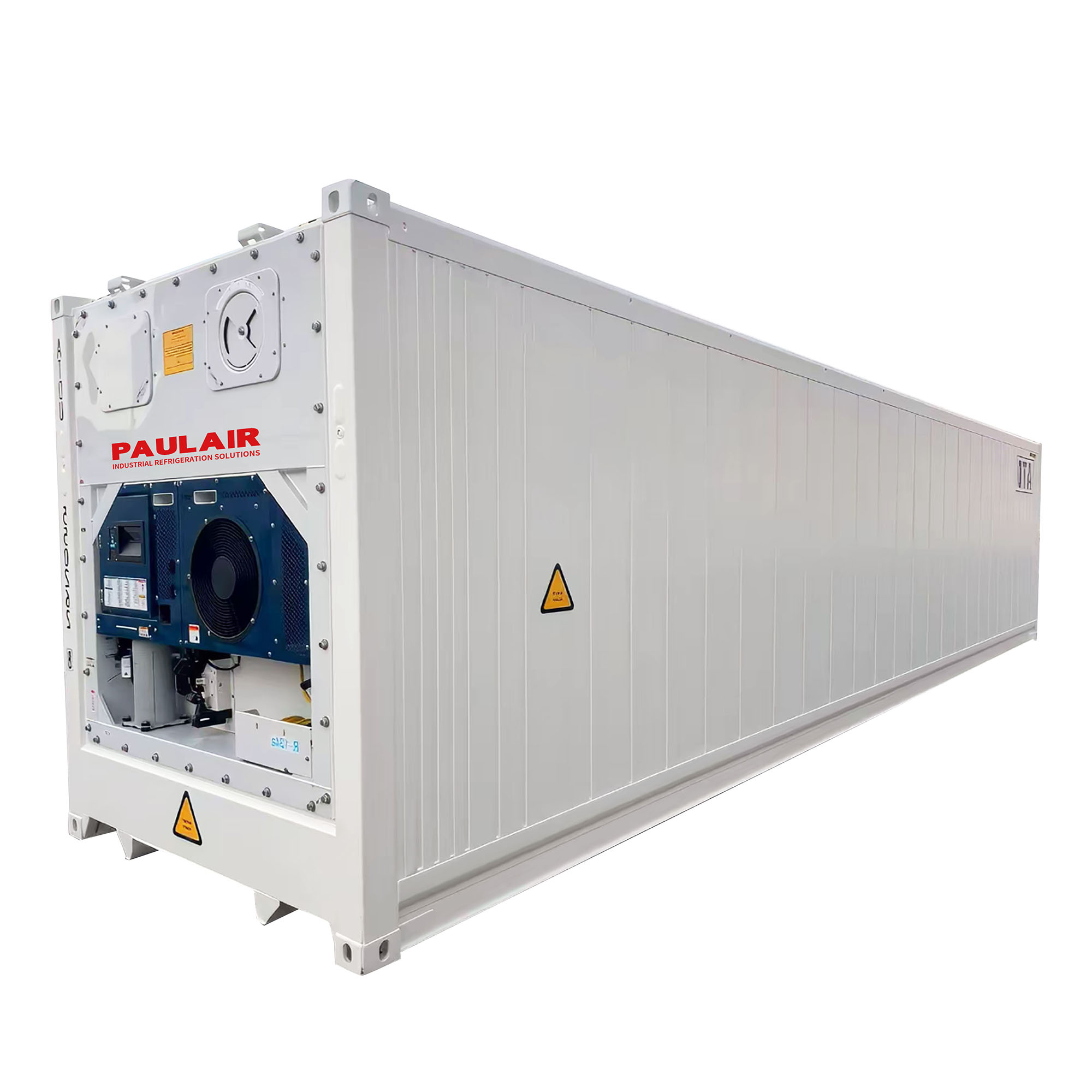
Getting the OEM cooling capacity right starts with mapping how air actually moves through your cold storage. A long, narrow layout with tall racking near the back wall behaves very differently from a square room with low shelving. If your evaporator is sized only by total square footage, you might end up with cold spots near the unit and warm zones by the loading door. Instead, note the ceiling height, the width of the aisles, and how close pallets sit to the walls. Those details change the static pressure and throw distance required from the unit, which in turn dictate the sensible and latent capacity you need from the OEM package.
Another factor that often gets overlooked is the daily pull-down load from incoming product. A layout with a narrow receiving area can concentrate warm goods in one spot, forcing the system to work harder for a few hours each day. Matching OEM cooling capacity means accounting for that peak, not just the average holding temperature. If your layout includes frequent door openings or strip curtains that don't fully seal, the infiltration load rises. In practice, it's worth oversizing slightly for that real-world leakage instead of trusting a clean-room calculation.
Finally, think about future racking changes or seasonal shifts. An OEM unit selected for a half-empty room may struggle once you add a second level of shelving that blocks return air. Look at the floor plan and trace the return path from the farthest corner back to the evaporator. Any sharp turns, tall stacks, or narrow gaps will reduce effective capacity. Matching the OEM cooling capacity to your layout isn't about buying a bigger unit; it's about aligning airflow, static pressure, and peak load so the system runs steady rather than short-cycling. That steadiness is what keeps product temperature stable and energy use predictable.
Why Modular Cold Rooms Outperform Traditional Walk-Ins
Modular cold rooms start with a prefabricated panel system that snaps together in a fraction of the time required for a traditional walk-in. Instead of framing, insulating, and finishing on site, the modular approach ships ready-to-assemble components, cutting installation from days to a few hours in many cases. Less time on site means lower labor costs and minimal disruption to daily operations.
Another clear advantage is adaptability. Traditional walk-ins are built to a fixed footprint and are difficult to alter once the floor is poured and the walls are up. Modular cold rooms can be expanded, reconfigured, or even relocated without major demolition, which is particularly useful for growing food businesses or distribution centers that need to adjust storage capacity quickly.
Energy efficiency also favors modular design. Factory-sealed panels leave fewer gaps and thermal bridges than site-built structures, so cold air stays inside and compressors run less often. Over the life of the unit, that translates into measurable savings and more consistent temperature control for perishable inventory.
Designing Around Your Product’s Temperature Tolerance
Temperature swings don't just affect electronics; they change the physical shape of every part. A housing machined for a tight fit at room temperature may seize in a hot engine bay or leave gaps in sub-zero storage. Instead of designing to nominal dimensions, calculate the worst-case expansion for each material and leave enough clearance or compliance to absorb that movement. Silicone gaskets, slotted mounting holes, and snap fits with built-in strain relief often outlast rigid assemblies when thermal cycling is part of the spec.
Cycling between hot and cold is usually more destructive than a single extreme. Solder joints crack, adhesives lose grip, and connectors creep loose after repeated expansion and contraction. Choose components rated for the full delta, not just the average operating temperature. Underfill large chip packages, avoid brittle potting compounds, and use locking fasteners on boards that will see wide swings. Copper pours and thermal vias can move heat away from sensitive areas, but they also create thermal gradients, so balance spreading with mechanical stress.
Before freezing the design, test prototypes beyond the intended limits. Soak the unit at both extremes, run rapid temperature ramps, and monitor output drift or seal leakage. Add margin to every thermal claim: if the product must survive -20°C to 60°C, design for -30°C to 70°C internally. Include a thermal cutoff or controlled derating curve so the product degrades gracefully instead of failing suddenly when a fan clogs or a vent gets blocked.
Container Cooling Systems That Ship Ready to Run
Every component is pre-piped, wired, and tested before the container leaves the factory, so the system can be connected to power and process lines on the same day it arrives. Rather than assembling individual chillers, pumps, and controls on site, operators get a single package that has already been run through a full load simulation and refrigerant leak check. This approach removes most of the field engineering guesswork and shortens commissioning from weeks to a few hours.
The ready-to-run format also simplifies moving cooling capacity between locations. Forklift pockets, corner castings, and an integrated base frame let the entire unit be relocated with standard container handling equipment, while the electrical panel, water manifold, and isolation valves remain protected inside the weatherproof enclosure. Because the internal layout is standardized, maintenance teams can follow the same inspection route on every unit, which keeps service routines consistent across multiple sites.
Noise and ventilation are addressed as part of the container build rather than as afterthoughts. Acoustic lining around the compressor section, discharge air plenums, and louvered inlet panels work together to keep sound levels acceptable in urban or noise-sensitive areas. The enclosure is also fitted with internal lighting, a service door, and enough clearance around major components to allow routine filter changes and coil cleaning without removing the cooling module from service.
One Partner for Industrial Refrigeration and Enclosure
When your operation depends on precise temperature control and robust protection, a single, knowledgeable partner makes all the difference. We bring together decades of expertise in industrial refrigeration systems and custom enclosure design, so you no longer have to coordinate between separate vendors or settle for off-the-shelf compromises. From cold storage warehouses to food processing lines, our teams work side by side to size compressors, evaporators, and controls that match the exact thermal load, while also specifying enclosures that shield sensitive electrical and mechanical components from moisture, dust, and extreme temperature swings.
What sets this partnership apart is the way every project starts with a thorough site assessment, not a catalog number. We look at ambient conditions, duty cycles, future expansion plans, and even maintenance access routes before recommending a combined solution. Whether you need a walk-in freezer paired with a corrosion-resistant stainless enclosure or a blast chiller system integrated with a climate-controlled panel, the result is a coherent package engineered to work together seamlessly on day one and for years after.
Beyond the initial build, our support continues with installation guidance, remote monitoring options, and rapid spare parts availability from a single point of contact. That means fewer handoffs, clearer accountability, and a system that stays efficient under real-world demands. For facility managers and plant engineers tired of juggling multiple specialists, this unified approach delivers the reliability of purpose-built refrigeration with the durability of enclosures that are truly fit for the environment.
FAQ
It means the cooling unit, insulation layout, door placement, and control logic are built around your operational needs rather than forcing a standard box into your site. You can specify dimensions, temperature band, backup power behaviour, and even the brand of compressor or controller if your maintenance team already has preferences.
Most builds are set for chilled storage around 0°C to 5°C, frozen storage down to -25°C, or dual-zone layouts that split the container into two independently controlled sections. Unusual setpoints for pharmaceuticals or chemical samples can be handled with a dedicated review of the heat load before finalizing the refrigeration size.
We start with the internal volume, daily door openings, incoming product temperature, and ambient climate at the installation site. That data drives the compressor selection, evaporator placement, and insulation thickness so the system reaches pull-down quickly without short-cycling during normal holding mode.
Yes, if the structure is in good condition. We strip the interior, repair any corrosion, install vapour barriers and insulated panels, cut openings for the refrigeration system and personnel door, then fit the cooling unit with a reinforced frame. The conversion usually takes less time than building a fixed cold room on a concrete pad.
You need a level surface able to carry the full loaded weight, a protected electrical supply matched to the cooling unit, and some clearance around the condenser side for air movement. If the container will sit in direct sun or a coastal area, we may add a canopy, marine-grade coating, or larger condenser fans to keep head pressure manageable.
The evaporator fans are positioned to push air down the full length of the room, and the return air path is kept open by pallet stops or floor markings. Defrost cycles are set based on actual humidity loads rather than a fixed timer, which reduces ice on the coil and keeps temperature swings small during normal operation.
You get a commissioning checklist, simple fault-finding steps for the control panel, and remote monitoring if the site has network access. For the first year we handle warranty parts and can arrange local technicians for refrigeration checks, door seal adjustments, or control software updates without requiring you to ship the unit back.
They work well for seasonal demand, construction camps, or overflow capacity because the container can be moved with a standard twist-lock truck or crane. The refrigeration system is mounted to withstand transport vibration, and the electrical connections are designed for quick disconnect and reconnection at a new site.
Conclusion
Industrial cold storage rarely follows a one-size-fits-all script. The right OEM container refrigeration room has to absorb punishing thermal loads without drifting from setpoint, especially when blast freezing or rapid pull-down is part of daily operations. That means matching compressor capacity, evaporator placement, and airflow patterns to the actual layout—not just the square footage. A layout with tall racking and narrow aisles needs different air distribution than an open staging area. It also pays to design around the product’s own temperature tolerance. Vaccines, seafood, and specialty chemicals each have a narrow band where quality holds, and even small excursions can spoil an entire batch. So the cooling package has to be dialed to the product, not the other way around.
Modular cold rooms built inside a shipping container format beat traditional walk-ins on several fronts: they arrive pre-piped, pre-wired, and factory-tested, so installation time drops from weeks to days. Once on site, they still need to be treated as a single system rather than a box with a refrigeration unit bolted on. A single partner who can engineer both the enclosure and the refrigeration circuit avoids the finger-pointing that happens when the insulated structure and the cooling system come from different suppliers. The result is a container cooling system that ships ready to run, with every sensor, drain, and service access already accounted for—backed by one service team that understands the full thermal envelope.
Contact Us
Contact Person: Jack
Email: [email protected]
Tel/WhatsApp: +86-13335127698
Website: https://www.paulair-refrigeration.com