

Professional Corn Processing Machine: The Ultimate Guide to Efficient Milling and Grinding Solutions
2026-10-10
Corn processing is the backbone of countless food and feed industries, yet achieving consistent milling and grinding efficiency remains a daily struggle. From uneven particle sizes to energy waste, outdated equipment can quietly erode your margins. In this guide, we break down the key principles behind professional corn processing machines—covering everything from degermination to fine grinding. Whether you're upgrading a small mill or designing a large-scale line, the right machinery makes all the difference. PINGLE has engineered advanced solutions that prioritize throughput, durability, and precision. Read on to discover how modern corn processing technology can streamline your operations and unlock new levels of productivity.
How Corn Processing Machines Turn Raw Kernels into Market-Ready Flour
The journey from raw corn kernels to market-ready flour starts long before any grinding takes place. Incoming grain passes through a series of cleaning machines—screens, aspirators, and destoners—that knock out cobs, stones, dust, and broken kernels. What matters here is not just hygiene but consistency: a single overlooked pebble can damage downstream roller mills, while uneven kernel size leads to uneven moisture uptake. After cleaning, the corn is conditioned with precise amounts of water and heat, which toughens the outer hull and softens the starchy endosperm. This step, often underestimated, determines how cleanly the germ separates later and how finely the final flour will mill.
Once conditioned, the kernels enter the degerminator, a machine that strips away the germ and hull from the endosperm. Removing the oily germ is critical for shelf-stable corn flour, since leftover germ causes rancidity within weeks. The degerminated endosperm chunks then pass through a series of roller mills, each set progressively closer. Rather than crushing the corn all at once, these machines shear and reduce it gradually, which prevents heat buildup and preserves starch quality. Between milling stages, plansifters and purifiers sort particles by size and density, recycling anything still too coarse. Operators constantly adjust roll gaps and sifter screens because no two corn lots behave exactly alike—harder flint corn demands a different grind profile than softer dent corn.
The final stretch turns milled stock into a uniform, market-ready product. Air classifiers and impact mills refine particle size while removing any remaining bran specks. Some facilities blend different mill streams to hit a target protein or ash content, while others add back measured amounts of germ or fiber to create whole-grain variants. Before packaging, moisture levels are checked and adjusted to stay within legal and practical limits, usually around 12–14 percent, so the flour flows well and resists mold. The finished flour then moves to automatic bagging lines, but the real skill remains in the hands of workers who read the machines—listening for bearing wear, checking grind texture between thumb and fingers, and making small corrections that keep every bag consistent from morning shift to night shift.
Key Components That Separate High-Performance Mills from Average Ones
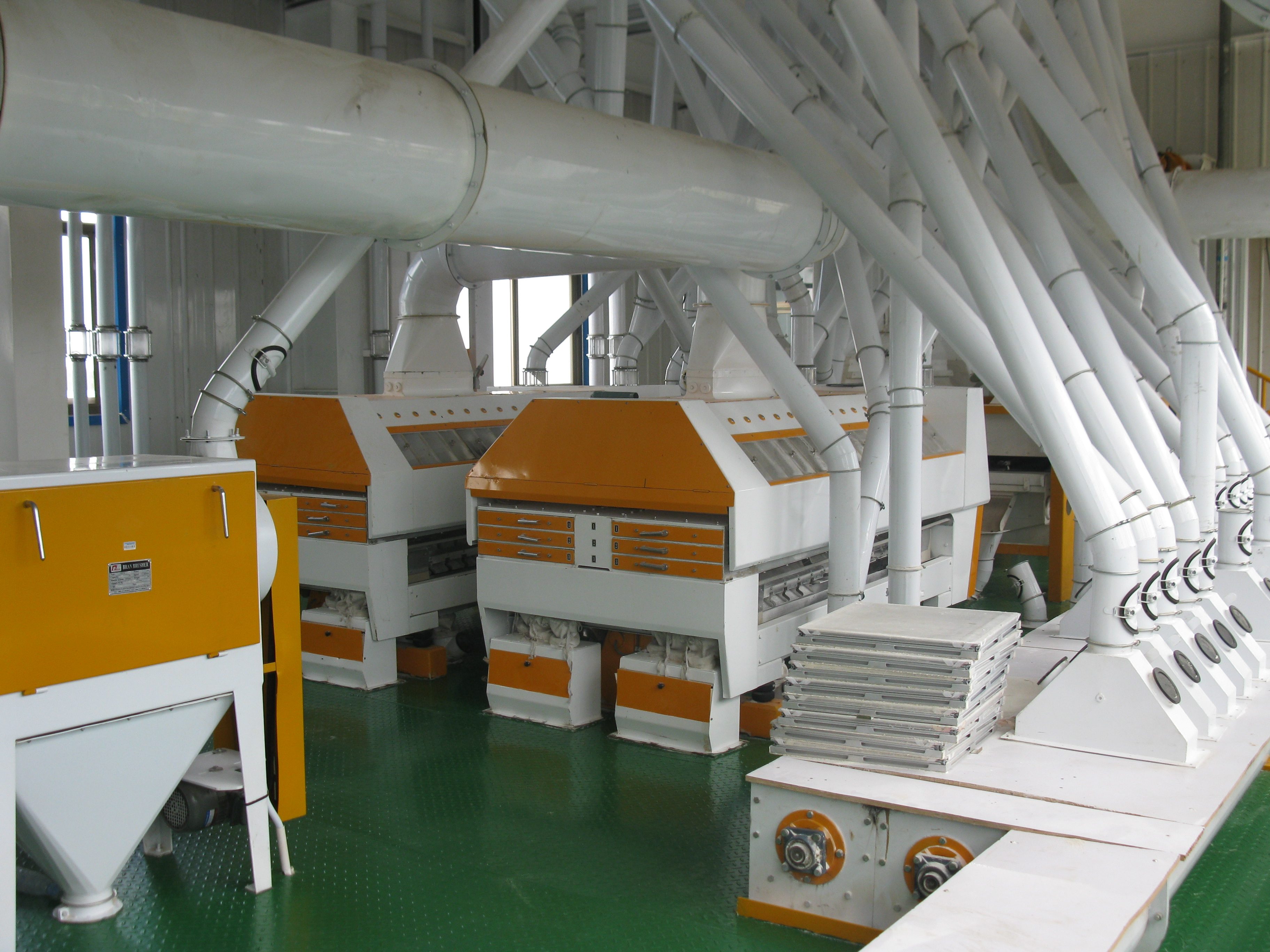
What truly sets a high-performance mill apart isn't a single dramatic feature, but a chain of quieter engineering choices that compound under load. Stiffness in the spindle housing and base casting, for instance, keeps vibration from smearing surface finishes when you push feed rates. Average mills often skimp here, relying on mass alone rather than ribbed geometry or damped joints, which leads to chatter long before the tool wears out.
Another separator is thermal discipline. High-performance machines map heat growth with sensors and compensate in real time, or they route coolant through core castings to hold dimensional stability across a shift. Cheaper mills drift as they warm up, forcing operators to chase offsets or wait for soak-out periods. The difference shows up in batch consistency: a top-tier mill can hold a few microns from first part to last, while an average one might wander ten times that.
Finally, look at how the mill manages axis motion. High-performance models pair direct-drive or high-resolution feedback with jerk-limited acceleration, so corners stay sharp without shaking the fixtures. Average ones rely on generic servo tuning that either rounds off geometry or hammers the slides. That gap becomes obvious in 3D contouring or tight-tolerance pockets, where the better machine simply trusts its path and holds it.
Matching Machine Capacity to Your Production Goals Without Overspending
Figuring out the right machine capacity often starts with a hard look at your actual production rhythm, not the peak numbers you hope to hit someday. Many shops end up paying for idle horsepower because they sized equipment off a best-case scenario. Instead, track your daily output over a few months, note where bottlenecks actually happen, and then match capacity to that honest average plus a modest buffer for rush jobs. This simple shift keeps you from leasing or buying a machine that mostly gathers dust while your real work keeps flowing through a smaller, cheaper unit.
Another trap is treating capacity as a single, fixed number. In practice, a machine's useful output changes with material type, operator skill, and shift schedules. A metal shear rated for 10 tons per hour might only deliver six when you're cutting stainless instead of mild steel, or when the second shift runs with a trainee. Before upgrading, test your current equipment under the exact conditions you face weekly. You may find that a small fixture change, better blade maintenance, or rearranging which jobs go to which machine gives you the extra 15% you thought required a new purchase.
Finally, think about modular or used options if you truly need more capacity. A lightly used machine from a reputable dealer can often handle 80% of the work of a brand-new model at half the price, and some manufacturers offer field-upgradable frames or drives so you can add power later only when orders justify it. The goal isn't to avoid spending altogether—it's to make every dollar of capacity match a dollar of real, repeatable production demand. Track your numbers, test before you buy, and let the workload lead the purchase decision.
A Practical Look at Dry vs. Wet Milling for Different Corn Products
Corn processing rarely follows a single path, and the split between dry and wet milling comes down to what you need from the kernel. Dry milling works by mechanically grinding and sieving the corn, relying on density and particle size to separate the bran, germ, and endosperm. This route is straightforward and less expensive to set up, which makes it the default for products like cornmeal, grits, and flaking corn used in breakfast cereals. You sacrifice some purity — the fractions still carry traces of oil and fiber — but for many food applications that rustic character is part of the appeal.
Wet milling takes a different tack, steeping the kernels in warm water with a mild acid or sulfur dioxide to soften everything before grinding. The goal is not just separation but near-complete isolation of starch, protein, fiber, and germ. From this process you get refined corn starch, high-fructose corn syrup, corn oil, and gluten feed or meal. The equipment is heavier, the water and energy use are higher, and the capital outlay can be steep, so wet milling typically belongs to large industrial operations that can spread those costs across multiple co-products. It’s not unusual for a wet mill to produce five or six revenue streams from the same bushel of corn.
The practical choice between them often hinges on the end market rather than any single technical advantage. A small mill producing stone-ground cornmeal for local bakeries will almost always opt for dry milling because the volume and margins don’t justify a wet mill. On the flip side, a facility supplying syrup to beverage manufacturers needs the clean starch wet milling provides, and the co-products like corn oil and gluten meal help offset the higher processing costs. Neither method is inherently better; they simply answer different questions about what the corn should become.
Maintenance Habits That Extend the Life of Your Grinding Equipment
Grinding equipment rarely fails without warning. The damage builds quietly: a misaligned belt, a clogged air filter, bearings running hotter than they should. Instead of waiting for the next breakdown, build a quick routine that catches these small problems before they turn into expensive rebuilds.
Start by tracking vibration and sound at the same points every shift. Rotating parts wear unevenly, and those changes show up in the way the machine feels and hums. Add a weekly torque check on key bolts and a close look at the cooling system. Grinding generates heat; even a small drop in coolant flow shortens bearing and spindle life.
Use your lubricants as a diagnostic tool. When you drain or top up, watch for metal particles, moisture, or shifts in color. That tells you what is wearing inside and lets you schedule repairs during planned downtime rather than reacting to a stall on the production line.
Common Bottlenecks in Corn Processing Lines and How to Avoid Them
Often the first real slowdown isn't the main mill but the cleaning section. Rocks, cobs, broken kernels, and fine debris accumulate in the screens and aspiration channels; when operators ignore the buildup, downstream equipment runs with reduced separation efficiency and higher wear. Instead of treating cleaning as a set-and-forget stage, schedule short, frequent inspections and adjust screen angles and airflow based on incoming kernel size and foreign material. Keeping a small buffer bin between cleaning and steeping can absorb minor surges without forcing the steep tanks to run half empty or overflow.
Steeping and grinding create their own constraints if the corn isn't conditioned properly. Water temperature, sulfur dioxide concentration, and steep time have to stay in a narrow band—too short and the germ doesn't release cleanly, too long and you lose starch yield and increase energy cost. Use inline sensors rather than manual grabs to track pH and temperature continuously, and automate the transfer pumps so the grinders receive a steady, fully hydrated stream. Many plants find that adding a modest intermediate holding tank after the first grind eliminates pressure spikes at the degerming mills.
Finally, watch the separation and drying side. Centrifuges and hydrocyclones can become bottlenecks when solids loading creeps above nameplate capacity, usually because upstream moisture wasn't controlled. Dryers, especially rotary or flash units, are often sized just barely above average throughput; any surge from separation turns into clumping and inconsistent final moisture. Add a small surge hopper before the dryer and monitor exhaust temperature rather than inlet temperature alone—this gives earlier warning of overload and lets operators reduce feed rate before product quality drops.
FAQ
Large facilities typically rely on hammer mills for coarse grinding, roller mills for precise particle reduction, and disc mills for medium-fine flour. The choice depends on whether the end product is meal, grits, or fine flour. Many operators pair a primary grinder with a secondary polishing or sifting unit to reach the desired texture.
Consistency comes from three main factors: an adjustable gap between grinding plates or rollers, replaceable screens with specific perforation sizes, and a steady feed rate. High-end models also include air classification or vibrating sifters that return oversized particles for a second pass, which prevents uneven flour.
Start with your target output per hour and the final particle size range. Then evaluate power consumption, ease of cleaning between batches, space requirements, and how quickly wear parts can be replaced. For example, if you process both dent corn and flint corn, look for a model with simple gap adjustment rather than fixed settings.
Most machines are optimized for one method because moisture affects screen performance and material flow. Dry milling equipment usually cannot tolerate wet material without clogging, while wet milling requires corrosion-resistant parts and a drainage system. Some manufacturers offer conversion kits, but they rarely match dedicated machines in efficiency.
Check and replace grinding plates or rollers at the first sign of dulling, because worn surfaces force the motor to work harder. Clean out residual flour daily to prevent caking and mold, lubricate bearings according to the manual, and verify belt tension monthly. A simple log of operating hours and parts changes can reveal wear patterns early.
Newer machines often use direct-drive motors instead of belt systems, which lose less power to friction. Improved grinding chamber geometry shortens the distance material travels, and variable frequency drives let operators run the machine at the lowest speed needed for a given batch. Together these changes can cut energy use by 15 to 30 percent.
The flour goes into cornbread, tortillas, extruded snacks, breakfast cereals, and batters. Coarser meals serve as animal feed or base for brewing, while very fine flour is used in gluten-free baking blends and industrial binders. The machine's ability to switch between textures determines which markets a producer can serve efficiently.
Conclusion
Investing in a professional corn processing machine isn't just about buying bigger equipment; it's about matching each stage—cleaning, degermination, milling, sifting—to your actual output targets. Raw kernels become market-ready flour only when the machine's rollers, screens, and aspiration systems are built to handle your grain's moisture and hardness without constant adjustment. High-performance mills separate themselves through precision grinding gaps, durable alloy rolls, and effective tempering controls, not just motor size. This is where many buyers overspend: they choose capacity based on peak demand instead of consistent weekly volume, leading to underused machinery and higher energy bills. A better approach is to work backward from the finished product specs—particle size, ash content, moisture—and then select a mill that can hold those numbers at 70–80% of its rated throughput. That leaves room for surges without paying for idle capacity.
The choice between dry and wet milling changes everything downstream. Dry milling suits flaking grits and coarse meals with lower water usage and simpler effluent handling; wet milling unlocks higher starch purity and finer separation for products like masa or fermented doughs, but demands more cleaning and dewatering equipment. Regardless of method, maintenance habits decide whether a line runs for a decade or struggles after two seasons. Daily checks on roll parallelism, screen tension, and bearing temperatures catch small misalignments before they become cracked shafts or torn screens. The most common bottlenecks are not the mill itself but the feeding and sifting around it: uneven kernel flow, clogged aspirators, or undersized elevators. Installing surge bins before the first break and using variable-speed feeders usually prevents those costly stops better than any high-tech upgrade. In the end, an efficient corn processing line is less about a single machine's specs and more about how well cleaning, conditioning, milling, and sifting work as one continuous, forgiving system.
Contact Us
Contact Person: Jiakuo Wu
Email: [email protected]
Tel/WhatsApp: +86-13011566087
Website: https://www.pinglemachine.com