

Rubber Profiles Extrusion Line Manufacturer: Engineering Excellence for Every Profile
2026-11-16
Every rubber profile has a story—a shape, a tolerance, and a purpose that can't be compromised. Turning that story into a repeatable production run takes more than just heavy machinery; it takes a line engineered for the profile itself. That's the principle behind SFC, a rubber profiles extrusion line manufacturer known for matching engineering precision with real-world reliability. Whether you're running soft EPDM seals or dense structural profiles, the right line changes everything. Here's a look at how SFC turns that principle into production.
Supporting Profiles Others Call Impossible
Most support teams keep a quiet list of profiles they hope never to contact them: the multi-account power user with edge-case workflows, the legacy system holdout running a version everyone else abandoned, the client whose requirements read like a ransom note. We keep that list empty on purpose. These are exactly the profiles we spend late nights reading through old tickets for.
Nothing about “impossible” is static. A profile that breaks one product’s assumptions often just has a different rhythm—different peak hours, different data shapes, different expectations around what a reply should feel like. We stopped asking “why can’t you use it the normal way?” and started asking “what does your normal actually look like?” That shift alone turned a dozen former red flags into repeat partners.
There will always be a boundary: profiles that need custom hardware, legal constraints we cannot move, or a data pipeline that no sane engineer would volunteer to maintain. We say no only after we’ve mapped the edge, tested a workaround, and written the exact reason down so the next support person doesn’t have to redo the detective work. Supporting the impossible isn’t about heroics; it’s about giving hard profiles a real seat at the table instead of a canned apology.
Temperature Mapping Along the Barrel: The Quiet Variable
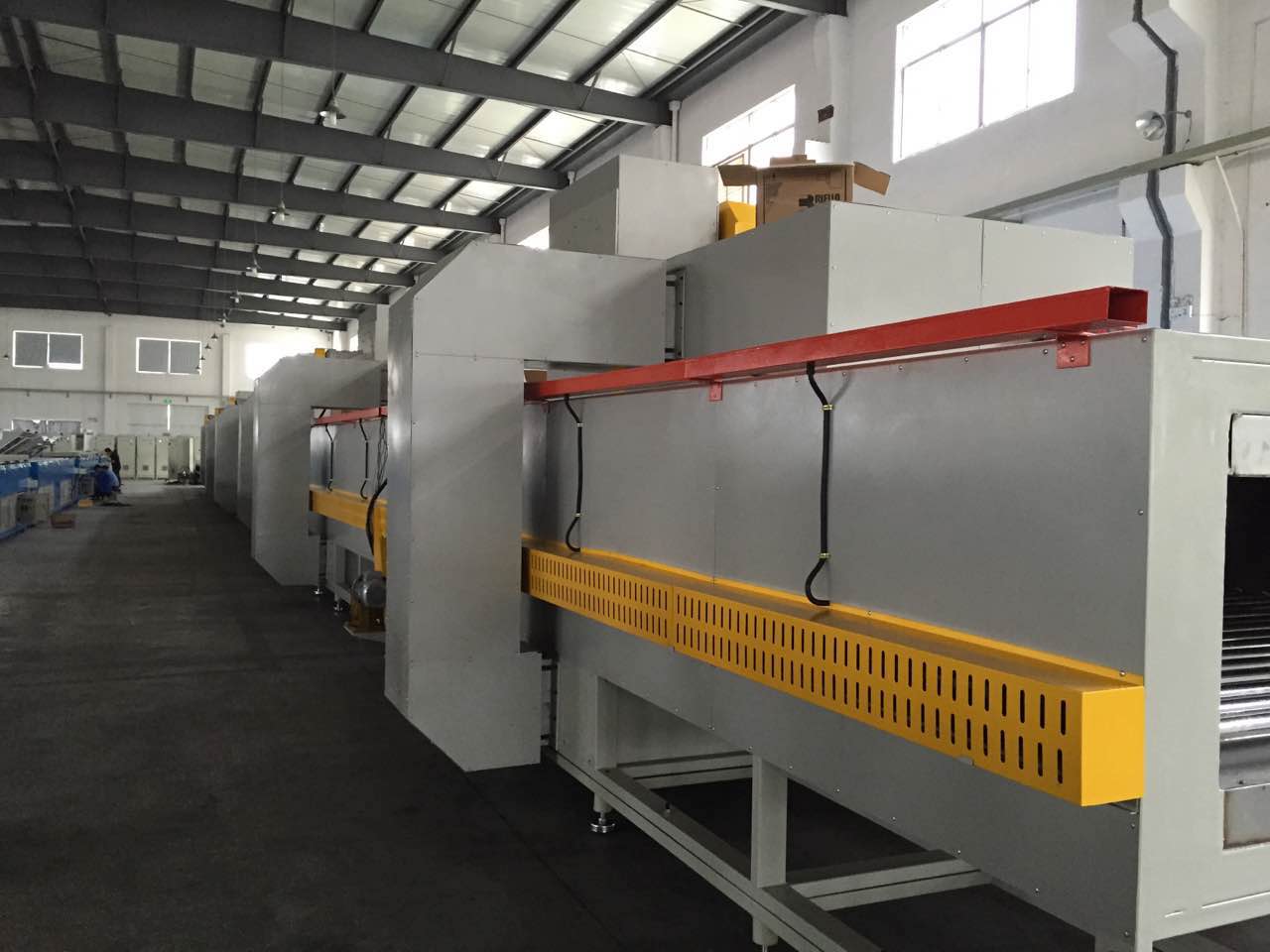
Ask most process engineers about barrel temperature and they will recite setpoints for each zone without hesitation. Yet the actual thermal profile along the barrel rarely matches those numbers, and the mismatch goes largely unnoticed. Axial gradients, radial differences between the wall and the melt, and slow-moving cold spots all develop quietly, shaped by heater band wear, screw geometry, and throughput changes. These deviations rarely trip an alarm, but they reshape viscosity, shear heating, and additive dispersion in ways that surface later as dimensional drift or surface defects.
Standard thermocouples embedded in the barrel wall capture only a thin slice of reality. They read metal temperature near the heater, not the melt temperature at the center of the channel, and certainly not the transient gradients that form during screw rotation or plastication pauses. A barrel that looks thermally uniform on the control screen can hide a 15-degree axial dip right before the check ring or a persistent overheating zone near the feed throat due to backpressure. Operators compensate by tweaking screw speed or backpressure, never realizing the root cause is a thermal map nobody has drawn.
Some shops have started carrying out quick temperature mapping runs using infrared cameras or sliding contact probes inserted through vacant sensor ports. The findings often contradict years of assumptions: a cool band at the vent, a hot spot behind a worn heater clamp, a feed zone running hotter than the second zone because of recycled regrind. Once the map is in hand, adjustments become obvious—shifting heater output, repositioning insulation, or even swapping a screw design that was never meant for that temperature distribution. The quiet variable turns out to be loud enough to hear, if someone finally listens.
Material-Ready Lines for High-Filler Compounds
High-filler compounds—whether calcium carbonate, talc, glass fiber, or carbon black—demand more from a compounding line than just a bigger motor. The feed section has to accept a dense, often dusty stream without bridging, while the screw design needs enough distributive mixing to wet out the filler without overworking the polymer. Barrel venting also becomes critical because many fillers carry moisture or release volatiles under shear.
Lines intended for these materials typically pair side feeders with a main feeder, use wear-resistant barrel liners and screw elements, and position vacuum vents after the filler is incorporated. That sequence lets you pull off gases before the melt reaches the die, cutting down on porosity and surface defects. It also helps to keep melt temperatures in check, since excessive shear can degrade heat-sensitive resins even while you’re trying to disperse a high solids load.
Operators often notice the difference in screw torque stability and pellet quality when the setup is actually matched to the filler type and loading level. Instead of running constantly at the edge of the torque limit, a material-ready line holds a steady specific energy input, which translates into more uniform pellets and fewer changeover headaches.
Hands-Free Operation from Hopper to Packaging
Imagine a production line where raw material flows from the hopper all the way to the final package without a single manual touch. That's the core of hands-free operation—sensors, automated conveyors, and robotic pick-and-place units work in sync to move product through each stage. Operators step back from repetitive tasks, and the system handles everything from initial feeding to sealing cartons.
What makes this seamless is integration. The hopper's discharge rate adjusts automatically based on downstream demand, preventing bottlenecks or overfeeding. Vision systems verify fill levels and package integrity on the fly, while automatic case packers and palletizers take over once the product leaves the primary packaging station. Even changeovers happen with minimal human input—recipes for different SKUs load directly into the control system.
The result isn't just fewer hands on the line; it's a calmer, more predictable process. Errors drop because machines don't get tired or distracted. And when workers only intervene for exceptions—like clearing a rare jam or replenishing packaging film—they can focus on monitoring data rather than chasing product. This hands-off approach turns packaging from a labor-intensive step into a quiet, continuous flow.
Closed-Loop Control That Learns Your Rubber's Behavior
Rubber rarely behaves the same way twice. Temperature shifts, aging, and strain history all nudge its stiffness and damping into new territory. A fixed control loop tuned for one condition quickly falls out of step. The solution is to let the controller build its own map of the material's response. Every cycle becomes a data point: force in, displacement out, and the lag between them. Over time, that map starts to predict how the rubber will react before the next command is even issued.
This learned model feeds directly into the closed loop. Instead of chasing error with a generic PID, the controller combines a feedback term with a live feedforward estimate of the rubber's nonlinearity. Hysteresis, creep, and rate-dependent stiffness are no longer treated as disturbances to reject. They become part of the expected trajectory. The loop tightens, but without the usual oscillation that comes from cranking up gain on a material that refuses to stay linear.
The real payoff arrives when conditions change. A warm gripper on a factory floor, a cold seal in outdoor equipment, or a soft actuator that has been cycled thousands of times all drift from their original spec. Because the controller keeps learning, it adjusts to the rubber you have right now, not the rubber you calibrated last month. Tracking error drops, overshoot shrinks, and the system holds its performance across a much wider operating envelope.
Less Scrap, More Meters: The Economics of Precision
In most converting or extrusion lines, the gap between the target dimension and what actually comes off the line is where profit quietly leaks away. Shaving a fraction of a millimeter off the tolerance stack doesn't sound dramatic, but in cable insulation or metal slitting it means fewer off-spec coils and more sellable length from the same input tonnage. One mid-sized PVC extrusion operation found that reducing wall-thickness variation by just 0.04 mm added roughly 120 meters of usable jacket per tonne of compound—straight to the bottom line.
That kind of gain rarely comes from a single heroic fix. It builds up when laser gauges, closed-loop tension control, and die centering work together so the process corrects itself before a bad meter ever reaches the take-up reel. The initial spend on this equipment can look intimidating next to a cheap manual setup, but the payback shows up in fewer scrap bins, less downtime for blade changes, and no more scrapping an entire mother roll because one edge drifted out of spec after lunch.
Beyond the immediate material savings, precision shifts how customers experience your product. Delivered lengths that consistently match the order (or exceed it by a predictable margin) mean fewer short-length claims, less administrative friction, and repeat business without constant renegotiation. Over a year, those extra meters compound into capacity you didn't have to build, effectively turning better control into free production time.
FAQ
Our lines handle a wide range, from simple solid strips and tubes to complex multi-hollow and co-extruded profiles. Whether you're working with EPDM, silicone, nitrile, or natural rubber, the equipment adapts to different material behaviors and cross-section geometries.
We use closed-loop control systems that monitor temperature, screw speed, and melt pressure in real time. This, combined with precision calibrating dies and vacuum sizing tanks, keeps tolerances tight even on profiles with thin walls or intricate internal voids.
Yes. We configure everything from standalone extruders for low-volume specialty runs to fully automated lines with inline cutting, punching, and coiling for high-output operations. You're not forced into a one-size-fits-all setup.
The lines are built to process a broad spectrum of rubber compounds, including EPDM, neoprene, SBR, silicone, and fluoroelastomers. Screw and barrel designs are matched to the material's shear sensitivity and curing characteristics.
Changeover is designed to be straightforward. Quick-release die heads, modular calibrators, and recipe-based PLC controls let operators switch profiles in a fraction of the time older lines require, minimizing downtime and scrap.
We offer on-site commissioning, operator training, and rapid-response spare parts. Our engineers can also dial in remotely to troubleshoot or fine-tune process parameters, which keeps your line running at peak efficiency.
Absolutely. Many of our lines are used for automotive seals, weatherstrips, and trim profiles. They're equipped to handle high-precision requirements, such as consistent lip geometry and EPDM sponge/dense combinations, with inline flocking or friction coating options.
Yes, we supply complete turnkey solutions that include caterpillar haul-offs, precision cutters, drilling units, and automatic stacking or spooling systems. This eliminates the need to source separate machines and ensures all components communicate seamlessly.
Conclusion
A rubber profiles extrusion line built by a manufacturer that truly understands the material can turn the most demanding cross-sections into routine production. Complex profiles that competitors dismiss as impossible—thin-walled, multi-hollow, or heavily asymmetric—hold their shape because the screw, die, and downstream handling are engineered together, not bolted on as afterthoughts. Along the barrel, temperature mapping isn't left to guesswork; precise thermal profiling keeps viscosity stable where it matters most, avoiding scorch in high-shear zones. And for plants running high-filler compounds, the line arrives material-ready, with wear-resistant metallurgy and feed sections that cope with abrasive silica or carbon black without choking or excessive screw wear.
Automation removes the need for constant operator intervention. From hopper loading to final packaging, the line runs hands-free, with sensors and actuators coordinating speed, tension, and cutting length in real time. More than just pre-set recipes, the closed-loop control observes how each batch of rubber behaves—adjusting temperatures, screw RPM, and haul-off pull to match the actual rheology. The result is measurable: less scrap from dimensional drift or surface defects, and more saleable meters per hour. That precision economics is what separates a generic extruder from a partner who delivers engineering excellence for every profile that leaves the die.
Contact Us
Contact Person: Chen Zhengwei
Email: [email protected]
Tel/WhatsApp: +86-13963975727
Website: https://www.sfcrubbermachine.com