

Stainless Steel Hex Nuts Wholesaler for High-Quality Bulk Fasteners
2026-11-16
Ever tightened a hex nut only to have it strip or corrode within months? That frustration is why choosing the right stainless steel hex nuts wholesaler matters more than you think. At Wanluo, we don't just ship bulk fasteners—we deliver confidence for projects that demand longevity. But how do you separate genuine quality from clever marketing? Stick around as we unpack the key factors that turn a simple nut into a silent workhorse.
Sourcing Stainless Steel That Survives Corrosive Environments
Many purchasing teams still default to 304 or 316 stainless, but those grades fall short once chlorides, acids, or elevated temperatures enter the picture. Instead of relying on a grade name, screen candidates by pitting resistance equivalent number (PREN). A value above 35 is typically needed for seawater or hot chloride service. That pushes you toward 904L, 254SMO, 2205 duplex, or superaustenitic alloys with molybdenum above 4% and deliberate nitrogen additions. Always require suppliers to submit certified chemical analysis and corrosion test reports from ASTM G48, ASTM A923, or equivalent methods, not just standard mill certificates.
Beyond alloy chemistry, processing and finishing determine whether the material survives. Confirm that the vendor performed solution annealing after welding or forming, and that pickling and passivation removed free iron and scale. Request batch-level microstructure reports or intergranular corrosion tests per ASTM A262. A supplier with projects in chemical processing, offshore, or desalination can usually share reference cases. Set incoming inspection rules: sample each heat for PREN, surface condition, and ferrite content if duplex is involved. Build a technical agreement that spells out acceptance thresholds and rejection rights tied to corrosion performance, not just dimensional tolerances.
Bulk Hex Nuts Without the Supply Chain Runaround
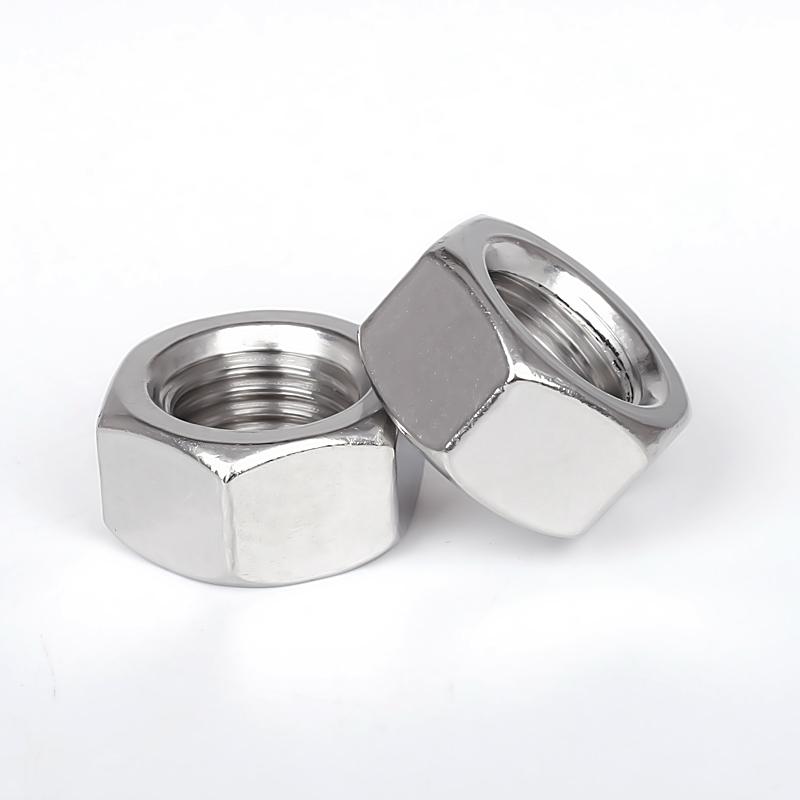
Sourcing large quantities of hex nuts can quickly turn into a maze of backorders, inconsistent specs, and hidden fees. Many buyers end up juggling multiple vendors just to keep a single project moving. The smart approach is to work with a supplier that keeps deep domestic stock and treats a bulk order as standard business—not a special request.
When hex nuts arrive in mixed lots with questionable thread tolerances, the real cost shows up on the assembly line. A dependable bulk source should ship uniform dimensions, clean finishes, and traceable material certifications without adding weeks to the lead time. This means fewer incoming inspections and less rework, which is what actually keeps production schedules intact.
Instead of chasing inventory across brokers, look for a partner that can handle blanket orders and staged releases. That way you order in volume but receive stock as your operation needs it, avoiding crowded receiving docks and cash tied up in excess bins. Bulk hex nuts shouldn't come with a runaround—just a steady, predictable flow.
What High Quality Means When Fasteners Hit the Assembly Line
On a busy assembly line, a high-quality fastener rarely announces itself. It simply feeds through the vibratory bowl without jamming, seats into a pre-drilled hole without cross-threading, and reaches the specified torque without snapping. That quiet reliability comes from tighter dimensional tolerances—often just a few microns—clean, burr-free threads, and a consistent heat treatment that keeps hardness uniform from the first piece to the ten-thousandth.
But quality isn't only about a single part passing inspection. It's about every fastener in the bin behaving like every other one. A mixed batch with even a 2% defect rate can halt an entire line, forcing operators to stop and clear misfed screws or replace stripped bolts. Suppliers who truly understand assembly-line quality monitor their coating thickness, thread geometry, and raw material lots closely enough that variation stays inside a very narrow band, shift after shift.
There's also the matter of what happens after torque is applied. A high-quality fastener resists corrosion, vibration loosening, and fatigue over the life of the product, not just on day one. When that happens, the assembly line doesn't see the payoff directly—but the warranty claims, rework orders, and field failures that never materialize are the clearest evidence that the right fastener was worth the slightly higher price.
Why Repeat Wholesale Buyers Stick With One Nut Supplier
Switching suppliers sounds easy on paper, but any seasoned wholesale buyer knows the hidden costs add up fast. New vendor onboarding means re-testing moisture levels, dealing with inconsistent sizing, and chasing documentation that should have been standard years ago. When a nut supplier consistently delivers clean lots, accurate counts, and on-time logistics, staying put isn't laziness—it's basic risk management.
There's also the quiet advantage of familiarity. Long-term suppliers learn your tolerance for shell fragments, your preferred roast profile, and even how you like pallets stacked for your warehouse layout. That kind of tacit knowledge can't be captured in a spec sheet, and replacing it often means weeks of awkward back-and-forth while both sides figure out what “acceptable” really means.
Price fluctuations in the nut market are brutal enough without adding supplier roulette to the equation. Buyers who stick with one source build negotiation leverage over time, get first look at premium lots, and sometimes receive early warnings about crop shortfalls or shipping delays. Loyalty here isn't sentimental—it's the cheapest form of supply chain insurance you can buy.
Picking the Right Grade and Finish for Your Specific Fastener Job
Many fastener failures trace back to a simple mismatch between the bolt's strength grade and the load it actually sees. For inch-series hardware, Grade 2 is soft and cheap, best for light-duty wood or low-stress assembly; Grade 5 is the workhorse for automotive and general machinery; Grade 8 offers the highest tensile strength, but it is also more brittle and can snap under shock loads where a Grade 5 would bend instead. Check your joint type before reaching for the strongest option—shear joints, clamping force, and vibration response all influence whether higher hardness helps or hurts.
Finish selection is less about looks and more about the environment the fastener will live in. Plain zinc plating handles indoor or mildly humid conditions, but it will rust quickly near saltwater or road de-icers. Hot-dip galvanizing or stainless steel buys you corrosion resistance, yet stainless can gall when threaded into stainless or aluminum without proper lubrication, and it costs significantly more. Black oxide, despite its name, offers almost no rust protection unless it is sealed with oil or wax, so treat it as an appearance coating rather than a barrier.
Finally, match both grade and finish to the mating materials to avoid galvanic corrosion and premature looseness. A stainless bolt into a carbon steel nut may be fine, but a zinc-plated steel bolt into an aluminum part will eventually sacrifice the zinc and then attack the aluminum if moisture is present. For structural or safety-critical jobs, stick with proven combinations—like Grade 8 with a heavy zinc or mechanical plating—instead of chasing an exotic spec that may be hard to source on short notice.
Actual Stock Levels and Honest Lead Times, Not Wishful Thinking
Most supply lists you see online are optimistic guesses dressed up as data. We keep a live count on every item in the warehouse, updated as orders move, not when it's convenient. If the shelf says three left, that means three are physically sitting there right now.
Lead times get the same treatment. Instead of quoting the fastest possible scenario, we publish the window that actually reflects current production and shipping queues. When a part is backordered, the date you see is the date our last shipment cleared, not a placeholder to make the sale feel easier.
This approach costs us a few orders from people who expect instant answers, but it saves everyone the frustration of chasing a phantom delivery. You can plan around real numbers, and we would rather lose a quick sale than burn your trust on a timeline that never existed.
FAQ
We carry 304 and 316 as standard, with 18-8 also available. 316 offers better corrosion resistance for marine or chemical environments, while 304 handles most general-purpose jobs.
Yes, we keep both DIN and ANSI/ASME specs in stock, from M3 up to M36 and #4 through 1-1/2 inch. Odd sizes can be sourced on request.
We can pack by weight, piece count, or in labeled boxes sized to your production line. Plain poly bags, cardboard cartons, and palletized crates are all options.
Every batch is checked for dimensional accuracy, thread fit, and surface finish. We also provide mill test reports on request so you know the alloy composition.
304 and 316 stainless are both common in food-grade applications. We can supply nuts with a passivated finish to remove free iron and improve corrosion resistance.
Usually 5,000 pieces per size, but we do work with smaller trial orders. Larger runs get better per-piece rates, and we can hold stock for scheduled releases.
Stocked sizes typically leave our warehouse within 48 hours. Custom or non-standard sizes may take 2-4 weeks depending on the production queue.
Yes, we include certificates of conformance and country of origin paperwork. If your project needs full traceability, we can arrange lot-specific documentation.
Conclusion
A dependable stainless steel hex nut wholesaler starts with the metal itself. Grade 316 and A4-70 lots need to be on the shelf, not promised after a three-week mill run. Buyers who work near salt water, chemical cleaning lines, or outdoor racking know that a passivated finish and a tight dimensional tolerance mean fewer seized threads and fewer line stoppages. The spec calls for a nut that seats flat, engages cleanly, and holds torque without galling—so the wholesaler should be able to tell you exactly which heat number is in the box and how many pieces are physically ready to ship today.
The real test comes after the first few pallets. Repeat buyers stick with a supplier because the hex nuts arrive on time, the threads are consistent from lot to lot, and the packaging is not a mixed bag of leftovers. Bulk ordering should not mean playing phone tag with three warehouses or waiting on a freight quote that changes by the hour. When a buyer can give one part number, get one straight answer on stock and lead time, and then send that order straight to the assembly line without rechecking every dimension, the fastener stops being a variable. That is what high quality actually means in a production environment.
Contact Us
Contact Person: Shane
Email: [email protected]
Tel/WhatsApp: 8613357785029
Website: https://www.wanluohardware.com