

Top All-In-One Strength Equipment for Building a Complete Home Gym
2026-05-08
Creating a home gym that covers every muscle group often means a maze of bulky machines and endless compromises. But what if a single piece of equipment could replace the rack, cables, and bench—without crowding your space? In this guide, we spotlight the top all-in-one strength systems that serious lifters trust for full-body gains. Among them, Yingruis stands out for smart engineering that adapts to your training style, not the other way around. Let's rethink what compact power really looks like.
Strength Stations That Fit Where You Train
Bulky machines and fixed layouts no longer define a serious training setup. Today’s strength stations are built with adaptability in mind—they slide into garage corners, tuck under staircases, or anchor a compact home gym without swallowing the whole room. Whether you're working with a spare bedroom or an office break area, modular uprights, folding benches, and weight stacks on rails make it possible to train heavy without a dedicated fitness facility. The whole idea is purposeful minimalism: every component earns its footprint, and nothing sits idle simply for show.
This flexibility shifts the way you think about a training space. Instead of waiting until you have the perfect basement or commercial square footage, you can set up a station that mirrors how you actually live and move. Wall-mounted cable towers, squat stands that double as pull-up rigs, and compact leg press plates all open avenues for progression while respecting your real floor plan. It turns a corner into a focused training spot—no commute, no waiting for equipment, just the gear you need configured exactly where it belongs.
Cable Systems That Mimic Gym Versatility
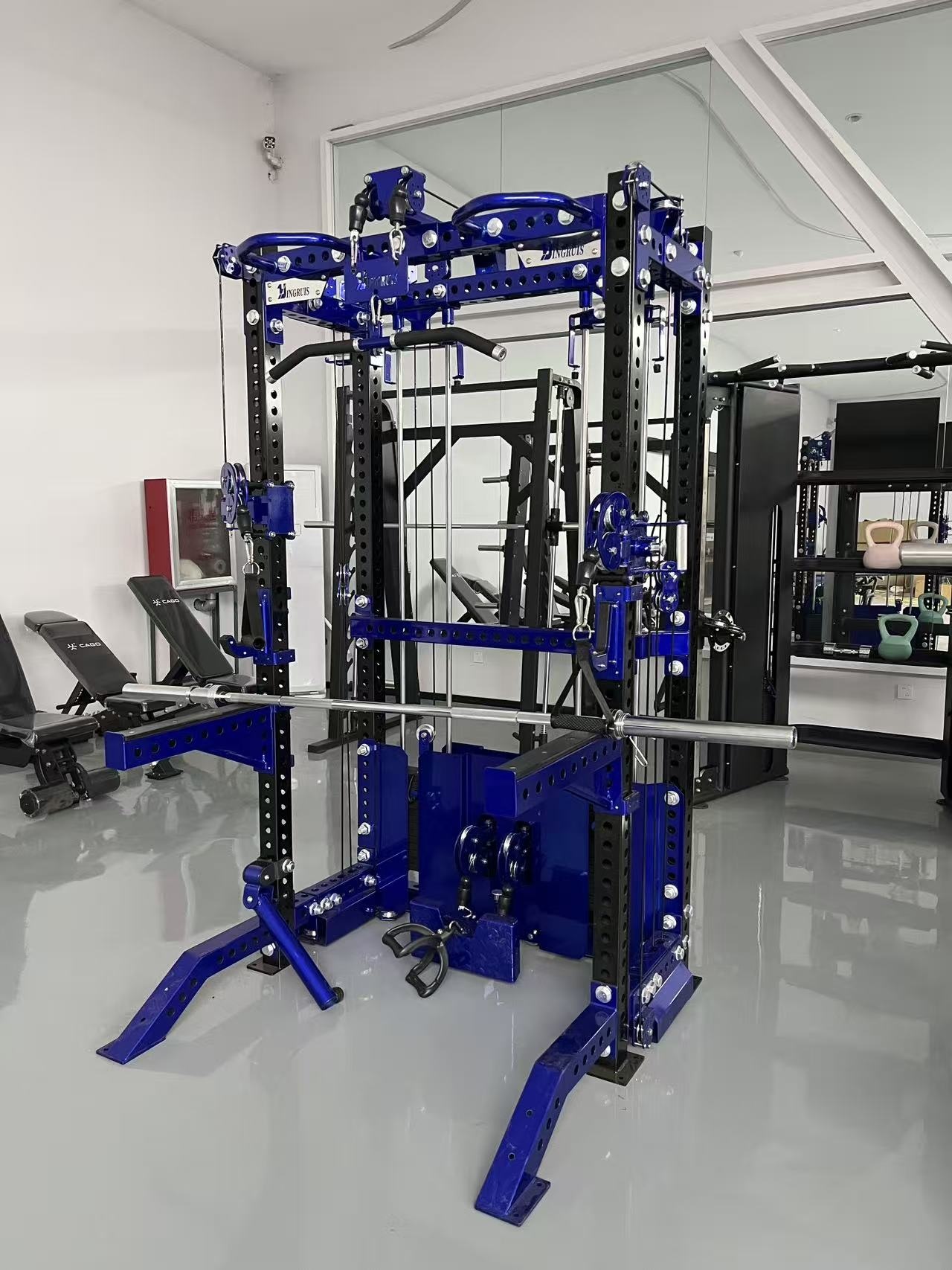
Imagine having the adaptable resistance of a full cable crossover machine without sacrificing half your living room. Modern cable systems pack this versatility into compact designs that slide under desks or fold against walls, yet still deliver the smooth, consistent tension you’d expect from commercial equipment. The secret lies in the adjustable pulley angles and quick-change handles: high pulls for lats, mid-level twists for obliques, and low rows for the back—all from a single anchor point. It’s not about replicating every bulky gym station, but about giving you that same creative freedom to target muscles from unexpected angles, so your workouts never plateau.
What truly sets these systems apart is how they encourage movement exploration rather than rigid routines. Instead of being locked into a fixed bar path like with many home gym machines, the free-moving cable lets your body dictate the arc—a slight shift in stance suddenly fires up the glutes during a chest fly, or a rotated grip transforms a standard curl into a hammer variation. This isn’t by accident; the best units mimic the infinite adjustability of gym-grade towers by letting you reposition the pulley along a vertical rail in seconds, often with just one hand. No pins, no clumsy detachments—just fluid transitions between exercises, which keeps your heart rate up and makes those quick lunchtime sessions feel surprisingly complete.
Durability is the quiet hero here, because jerky, sticky cables can ruin the illusion of gym-level quality. Look for systems that route the cable through maintenance-free bearings rather than simple bushings, and those that use a fiber-reinforced rope instead of basic steel wire—it glides quieter and won’t fray after a few months of lateral raises. Some even integrate a progressive resistance curve via a cam mechanism, so that the weight feels heavier at the strongest part of the lift and lighter where your joints are vulnerable, much like premium gym stacks. Combined with magnetic resistance or a whisper-quiet weight stack, you can grind out a full-body circuit at midnight without waking the household, and that’s a kind of convenience no gym membership can offer.
Power Racks That Grow With Your Goals
A power rack shouldn't just match where you are today—it should adapt as your ambitions evolve. Look for racks with modular designs that let you bolt on extras like cable pulleys, dip bars, or additional J-hooks over time. This way, your initial investment stays relevant even when your routine shifts from basic squats to more complex accessory work.
Adjustability is the heartbeat of a rack that keeps up. Beyond the standard hole spacing, some racks offer numbered uprights and quick-change pull-up bars, making it effortless to tweak setups between exercises or users. That kind of flexibility means you're never stuck in a configuration that's outgrown its purpose.
Finally, consider the platform itself. Some racks are designed with expansion kits that turn a four-post cage into a six-post monster, adding plate storage or a lat tower down the line. It's about building a system that mirrors your progress, not boxing you into a static piece of equipment.
All-in-One Trainers That Cut Setup Time
Getting ready for a workout used to mean fumbling with laces and swapping shoes between activities—until I switched to an all-in-one trainer. These streamlined kicks are designed to handle everything from sprints to squats without pausing for a change, so my warm-up starts the moment I step onto the gym floor. The first time I tried a pair, I shaved almost ten minutes off my usual routine, and that saved time adds up when you’re fitting exercise into a busy day.
What really sets them apart is how they blend support with flexibility, so you’re not compromising performance for convenience. The heel locks in during lifts, yet the forefoot flexes naturally for burpees or short runs, making transitions between exercises almost unconscious. It’s the kind of design that strips away the friction of setup—no more digging through a bag for dedicated shoes or retying knots between sets—and lets you focus purely on the work ahead.
Hybrid Machines for Cardio and Strength
Combining cardio and strength training into a single session used to mean switching between machines, but hybrid machines now make it seamless. These units let you torch calories while building muscle, often by adding resistance to aerobic movements. Whether it’s a bike with upper-body levers or an elliptical that doubles as a leg press, the design keeps workouts efficient and engaging.
One standout benefit is how they adapt to different fitness levels. You can crank up the resistance for a strength-focused circuit or dial it back for steady-state cardio, all on the same machine. This versatility makes hybrid gear a smart pick for home gyms where space is tight—you get two workout styles without the clutter.
I’ve noticed that the best hybrid machines feel more like full-body tools than gimmicks. For example, a rower naturally blends cardio with pulling strength, while newer smart models use magnetic resistance to shift between fluid aerobic workouts and muscle-building tension. It’s a practical way to keep exercise varied without overcomplicating a routine.
Compact Builds That Outperform Their Footprint
In a world where bigger is often mistaken for better, compact builds quietly prove that intelligence beats square footage. These designs strip away the unnecessary, focusing on what truly matters—clever layouts, dual-purpose features, and a sense of openness that defies their modest dimensions.
Rather than feeling cramped, a well-conceived compact space breathes with efficiency. Every corner pulls double duty, from staircases with built-in storage to furniture that transforms on demand. It's not about sacrificing comfort; it's about rethinking how we use each inch.
The result is a home or structure that feels expansive without waste. By outperforming their footprint, these builds challenge our assumptions about space—and prove that living large has little to do with floor area.
FAQ
It's a single station that combines multiple functions like a cable crossover, smith machine, leg press, and pull-up bar into one frame. Instead of having a room full of separate units, you get a compact system that lets you switch between exercises quickly. The main difference is space efficiency and cost, though some exercises might feel slightly different due to integrated design constraints.
Absolutely. A well-designed all-in-one can target every major muscle group: chest, back, legs, shoulders, and arms. You just need to get creative with attachments and body positioning. I've seen guys build impressive physiques using nothing but a functional trainer with a bench. The key is knowing which adjustments unlock which movements.
Focus on weight stack capacity, the quality of pulleys and cables, and how smoothly the adjustments work. Check if the unit supports the specific exercises you actually do—some are better for pressing, others for pulling. Also, pay attention to the warranty on moving parts; that tells you a lot about durability.
Most compact all-in-ones need about a 6x6 foot footprint, but always add extra clearance for range of motion. If you're tight on space, look for wall-mounted or folding designs. Measure your ceiling height too—some need more vertical room than you'd expect.
They can definitely work for both, with a caveat. Beginners appreciate the guided motions and safety features, while advanced lifters might find the resistance curves limiting for heavy barbell lifts. But if you grab a unit with a solid smith machine and free-weight adapters, you can push yourself pretty hard.
You're looking at everything from lat pulldowns, seated rows, chest presses, shoulder presses, leg extensions, and curls to cable flyes and tricep pushdowns. Many also let you do squats and deadlifts with the smith bar. It's really about how you configure the attachments.
In the long run, yes. Doing the math, a single $2,000 machine can replace a rack, bench, cables, and leg developer that would cost over $3,000 separately. Plus you save on flooring and space. The trade-off is you can't upgrade piece by piece—you're committing to that ecosystem.
Conclusion
Building a complete home gym no longer means sacrificing floor space or settling for limited workouts. The latest all-in-one strength equipment has reshaped what’s possible, merging the feel of a commercial gym with the convenience of a corner in your living room. Strength stations that adjust to your available area—whether a dedicated room or a shared office—let you train without rearranging furniture. Meanwhile, cable systems have evolved far beyond simple pulleys, offering smooth, gym-grade resistance and countless angle variations that replicate everything from lat pulldowns to functional twisting moves. They’re silent, durable, and eliminate the need for a rack of dumbbells. The best setups feel less like bulky machinery and more like a personal training studio that happens to compress into a modest footprint.
What truly sets modern home equipment apart is its ability to grow with you. Power racks that accept attachments like dip bars, landmines, and even weight stacks mean you can start with a basic squat stand and gradually build a full rig as your strength increases. All-in-one trainers cut the clutter: one machine now handles bench press, row, leg curl, and more in a single station, slashing setup time so you move straight from warm-up to working sets. For those who hate choosing between cardio and lifting, hybrid machines blend resistance with air or magnetic braking, letting you burn and build without switching gear. And perhaps the most surprising advancement is compact engineering—units barely larger than a yoga mat that deliver a genuine full-body burn. These aren’t light compromises; they outperform their size, proving that a well-designed home gym doesn’t need a garage, just the right piece of equipment.
Contact Us
Contact Person: Owen Wu
Email: [email protected]
Tel/WhatsApp: 86-15376736259
Website: https://www.yingruisfit.com/