

Top Industrial Transformers Driving Reliable Power Distribution
2026-09-03
Industrial power systems live or die by the transformers feeding them. Yet behind every stable grid, harbor crane, or production line there's a silent dependency most engineers only notice when it fails. This post looks at the top industrial transformers shaping reliable power distribution—and why TPS keeps showing up in the conversations that matter.
Smart Sensors Are Quietly Preventing Factory Downtime
On most factory floors, equipment failures rarely announce themselves. A bearing wears down, a pump starts cavitating, or a motor draws slightly more current than it should, and the first sign is often an unplanned shutdown. Smart sensors change that equation by listening to the machinery around the clock. They track vibration, temperature, acoustic emissions, and electrical signatures at a level of detail no human operator can match. The moment a reading drifts outside its normal envelope, the sensor flags the change long before a breakdown becomes inevitable.
The real advantage is not just collecting data, but turning it into a usable warning. Many systems process the signal locally on an edge device or send it to a cloud model that compares current behavior against historical baselines for that specific machine. If a cooling fan starts vibrating at a frequency associated with early bearing wear, the system can alert maintenance staff with enough lead time to schedule a repair during a planned pause. Instead of tearing down a production line at 2 a.m., technicians swap a part in the afternoon, often before operators notice anything unusual.
Quietly, this approach shifts maintenance from a calendar-based chore to a condition-based response. Factories avoid the double cost of unexpected downtime, lost output, and emergency parts, while also skipping unnecessary replacements that a rigid schedule might demand. The sensors themselves are small, often clamped or adhered to existing equipment without major retrofits. Over time, the data they gather helps refine predictions further, making each intervention more precise and each production schedule more reliable.
Voltage Stability: The Unsung Hero Behind Heavy Equipment Uptime
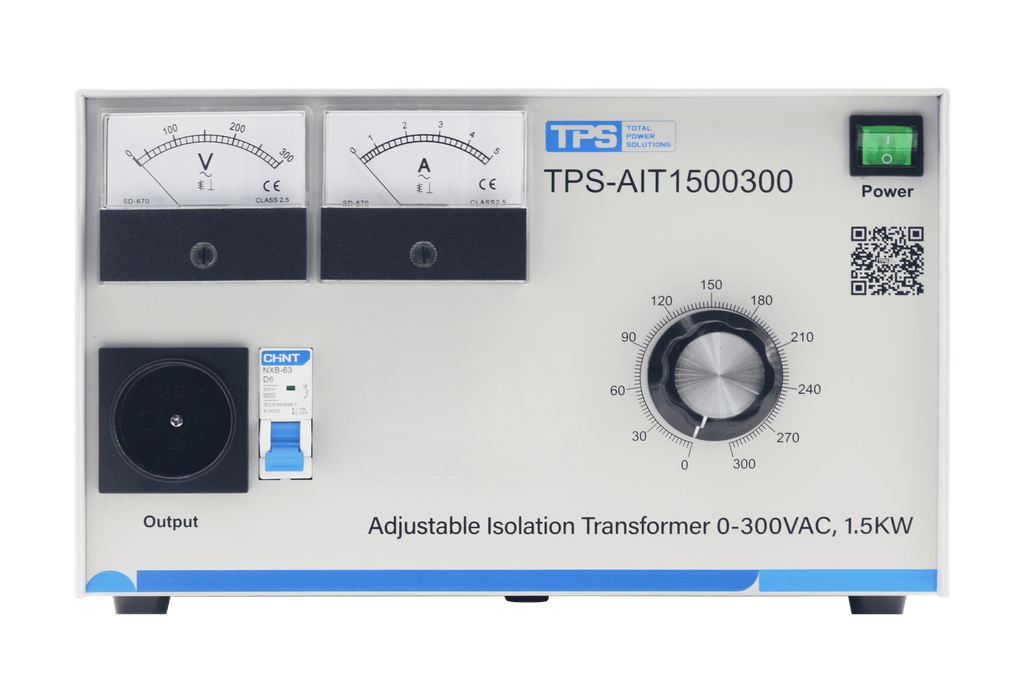
When a loader stalls mid-shift or a haul truck refuses to crank, the culprit is rarely a blown engine or a failed transmission. More often than not, the problem traces back to something far less glamorous: voltage stability. Heavy equipment relies on a delicate electrical ecosystem where even a half-volt fluctuation can trigger sensor errors, disrupt communication between control modules, and leave an operator stranded. Unlike consumer vehicles, these machines don't get the luxury of a quick roadside reset. A voltage dip under load—say, when the hydraulic pump kicks in—can shut down the entire machine if the electrical system isn't tuned to absorb that spike without dropping below critical thresholds.
Most maintenance teams focus on mechanical wear parts, but the unsung hero of uptime is a rock-solid grounding scheme and a charging system that holds steady under brutal conditions. Corrosion on a battery terminal, a loose ground strap, or an alternator that's just barely within spec can create intermittent gremlins that take days to trace. The fix isn't exotic: it's disciplined voltage drop testing, cleaning every connection with a wire brush, and measuring output not at idle but under realistic load. Machines that get this attention rarely suffer the mystery shutdowns that plague fleets running on guesswork.
What separates reliable fleets from those constantly nursing electrical gremlins is a shift in mindset. Instead of treating voltage stability as an afterthought, they record baseline readings for every machine, compare them at every service interval, and replace any cable or connector that shows more than a 0.2-volt drop. The result is a piece of equipment that starts on the first crank, stays running through the toughest conditions, and rarely surprises the operator with a dead screen on a cold morning. That's the kind of uptime that doesn't make headlines, but it keeps the job site moving when others are waiting for a jump start.
Wasted Energy? Modern Core Materials Push Efficiency Past 99%
In power conversion, every fraction of a percent lost shows up as heat, noise, and higher operating costs. Older silicon steel cores routinely surrendered 3–5% of throughput to eddy currents and hysteresis. The shift to amorphous and nanocrystalline alloys changes that calculus. These materials exhibit drastically lower core loss at high frequencies, letting designers hit efficiency figures that were once considered physically out of reach. A well-tuned converter built around a nanocrystalline core can now sustain 99.2% efficiency under real load conditions, not just on a datasheet curve.
The jump past 99% is not a single breakthrough but a stacking of refinements. Thinner laminations reduce eddy current loops. Tighter grain alignment lowers coercivity. Better thermal conductivity pulls heat away from windings before it degrades magnetic performance. Combined with wide-bandgap semiconductors switching at 100 kHz and above, modern cores maintain permeability where traditional ferrites start to droop. That means smaller magnetics, lighter heat sinks, and power supplies that run cool enough to touch after hours of full-load operation.
What looks like a marginal gain on paper has outsized effects in the field. A 1% efficiency improvement in a 10 kW server power supply saves 100 W of waste heat per unit. Across a data center with thousands of units, that reduction ripples into lower cooling demand, smaller backup battery banks, and longer component lifespans. The old assumption that magnetics are inherently lossy no longer holds. With the right core material and careful drive topology, wasted energy becomes an engineering choice rather than a fixed penalty.
How Rugged Enclosures Keep Transformers Alive in Extreme Conditions
In extreme environments, transformer failure often has less to do with electrical stress than with physical assault. Dust, salt spray, driving rain, and rapid temperature swings push unprotected units past their design limits. A rugged enclosure acts as the first line of defense, sealing out contaminants and maintaining an internal climate stable enough for insulation and cooling systems to function as intended.
Good enclosure design goes beyond simple weatherproofing. It accounts for thermal expansion, condensation cycles, and even UV degradation. Seams are gasketed, vents are filtered, and coatings are selected to resist corrosion without adding unnecessary weight. The result is a transformer that continues to breathe and dissipate heat while keeping destructive particles and moisture on the outside.
In coastal, mining, or high-altitude installations, this protection becomes the difference between routine maintenance and repeated replacements. Operators report markedly fewer insulation failures and longer service intervals once units are housed in properly engineered cabinets built for their specific exposure.
Modular Designs Let You Add Capacity Without Rebuilding the Substation
Modular designs reshape how substations grow. Instead of tearing down walls or pouring new foundations, you snap in pre-built units that handle more load. This keeps the original footprint intact while capacity climbs in step with demand.
Think of it like stacking blocks. Each module arrives tested and ready, so adding transformers, breakers, or bus sections becomes a matter of planning the layout rather than shutting down the yard. The result is less downtime and fewer surprises during the build.
Operators get to expand on their own schedule. A small site today can double or triple its throughput next year without a full redesign. That flexibility keeps costs predictable and lets the substation adapt to the grid as it evolves.
Balancing Renewable Power and Industrial Loads with Advanced Tap Changers
Fluctuations in renewable generation create voltage swings that industrial facilities cannot afford. Advanced tap changers respond within milliseconds, adjusting transformer ratios to keep supply within tight tolerances even when cloud cover or wind gusts disrupt output. This speed prevents motor overheating, control system faults, and unplanned downtime on production lines that depend on stable power quality.
Conventional mechanical tap changers wear out quickly under frequent switching, but hybrid and solid-state designs eliminate arcing and reduce maintenance. By pairing fast tap changes with predictive load forecasting, plants can absorb excess solar or wind energy during peak generation and seamlessly draw from the grid when renewables dip. The result is smoother integration of intermittent sources without sacrificing process reliability.
Industrial operators gain more than voltage control: they unlock dynamic load shifting that aligns energy-intensive operations with periods of abundant renewable supply. Advanced tap changers enable this by maintaining precise secondary voltage across a wide primary range, allowing transformers to ride through renewable variability while protecting sensitive equipment from harmonic distortion and phase imbalance.
FAQ
A dependable unit typically has a reinforced core and coil assembly designed to tolerate frequent load swings, high ambient temperatures, and dusty or corrosive conditions. Unlike standard commercial models, these transformers often use higher grade insulation, extra bracing to minimize vibration, and lower flux densities to reduce hot spots over years of continuous operation.
Oil-filled units remain popular because the oil does two jobs at once: it cools the windings and insulates them, which allows a smaller footprint for the same kVA rating. The fluid also tends to absorb thermal stress more evenly, so well-maintained oil-filled transformers can handle heavy overloads without immediate damage, an advantage in older plants with tight switchgear rooms.
Impedance determines how much the secondary voltage drops when a transformer goes from no load to full load. A lower impedance gives tighter voltage regulation but can increase fault current levels, while a higher impedance limits short-circuit energy at the cost of a larger voltage swing. Industrial facilities usually need a balance that matches the stiffness of the upstream supply and the inrush demands of large motors.
Smart monitors track dissolved gases, moisture, partial discharge, and winding temperature continuously, so operators can spot early signs of insulation breakdown or cooling problems. Instead of relying only on scheduled oil samples, these systems provide real-time trends and often trigger alarms before a minor fault becomes a full winding failure.
Cast resin transformers make sense when a facility has strict fire safety rules, limited ventilation, or equipment located near occupied areas. Because they use epoxy-encapsulated windings instead of liquid cooling, they eliminate the risk of oil leaks and require no containment pit. Many plants switch to cast resin units when expanding indoor substations or when local codes restrict oil-filled equipment.
One commonly skipped step is checking winding resistance and turns ratio under load, not just during shutdowns. Another is verifying that cooling fans and pumps actually cycle on at the correct temperature instead of assuming the controls work. Cleaning radiator fins, tightening bus connections, and testing the nitrogen blanket on sealed oil units also tend to fall through the cracks until a temperature alarm goes off.
Harmonics produce extra eddy current and stray losses in the core and windings, which generates heat beyond what the basic load would suggest. Over time, this extra heat accelerates insulation aging and can cause neutral conductors and winding terminations to overheat. In plants with many variable frequency drives or LED lighting, transformers often need de-rating or special K-factor ratings to survive.
Look for enclosed coil construction, anti-condensation heaters, and corrosion-resistant enclosures if the unit will face dust, moisture, or chemical vapors. In areas with vibration, through-bolt core clamping and flexible coil supports reduce mechanical fatigue. For outdoor installations, a sealed tank, pressure relief device, and marine-grade paint system often mean the difference between a unit that lasts decades and one that rusts out in a few years.
Conclusion
Industrial transformers keep power flowing reliably, but the real work often happens out of sight. Smart sensors now monitor thermal stress, partial discharge, and load harmonics in real time, flagging minor anomalies before they escalate into unplanned shutdowns. This quiet vigilance complements voltage stability, which remains the backbone of heavy equipment uptime—small fluctuations can degrade motor windings or trip sensitive drives. Modern core materials, such as amorphous steel and laser-scribed silicon, push efficiency beyond 99%, turning what used to be wasted energy into extra capacity without adding footprint. Reliability starts in these invisible margins, not in the nameplate rating.
Harsh environments demand more than electrical precision, so rugged enclosures with sealed gaskets and corrosion-resistant coatings keep transformers alive in foundries, coastal substations, and desert solar farms. Meanwhile, modular designs let plant managers add capacity incrementally—swapping in additional bays or cooling modules—rather than rebuilding an entire substation. Advanced tap changers handle the messy reality of mixed renewable and industrial loads, adjusting voltage ratios on the fly to prevent flicker and harmonics from destabilizing the grid. Together, these features turn top industrial transformers into adaptive, self-protecting power hubs, not static hardware. That adaptability is what modern factories actually pay for.
Contact Us
Contact Person: Lily
Email: [email protected]
Tel/WhatsApp: +49 (0) 2161 49526-0
Website: https://tps-elektronik.com/en/