

Wire Flattening and Shaping Lines: Advanced Techniques for Chinese Manufacturing
2026-01-31
In the competitive landscape of Chinese manufacturing, precision and efficiency are not just goals—they are the foundation of success. For industries relying on wire processing, advanced techniques in flattening and shaping have become game-changers, driving innovation and quality to new heights. Today, we explore how these cutting-edge methods are transforming production lines, offering insights that can elevate your operations. At the heart of this evolution is GRM, a leader in rolling mill technology, whose solutions are shaping the future of wire manufacturing. Join us as we delve into strategies that not only optimize processes but also unlock potential, making your business stand out in a crowded market.
Precision Wire Flattening: Key Methods for Enhanced Product Quality
Precision wire flattening involves specialized techniques to transform round wires into flat profiles with tight tolerances, directly impacting product durability and performance. Unlike standard flattening, precision processes employ advanced rolling mills and controlled annealing to minimize surface defects and ensure uniform thickness. This method is critical for applications like electrical connectors and medical devices, where even minor imperfections can lead to failures.
A key approach involves multi-pass rolling with precise tension control, which reduces stress concentrations and enhances material integrity. By integrating real-time monitoring systems, manufacturers can detect deviations early and adjust parameters dynamically, resulting in smoother finishes and improved mechanical properties. This proactive strategy not only elevates quality but also reduces waste, making it a cost-effective solution for high-demand industries.
To stand out in competitive markets, adopting customized tooling designs tailored to specific alloys and end-use requirements proves effective. For instance, using diamond-coated rollers for hard materials or incorporating in-line polishing can deliver superior surface quality. Emphasizing these nuanced methods helps differentiate products by offering enhanced reliability and performance, meeting stringent industry standards without relying on generic processes.
Innovative Shaping Techniques: Boosting Efficiency in Chinese Production Lines
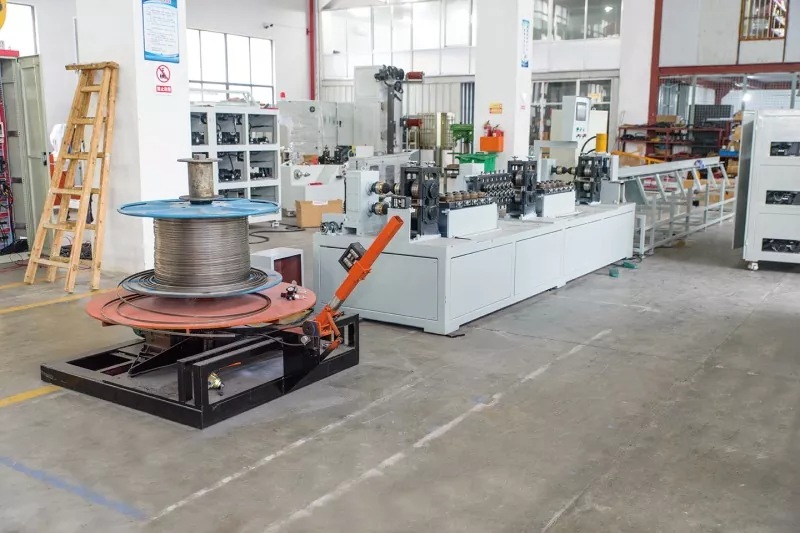
Chinese manufacturing has embraced a wave of innovative shaping techniques that are fundamentally transforming production lines. Methods like 3D printing, hydroforming, and advanced injection molding allow for more precise and complex component designs, reducing material waste and minimizing the need for secondary processing. By integrating these techniques, factories can produce lighter, stronger parts with shorter lead times, directly addressing efficiency bottlenecks that have long plagued traditional assembly processes.
Beyond just adopting new tools, Chinese producers are rethinking entire workflows through smart shaping strategies. For instance, combining digital twin technology with real-time sensor data enables predictive adjustments in shaping parameters, preventing defects before they occur. This proactive approach not only cuts down on rework and scrap rates but also empowers operators to fine-tune processes on the fly. As a result, production lines become more agile, capable of handling custom orders without sacrificing speed or quality.
The impact of these innovations extends beyond individual factories, fostering a competitive edge in global markets. Companies leveraging such techniques report significant boosts in throughput and energy efficiency, often achieving cost savings of 15-25%. By prioritizing continuous improvement in shaping methods, Chinese manufacturing is setting new benchmarks for productivity, proving that efficiency gains are not just about scaling up, but about shaping up smarter.
Automated Calibration Systems: Reducing Downtime and Material Waste
Imagine a production floor where equipment calibrations happen seamlessly in the background, without halting operations. Automated calibration systems make this possible by continuously monitoring and adjusting machinery parameters, ensuring precision without manual intervention. This not only keeps production lines running smoothly but also prevents costly stoppages that can ripple through schedules. By eliminating the need for scheduled downtime dedicated to calibration, companies can maximize uptime and meet tight deadlines more reliably, giving them a competitive edge in fast-paced industries.
Beyond just saving time, these systems tackle material waste head-on. When sensors drift or tools fall out of spec, the result is often defective products or excessive scrap. Automated systems catch these deviations in real-time, making micro-adjustments that maintain quality standards. For instance, in precision manufacturing, even minor errors can render batches unusable. By ensuring consistent accuracy, automated calibration reduces material overuse and rework, leading to significant cost savings and a smaller environmental footprint, which resonates with today's sustainability-driven markets.
What sets modern automated calibration apart is its adaptability and intelligence. Unlike rigid, one-size-fits-all solutions, advanced systems learn from operational data, predicting when adjustments are needed before issues arise. This proactive approach transforms calibration from a reactive chore into a strategic asset, fostering a culture of continuous improvement. Businesses that integrate these smart systems not only boost efficiency but also enhance product reliability, building trust with customers who value consistent quality. In essence, it's about working smarter, not harder, to drive long-term growth.
Advanced Tooling Designs for High-Speed Wire Processing
When it comes to high-speed wire processing, the tooling often dictates the entire production line's efficiency and reliability. Advanced designs now incorporate materials like high-performance carbide or diamond-coated components that withstand intense friction and heat, ensuring minimal wear over millions of cycles. This not only extends tool life but also reduces downtime for maintenance, a critical factor in industries where every second counts, such as automotive or aerospace manufacturing.
Beyond durability, modern tools feature precision-engineered geometries that optimize wire handling at speeds exceeding 10,000 cycles per minute. Innovations like micro-serrated grips or adaptive clamping systems enhance wire alignment and feed, preventing slippage and reducing material waste. Such refinements are increasingly essential as wire diameters shrink and tolerances tighten, pushing the boundaries of what's achievable in automated assembly processes.
Another key aspect is the integration of smart sensors and IoT connectivity, enabling real-time monitoring of tool performance and predictive maintenance alerts. These advancements transform wire processing from a reactive task into a proactive, data-driven operation, allowing for seamless adjustments to speed and pressure based on live feedback. The result is a more resilient production environment that adapts to varying wire types and conditions, setting new benchmarks for quality and throughput.
Quality Control Protocols: Ensuring Consistency in Flattened Wire Output
Maintaining uniformity in flattened wire production hinges on stringent quality control protocols that go beyond basic checks. These measures tackle inconsistencies head-on, from material variations to processing anomalies, ensuring every coil meets exact specifications. By integrating real-time monitoring systems and periodic manual inspections, manufacturers can detect deviations early, preventing costly rework and upholding reliability in applications demanding precise dimensions and surface finish.
Differentiating our approach, we emphasize adaptive testing frameworks that respond dynamically to production shifts. Unlike standard procedures that rely on fixed intervals, our protocols incorporate machine-learning algorithms to analyze data trends, predicting potential flaws before they emerge. This proactive stance not only boosts efficiency but also fosters a culture of continuous improvement, where each output iteration refines the process, making consistency a built-in feature rather than an afterthought.
Ultimately, these protocols are tailored to the unique challenges of flattened wire, such as edge distortion or thickness disparities. Through collaborative audits with end-users and transparent reporting, we ensure the output aligns with specific industrial needs, enhancing trust and performance. This commitment to tailored precision sets a benchmark for quality, driving innovation while safeguarding product integrity across diverse sectors.
Future Trends in Wire Manufacturing: Adapting to Global Demands
The global wire manufacturing sector is bracing for transformative shifts as it navigates evolving demands. One prominent trend is the push toward sustainability, driven by both regulatory pressures and consumer preferences. Manufacturers are increasingly integrating recycled materials into production lines and optimizing energy consumption to reduce their carbon footprint. This adaptation not only meets environmental standards but also positions companies favorably in markets where eco-consciousness is a key purchasing factor.
Technological innovation is another critical driver reshaping the industry. Advanced automation, such as AI-driven quality control systems and robotic assembly lines, is enhancing precision and efficiency. These technologies enable manufacturers to produce high-performance wires for emerging applications, including electric vehicles and renewable energy infrastructure. By investing in smart manufacturing processes, companies can stay agile and responsive to fluctuating global supply chains.
As global demand expands, customization and flexibility are becoming central to competitive strategy. Manufacturers are developing modular production setups that allow for rapid adjustments to meet diverse regional specifications and niche market needs. This adaptability helps firms navigate trade dynamics and geopolitical uncertainties, ensuring they can deliver tailored solutions without compromising on cost or quality.
FAQ
The advanced techniques focus on precision flattening using high-speed rolling mills, automated shaping with CNC controls, and heat treatment processes that enhance material properties for diverse industrial applications.
By integrating IoT sensors for real-time monitoring, implementing predictive maintenance algorithms, and adopting modular designs that reduce downtime and adapt quickly to production changes.
Innovations include AI-driven quality inspection systems that detect micro-defects, eco-friendly cooling methods to reduce energy consumption, and hybrid shaping tools that combine traditional and modern techniques for superior finish.
It ensures uniform thickness and strength, crucial for components like connectors and springs, improving durability and performance while meeting strict industry standards and reducing waste.
Challenges include high initial costs and skilled labor shortages, addressed through government subsidies, training programs, and scalable solutions that lower barriers for small to medium enterprises.
In a recent automotive project, a shaping line with laser-assisted flattening produced high-tensile steel wires for seatbelt systems, cutting production time by 15% while enhancing safety compliance and reducing material usage.
Conclusion
The article "Wire Flattening and Shaping Lines: Advanced Techniques for Chinese Manufacturing" explores cutting-edge methods transforming the production of flattened wires in China, emphasizing precision, efficiency, and quality. It highlights how precision wire flattening techniques are crucial for enhancing product quality, while innovative shaping approaches boost efficiency on production lines. The integration of automated calibration systems plays a key role in reducing downtime and material waste, supported by advanced tooling designs optimized for high-speed processing. Together, these advancements not only streamline operations but also ensure consistent output through robust quality control protocols.
Looking ahead, the article discusses future trends in wire manufacturing, as Chinese producers adapt to meet global demands for more sustainable and technologically advanced products. This evolution involves embracing automation, refining calibration methods, and implementing stricter quality measures, positioning China's wire industry at the forefront of innovation. By focusing on these aspects, the sector aims to maintain competitiveness while addressing challenges related to waste reduction and efficiency improvements, ultimately shaping the future of manufacturing on an international scale.
Contact Us
Contact Person: Rayna
Email: [email protected]
Tel/WhatsApp: 86 -173 1474 6343
Website: https://www.grmrollingmill.com/